Hazardous Duty Pay for Frontline Federal Workers Act This bill temporarily entitles federal employees, including certain employees of the Veterans Health Administration and the Transportation Security Administration, who are exposed to COVID-19 (i.e., coronavirus disease 2019) during duty to a pay differential, as set by the Office of Personnel Management.
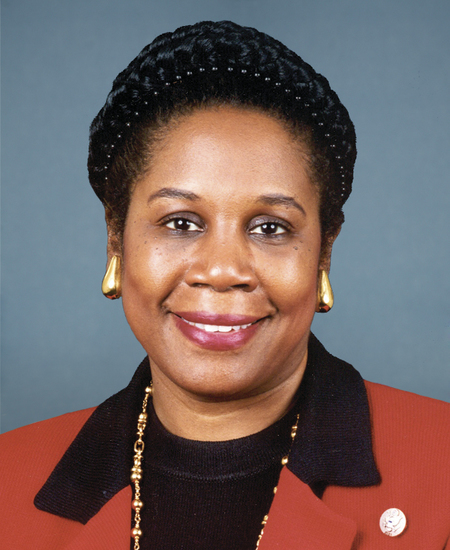
Rep. Sheila Jackson Lee
Sponsored bills
Real Estate Valuation Fairness and Improvement Act of 2021 This bill establishes the Interagency Task Force on Real Estate Valuation to harmonize among specified agencies and entities the underwriting standards that govern residential and commercial real estate valuations. The task force must also study racial disparities in the valuation and price of certain residential real estate. The bill also establishes a grant program for states, nonprofit organizations, and institutions of higher education to promote diversity and inclusion in the appraisal profession.
Access to Contraception for Servicemembers and Dependents Act of 2021 This bill addresses Department of Defense (DOD) contraceptive care and family planning services. Specifically, the bill prohibits cost-sharing with respect to TRICARE beneficiaries for specified prescription contraceptives. Additionally, the bill prohibits cost-sharing for TRICARE Select and TRICARE Prime beneficiaries in relation to any in-network method of contraception or contraceptive care (including with respect to insertion, removal, and follow-up), any sterilization procedure, or any related patient education or counseling service. The bill requires DOD to provide information on all methods of emergency contraception and care to sexual assault survivors at its medical treatment facilities. Upon request by a sexual assault survivor, DOD must provide such emergency contraception or a prescription for emergency contraception. Finally, DOD must establish a uniform standard curriculum for education programs on family planning for all members of the Armed Forces. Such education programs must be provided to service members during their first year of service and at other appropriate times, as determined by each military department.
Suicide Prevention Assistance Act This bill requires the Substance Abuse and Mental Health Services Administration (SAMHSA) to award grants to primary care offices for self-harm and suicide prevention services, including screenings. SAMHSA must also develop standards of practice for conducting such screenings.
Protecting Seniors from Emergency Scams Act This bill requires the Federal Trade Commission to report on, and increase awareness regarding, scams targeting older adults. Specifically, the commission must report on the number and type of scams that target older adults and provide policy recommendations to prevent such scams; revise the commission's web portal with current information about such scams, including contact information for law enforcement and adult protective services agencies; and coordinate with media outlets and law enforcement to disseminate such information.
COVID-19 Safe Birthing Act This bill expands coverage of maternal health care under Medicare, Medicaid, the Children's Health Insurance Program (CHIP), and private health insurance. The bill specifically provides for Medicare and Medicaid coverage of maternal health services that are furnished via telehealth. It also requires Medicaid, CHIP, and private health insurance to cover prenatal services and one year of postpartum care without cost-sharing. The bill also requires short-term, limited-duration health insurance plans, association health plans, and health care sharing ministries to cover COVID-19 testing without cost-sharing. It also requires state Medicaid programs to provide coverage of COVID-19 testing for pregnant individuals who are uninsured. Additionally, as a condition of Medicare participation, hospitals must permit pregnant individuals to be accompanied by someone of their choosing (in addition to a doula or other health care worker) during labor, delivery, and recovery, and may not implement any discriminatory policies that restrict hospital access or birthing options for pregnant individuals.
Fire Fighters and EMS Employer-Employee Cooperation Act This bill requires the Federal Labor Relations Authority to determine whether a state substantially provides fire and emergency medical services (EMS) personnel the right to form and join a labor organization; recognition by fire and EMS employers of the employees' labor organization, agreement to bargain with the organization, and reduction of any agreements to writing in a contract or memorandum of understanding; the right to bargain over hours, wages, and terms and conditions of employment; and arbitration or other mechanisms to resolve an impasse in collective bargaining negotiations. The bill makes the authority responsible for (1) determining the appropriateness of units for labor representation; (2) supervising elections; (3) conducting hearings and resolving complaints of unfair labor practices; and (4) protecting the right of employees to form, join, or assist any labor organization, or to refrain from doing so. An employer, fire and EMS personnel, or labor organization may not engage in a lockout, sickout, work slowdown, strike, or any other organized job action that will measurably disrupt the delivery of emergency services and is designed to compel an employer, fire and EMS personnel, or labor organization to agree to the terms of a proposed contract.
Tax Fairness for Workers Act This bill allows an above-the-line tax deduction for union dues and expenses. (An above-the-line deduction is subtracted from gross income and is available whether or not a taxpayer itemizes other deductions.) The bill also reinstates the miscellaneous itemized tax deduction for unreimbursed expenses attributable to the performance of services as an employee (Under current law, all miscellaneous itemized deductions are suspended through 2025).
Commission to Study and Develop Reparation Proposals for African Americans Act This bill establishes the Commission to Study and Develop Reparation Proposals for African Americans. The commission shall examine slavery and discrimination in the colonies and the United States from 1619 to the present and recommend appropriate remedies. The commission shall identify (1) the role of the federal and state governments in supporting the institution of slavery, (2) forms of discrimination in the public and private sectors against freed slaves and their descendants, and (3) lingering negative effects of slavery on living African Americans and society.
Resetting the Impact Act of 2021 or the TRIA Act of 2021 This bill requires certain data collection and recommendations relating to a Medicare post-acute care prospective payment system to incorporate the effects of COVID-19 on providers and patients. Current law requires the Centers for Medicare & Medicaid Services (CMS) and the Medicare Payment Advisory Commission to develop a prototype for a unified Medicare payment system for post-acute care that is based primarily on patient characteristics (e.g., cognitive ability, functional status, or impairments) rather than the provider setting (e.g., skilled nursing facility, home health agency, inpatient rehabilitation facility, or long-term care hospital). The bill requires the prototype to account for the role of post-acute care providers during public health emergencies, particularly in light of the COVID-19 emergency and the related effects on such providers and their patients. The bill also delays the development of the prototype until two years after the later of January 1, 2022, and the date by which the CMS has collected eight calendar quarters of data after the emergency ends and other changes have been implemented.