

Pandemic Risk Insurance Act of 2021 This bill establishes the Pandemic Risk Reinsurance Program within the Department of the Treasury. The program generally provides compensation to property and casualty insurers if they incur losses as a result of coverage related to pandemics and outbreaks of disease. All insurers as specified in the bill must participate in the program. These insurers must offer, in all property and casualty insurance policies, coverage of losses related to an outbreak of infectious disease or a pandemic for which a covered public health emergency is certified by the Department of Health and Human Services. Additionally, these insurers must offer, in all its commercial property insurance policies, coverage to compensate the insured for a portion of 180 days' fixed costs and payroll triggered upon the certification of a public health emergency and state or local government closure orders without requiring specific proof of losses. The bill establishes the share of insured losses covered by the program and conditions for payment to insurers. The bill also provides for the treatment of reinsurance, captive insurers, other self-insurance arrangements, and state residual market insurance entities. The Government Accountability Office must report on the availability and affordability of property and casualty insurance.
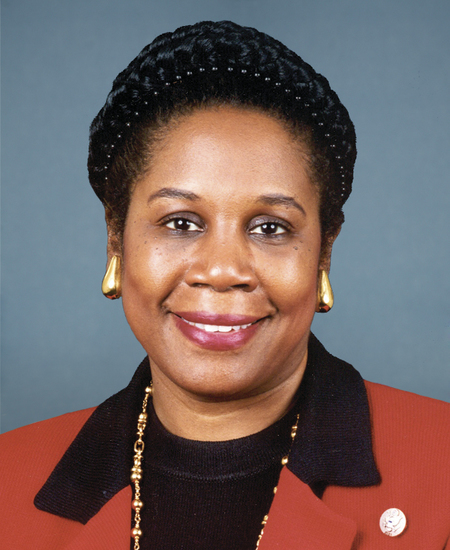
Rep. Sheila Jackson Lee
Sponsored bills
Maddy summaryHRES 752 is a symbolic House resolution (not a binding law) introduced on October 28, 2021, that urges U.S. House members to stand in solidarity with workers advocating for fair pay, quality retirement benefits, and safer workplaces. It references widespread strike activity in 2021 (including nurses, auto workers, and theater employees) and highlights statistics showing growing worker demands and public support for unions (68% of Americans support labor unions). The resolution does not create new policies or change existing laws - it serves solely as a statement of support for workers' efforts to secure better compensation and working conditions through collective action.
Sustainable International Financial Institutions Act of 2021 This bill directs specified international financial institutions to use the influence of the United States to advance the cause of reducing greenhouse gas emissions and transition the global economy to a clean energy economy. It also prohibits the United States from providing direct or indirect assistance to any country or entity to support any fossil fuel activity.
Cady Housh and Gemesha Thomas Student Suicide Prevention Act of 2021 This bill reauthorizes through FY2028, and otherwise revises, grants administered by the Substance Abuse and Mental Health Services Administration (SAMHSA) to support youth suicide early-intervention and prevention strategies. Specifically, the bill requires SAMHSA to award a portion of such grants for statewide training programs on emotional well-being, mental health, and suicide awareness and prevention for elementary and secondary school students and staff.
Real Justice for Our Veterans Act of 2021 This bill expands data collection on the effectiveness of veteran treatment court programs, incentivizes local governments to improve retention rates in veteran treatment court programs and drug court programs, and expands options for veterans to participate in drug court programs. First, the bill requires the Department of Justice (DOJ) to report on the effectiveness of veteran treatment court programs. The report must assess the population served by the programs, whether the programs use evidence-based treatments, the recidivism rates of participants, and program completion rates. The report must also assess whether women and racial and ethnic minorities have equal access to the programs and an equal opportunity to participate. Second, the bill requires DOJ's Bureau of Justice Assistance to implement a pilot program to make grants for local governments to improve retention in veteran treatment court programs and drug court programs. Finally, this bill allows a veteran (including a veteran who is a violent offender) to participate in a drug court program instead of a veteran treatment court program if a jurisdiction does not operate a veteran treatment court program.
Social Security 2100: A Sacred Trust This bill makes changes to Social Security benefits, taxes, and other aspects of the program, including by raising the primary insurance amount, increasing the maximum taxable earnings that are subject to Social Security payroll taxes, and requiring Social Security account statements to be mailed unless the individual recipient opts for electronic delivery.
Family Violence Prevention and Services Improvement Act of 20 21 This bill modifies, expands, and reauthorizes through FY2026 the Family Violence and Prevention Services program, which funds emergency shelters and supports related assistance for victims of domestic violence. Specifically, the bill requires the Department of Health and Human Services (HHS) to award grants and enter cooperative agreements with state and tribal domestic violence coalitions, and community-based organizations, to support prevention services. Depending on the type of organization, grant recipients must use funding to (1) provide technical assistance; (2) promote evidence-informed prevention strategies; (3) implement coordinated, community responses to reduce risk factors for family violence; and (4) develop prevention partnership strategies. Further, HHS must award specified grants to organizations that provide population-specific services in underserved communities and to community-based organizations that provide culturally specific domestic violence services to racial and ethnic minority groups. The bill also establishes a grants program for tribal domestic violence coalitions to support the provision of local, tribal, family domestic or dating violence services and requires HHS to award a grant for the administration of a hotline dedicated to serving Indians affected by domestic violence. In addition, the bill modifies certain program-wide definitions; changes the requirements for specified grant applications, eligibility criteria, and use of funds; and makes other technical revisions.
Original National Domestic Violence Awareness Month Resolution of 2021 This resolution supports the goals and ideals of National Domestic Violence Awareness Month. Further, it expresses the sense of the House of Representatives that Congress should continue to raise awareness of and support programs to end domestic violence.
Public Service Freedom to Negotiate Act of 20 21 This bill provides minimum collective bargaining rights and procedures for public employees and prohibits strikes by certain public safety workers. The Federal Labor Relations Authority (FLRA) shall determine for each state whether the laws of such state substantially provide for each of the minimum standard collective bargaining rights and procedures specified by this bill, including the right of public employees and supervisory employees to self-organize, form or join a labor organization, or collectively bargain. The FLRA must issue rules and take actions to establish and administer bargaining rights and procedures for those states that do not substantially provide for them. No employers, emergency services employees, or law enforcement officers may engage in a lockout, strike, or any other organized job action that is likely to result in a measurable disruption of the delivery of emergency or public safety services. Furthermore, no labor organization may be the cause of a violation of such prohibition.
This bill requires states receiving federal payments for foster care and adoption assistance to prohibit specified surgeries from being performed on foster children under the age of six who are born with variations in the development, appearance, or function of their physical sex characteristics.