

Mental Health Workforce and Language Access Act of 2021 This bill establishes within the Department of Health and Human Services (HHS) two demonstration programs to increase access to mental health services provided in languages other than English at federally qualified health centers (FQHCs). In carrying out the programs, HHS must give preference to FQHCs at which at least 20% of the patients are best served in a language other than English. First, HHS must provide National Health Service Corps (NHSC) loan repayments to mental health care providers who agree to serve their period of obligated service in an FQHC. HHS may provide enhanced payments to those who serve in an FQHC with non-English language needs. (The NHSC is a scholarship and student loan repayment program for eligible health care providers who agree to work in areas with a shortage of primary care, dental care, and mental health care providers.) Second, HHS must award grants to FQHCs for recruiting and retaining mental health care providers who are fluent in a language other than English.
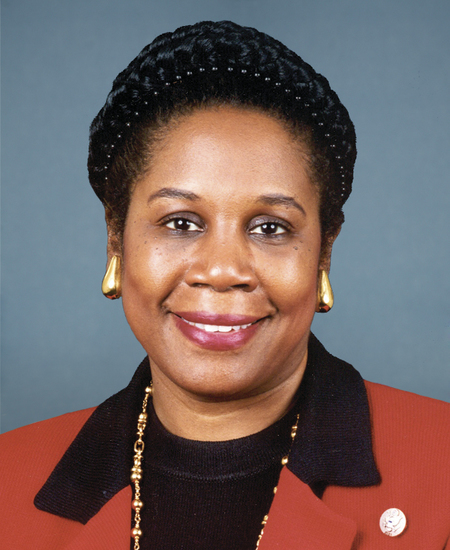
Rep. Sheila Jackson Lee
Sponsored bills
Maddy summaryHRES 785 is a symbolic resolution designating November 8, 2021, as "National First-Generation College Celebration Day." It urges all Americans to celebrate this day, recognize the contributions of first-generation college students (those whose parents did not earn bachelor's degrees), and honor the Higher Education Act of 1965. The resolution highlights existing federal programs like TRIO and Pell Grants that support underrepresented students but does not create new laws or funding. As a non-binding resolution, it has no direct policy impact but aims to raise awareness about first-generation students' challenges and achievements.
Early Childhood Nutrition Improvement Act This bill makes various changes to the Child and Adult Care Food Program, which reimburses child care centers, day care homes, and other sites for meals and snacks provided to low-income individuals. Among these changes, the bill authorizes reimbursements for an additional meal or snack provided to children who are in care for at least eight hours, allows certain child care centers to certify their eligibility on an annual (rather than a monthly) basis, and establishes an advisory committee to make recommendations to reduce unnecessary recordkeeping requirements for program participants.
Protecting Our Communities Act This expands the types of parts, weapons, and devices that are subject to regulation under federal firearms laws. The bill also establishes a notification requirement following a firearms-related background check that results in a denial. Specifically, the bill includes as a firearm any combination of parts designed or intended to be used to convert a device into a firearm and from which a firearm may be readily assembled; adds armor-piercing, concealable weapons to the list of firearms subject to regulation under federal firearms laws; and provides statutory authority for the regulation issued by the Bureau of Alcohol, Tobacco, Firearms and Explosives to classify bump-stock devices as machine guns for the purposes of federal firearms laws. Additionally, the bill requires the Department of Justice to notify state and local law enforcement authorities following a firearms-related background check that results in a denial.
Raise the Age Act This bill establishes new restrictions on the sale or transfer of certain semiautomatic firearms to individuals under 21 years of age. Specifically, this bill makes it unlawful for a licensed gun dealer, importer, manufacturer, or collector to sell or deliver a semiautomatic center-fire rifle that has (or has the capacity to accept) an ammunition feeding device with a capacity of more than five rounds to an individual who the licensee knows or has reasonable cause to believe is under age 21. The prohibition does not apply if the individual under age 21 is a full-time law enforcement officer or active-duty member of the Armed Forces. The bill also requires the Federal Bureau of Investigation to report on the operation of its public access line, including a description of information sharing protocols and recommendations for improving such protocols.
This resolution supports the goals and ideals of National STEM Day. The resolution acknowledges the many individuals currently involved in the science, technology, engineering, and mathematics (STEM) fields, as well as those individuals interested in pursuing STEM careers. The resolution also recognizes the important role women and people of color have played in STEM fields. Finally, the resolution appreciates the role STEM continues to play in contributing to innovative changes to improve society.
21st Century STEM for Girls and Underrepresented Minorities Act This bill directs the Department of Education to make grants to local educational agencies to pay the costs of carrying out STEM (science, technology, engineering, and mathematics) education activities for girls and underrepresented minorities.
Rural Health Fairness in Competition Act This bill requires the Centers for Medicare & Medicaid Services (CMS) to establish a Medicare Rural Health Clinic Value-Based Care Program that exempts certain rural health clinics (e.g., those participating in Medicare quality programs) from payment limitations if they meet reporting requirements relating to quality measures and performance standards, as set by the CMS.
Ending the Monopoly of Power Over Workplace Harassment through Education and Reporting Act or the EMPOWER Act This bill makes it an unlawful labor practice for an employer to enter into, or attempt to enforce, a contract with an employee or job applicant that contains a nondisparagement or nondisclosure clause that covers workplace or sexual harassment, including retaliation for participating in a workplace harassment proceeding. The bill exempts certain settlement or separation agreements from such prohibition. The bill also requires the Securities and Exchange Commission to promulgate a regulation that requires any issuer of securities to submit a report for the most recent five-year period with respect to workplace and sexual harassment. The commission must provide for the development and dissemination of training programs and information regarding workplace and sexual harassment. The bill denies a tax deduction for amounts related to judgments and expenses in connection with litigation related to workplace or sexual harassment. It also excludes from gross income, for income tax purposes, any amount received in connection with a claim or settlement related to workplace or sexual harassment, or other unlawful discrimination.
White House Conference on Food, Nutrition, Hunger, and Health Act This bill directs the President to convene a conference to make policy recommendations for ending hunger, creating sustainable markets for agricultural producers, and improving nutrition and the resiliency of the food system. The bill also requires specified congressional committees to hold hearings on the conference recommendations and on the status of hunger, nutrition security, and food systems.