

Maddy summaryHR 1313, the Transparency in CFPB Cost-Benefit Analysis Act, requires the Consumer Financial Protection Bureau (CFPB) to include detailed cost-benefit analyses in all proposed financial regulations. The bill mandates that the CFPB explain the need for a regulation, assess costs and benefits for small businesses and the economy, evaluate alternatives, and justify decisions where benefits don't outweigh costs. It also requires consultation with the Small Business Administration if a rule increases costs for small businesses and a distribution analysis of burdens. This bill directly affects the CFPB's rulemaking process by increasing transparency in how financial regulations are developed.
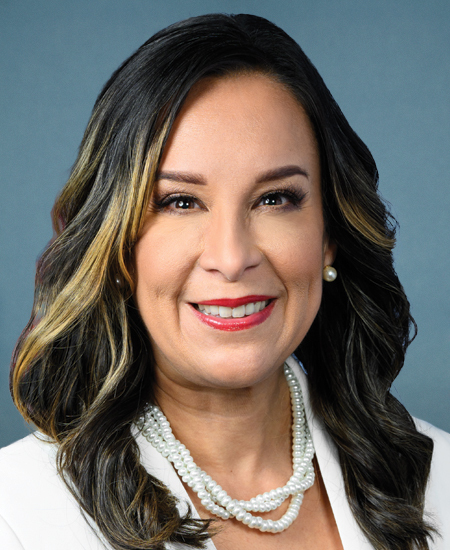
Rep. Monica De La Cruz
Sponsored bills
No Retaining Every Gun In a System That Restricts Your Rights Act This bill modifies the retention requirements for firearm transaction records of federal firearms licensees (FFLs) that go out of business. Current law generally requires FFLs that go out of business to deliver their firearm transaction records to the Bureau of Alcohol, Tobacco, Firearms and Explosives (ATF). This bill removes the requirement for FFLs that go out of business to deliver their firearm transaction records to the ATF. Further, the bill requires the ATF to destroy all out-of-business records it has collected from FFLs.
Maddy summaryHR 1228 prohibits the U.S. military and Department of Defense-operated academic institutions from promoting specific anti-American or racist theories in training. It bans military programs that teach ideas such as "the U.S. is fundamentally racist," "the Constitution is fundamentally racist," or that "an individual’s worth is determined by race." The bill explicitly states it does not restrict protected speech, research access, or educational contexts that clearly disavow military endorsement of such theories. This directly affects military training curricula, workshops, and educational materials within the armed forces.
Maddy summaryThe Permitting for Mining Needs Act of 2023 streamlines federal permitting for mining projects on public lands by establishing specific time limits for environmental reviews (12 months for assessments, 24 months for impact statements) and allowing lead agencies to adopt applicant-prepared environmental documents that meet National Environmental Policy Act requirements. It enables mineral exploration with limited surface disturbance (up to 5 acres) to proceed without full environmental review, and creates mechanisms for coordination between agencies and project applicants through memorandums of agreement. The bill applies to all minerals, not just "critical" minerals, and ensures uranium is treated as a critical mineral for certain purposes. The legislation aims to expedite domestic mineral development while maintaining environmental review standards.
Maddy summaryHRES 165 is a non-binding resolution commemorating the 200th anniversary of the Texas Ranger Division, established in 1823 and recognized as North America's oldest state law enforcement agency. It honors all past and present Texas Rangers, including the 149 who died in service, and acknowledges their historical roles from frontier protection to modern law enforcement. The resolution highlights the Rangers' cultural impact, noting their presence in over 225 movies and 7 TV series, and their partnerships with federal agencies like the FBI. As a ceremonial resolution, it does not create new laws or policies but formally recognizes the Rangers' legacy.
Maddy summaryHR 1200, the National Right-to-Work Act, prohibits requiring workers to join a union or pay dues as a condition of employment in both private-sector workplaces (covered by the National Labor Relations Act) and railroad industries (covered by the Railway Labor Act). The bill amends key sections of these laws to eliminate provisions that allowed union security agreements, meaning workers in unionized settings would no longer be forced to pay dues to retain their jobs. This directly affects employees in unionized workplaces across the U.S., particularly those in industries with existing union contracts that included mandatory dues. The law changes the legal framework to ensure union membership and dues payment remain voluntary for all workers.
Maddy summaryThe Stop the Cartels Act (HR 597) aims to disrupt drug trafficking organizations and related criminal activities by requiring enhanced intelligence gathering on cartels in Mexico and Central American countries, mandating improved U.S.-Mexico law enforcement cooperation, and cutting federal funding from jurisdictions that restrict immigration enforcement. The bill creates a "Special Transnational Criminal Organization" designation for major cartels like the Sinaloa Cartel and Jalisco New Generation Cartel, requires monthly reports on migrant encounters at the border, and establishes refugee processing centers in Mexico and Central America. It also increases staffing for immigration courts by 500 judges, prohibits asylum applications from nationals of countries with refugee processing centers, and reauthorizes substance abuse prevention funding at higher levels while repealing several existing drug programs. These provisions directly affect U.S. intelligence and law enforcement agencies, Mexican and Central American governments, local jurisdictions receiving federal funds, and migrants seeking asylum or refugee status.
Maddy summaryHJRES 33 is a symbolic congressional resolution acknowledging Vietnam War veterans' service and formally apologizing for their mistreatment upon returning home. It recognizes the sacrifice of over 58,000 service members killed and 300,000 wounded during the war, including veterans exposed to harmful herbicides like Agent Orange. The resolution urges the President to acknowledge this mistreatment as part of the Vietnam War Commemoration and issues a formal apology on behalf of the American people. It also calls for increased educational efforts in schools to highlight veterans' courage and the lack of support they faced after the war. (Note: This is a non-binding resolution, not a law, so it has no direct legal or financial impact.)
Maddy summaryHR 1088, the Shirley Chisholm Congressional Gold Medal Act, authorizes a posthumous Congressional Gold Medal to honor Congresswoman Shirley Chisholm, the first African-American woman elected to Congress (1968) and the first Black candidate for a major party's presidential nomination (1972). The bill directs the Treasury Secretary to design and strike a gold medal featuring Chisholm's image, which will be presented by Congress and then permanently displayed at the Smithsonian Institution. Duplicate bronze medals may be sold to the public to cover production costs, with proceeds deposited into the U.S. Mint fund. This bill commemorates Chisholm's legacy and achievements without creating new laws or affecting any current policies.
This resolution calls on the United States and North Korea to begin the process of reuniting Korean Americans with their immediate relatives in North Korea. (Many families were divided after the signing of the Korean War Armistice Agreement, which divided the Korean Peninsula into North and South Korea.)