

Maddy summaryThe PHIT Act of 2023 allows individuals and families to deduct certain fitness expenses as medical costs on their federal taxes. It covers gym memberships, fitness classes, and specific equipment used exclusively for exercise (like home workout gear), with a yearly limit of $1,000 ($2,000 for joint returns). Expenses for activities like golf, hunting, or non-exercise-focused facilities (e.g., private clubs) are excluded, and equipment must be used solely for physical activity. This directly affects taxpayers who pay for qualifying fitness programs, making these costs partially tax-deductible under revised IRS rules.
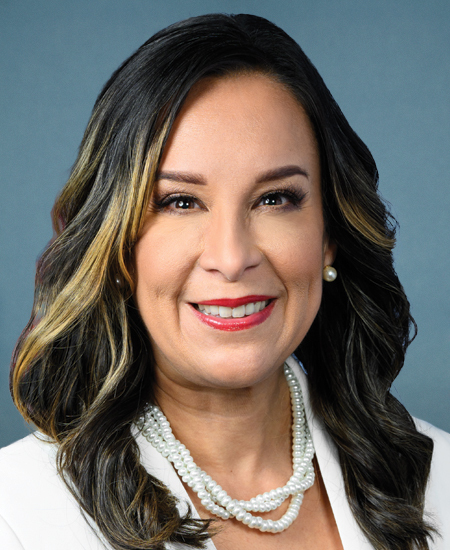
Rep. Monica De La Cruz
Sponsored bills
Mayorkas Must Fly Coach Until We Secure the Border Act This bill prohibits any officer or official of the Office of the Secretary of the Department of Homeland Security (DHS), including the Secretary of DHS, from using any federal executive aircraft until certain conditions relating to the border have been met. Specifically, the prohibition shall apply until the number of encounters and apprehensions of non-U.S. nationals ( aliens under federal law) who have unlawfully crossed the border have been reduced to FY2020 numbers; DHS reports to Congress a plan to place 90% of deployed U.S. Border Patrol agents in duties in the field; and DHS reports to Congress a plan to offer resources, including financial support, to local communities and governments.
Maddy summaryThis bill amends the World Trade Center Health Program to expand eligibility to include certain Department of Defense and Federal agency workers who responded to the September 11 attacks at the Pentagon and Shanksville, Pennsylvania. It establishes a 500-person enrollment cap for these responders, allows a broader range of licensed health care providers to conduct program evaluations, and creates two new funding mechanisms totaling $2.04 billion for the program through 2033. The bill also clarifies enrollment counts by excluding deceased individuals from program statistics and adjusts funding calculations to ensure continued support for affected responders and survivors. These changes directly affect 9/11 responders who worked at the Pentagon and Shanksville sites and their families participating in the health program.
Maddy summaryHR 1514, the Medal of Honor Act, increases monthly pension payments for living recipients of the Medal of Honor and their surviving spouses. It amends federal law to raise the monthly pension for living recipients from $1,388.68 to $8,333.33. For surviving spouses, the monthly pension is set at $1,489.73, with adjustments over time. The bill directly affects current Medal of Honor recipients and their spouses by increasing their financial benefits under existing law.
Maddy summaryThis bill expands the use of 529 college savings accounts to cover career training and credentialing costs. It allows funds to pay for tuition, fees, books, and testing expenses related to recognized postsecondary credential programs (like vocational certifications) that meet specific standards under the Workforce Innovation and Opportunity Act. The change directly affects workers seeking industry-recognized credentials - such as nursing certifications or IT certifications - instead of traditional degrees. It treats these expenses the same as traditional college costs for 529 account withdrawals, making it easier to save for career-focused training. The provision applies to expenses paid after the bill's enactment date.
Maddy summaryThe TABS Act of 2023 would rename the Consumer Financial Protection Bureau (CFPB) to the Consumer Financial Empowerment Agency (CFEA) throughout U.S. federal law. This bill would change the agency's name in the Consumer Financial Protection Act of 2010 and over 25 other federal statutes, including the Dodd-Frank Act and Truth in Lending Act. The bill does not alter the agency's responsibilities, authority, or budget structure - only its name. This is a procedural change affecting all federal documents, regulations, and references to the agency.
Maddy summaryHR 1388 authorizes the minting of commemorative coins to honor the 1865 Sultana steamboat disaster, the deadliest maritime tragedy in U.S. history. It specifies three coin types ($5 gold, $1 silver, and half-dollar) with defined weights and compositions, to be sold at face value plus surcharges ($35, $10, and $5 per coin, respectively). All surcharges collected will fund the Sultana Historical Preservation Society for museum development, including exhibits, artifact preservation, and facility construction. The coins are legal tender but intended for collectors, with sales limited to a one-year period starting January 2023.
This resolution supports the designation of National FFA Week. It also (1) recognizes the important role of the National FFA Organization (Future Farmers of America) in developing the next generation of leaders who will change the world, and (2) celebrates the 90th anniversary of the iconic FFA jacket.
Feral Swine Act This bill extends through FY2028 the feral swine eradication and control pilot program to respond to the threat feral swine pose to agriculture, native ecosystems, and human and animal health.
Maddy summaryHR 1321, the "More Homes on the Market Act," increases the tax exclusion for gains from selling a primary residence. It doubles the exclusion amount from $250,000 to $500,000 for single filers and from $500,000 to $1,000,000 for married couples filing jointly. The bill also adds automatic annual inflation adjustments to these amounts starting in 2023, ensuring the exclusion keeps pace with rising costs. This change directly affects homeowners who sell their primary residence and meet the ownership and use requirements under current tax law. The policy modifies the Internal Revenue Code to make selling a home less financially burdensome for qualifying homeowners.