

Maddy summaryHR 1548, the "Leveling the Playing Field 2.0 Act," amends U.S. trade laws to strengthen enforcement of antidumping and countervailing duty regulations. The bill creates new rules for handling multiple investigations on the same merchandise (successive investigations), addresses market distortions in foreign countries that affect production costs, and improves mechanisms to prevent companies from circumventing existing duties. It also establishes procedures for investigating currency undervaluation as a form of subsidy and strengthens requirements for importers to certify compliance with trade laws. These changes primarily affect U.S. importers of foreign goods, foreign exporters, and the Department of Commerce, which administers these trade enforcement mechanisms.
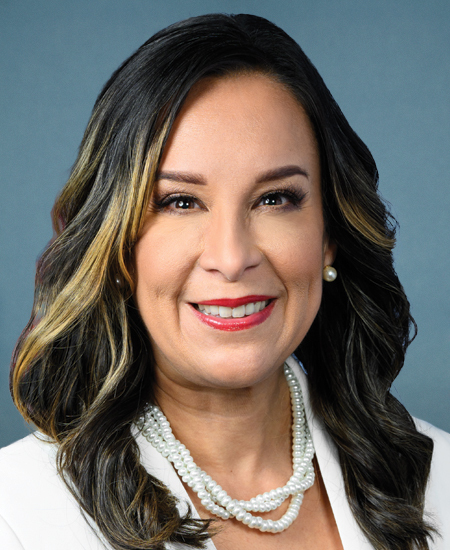
Rep. Monica De La Cruz
Sponsored bills
Maddy summaryHR 1502 authorizes the creation of a Congressional Gold Medal to honor the volunteers and communities (primarily from Nebraska, Colorado, and Kansas) who supported the North Platte Canteen during World War II. The bill directs the Treasury Secretary to design and strike the medal, which will be presented to the individuals who contributed to the canteen’s operations and then permanently displayed at the Lincoln County Historical Museum in North Platte, Nebraska. It also permits the sale of bronze duplicates to cover production costs, with proceeds going to the U.S. Mint. This is a commemorative measure recognizing historical service, not a policy change affecting current laws or programs.
Maddy summaryThe Family-to-Family Reauthorization Act of 2025 extends federal funding for existing Family-to-Family Health Information Centers, which provide free resources and support to families navigating healthcare systems, especially for children with special healthcare needs. It authorizes $6 million for the period April 1-September 30, 2025, and $9 million annually for fiscal years 2026 through 2029. This funding ensures these centers can continue operating without interruption, directly supporting families seeking health information and assistance. The bill makes no new policy changes but secures ongoing financial support for established community-based health education services.
Maddy summaryHR 387, the Texas Agricultural Producers Assistance Act, requires the U.S. Secretary of Agriculture to submit a report within 180 days of enactment. The report must list all existing USDA programs that could provide assistance to Texas agricultural producers who suffered economic losses due to Mexico's failure to deliver water under the 1944 Colorado River Treaty and its 1944 Supplementary Protocol. It does not create new aid but identifies current federal resources available to affected Texas farmers. The bill directly affects Texas agricultural producers impacted by the water delivery issue, focusing on existing program options rather than new legislation.
Maddy summaryHR 389, the Southern Border Farmers and Ranchers Protection Act, creates a new program to provide annual payments to agricultural producers in specific Texas counties along the southern border. It directs the Secretary to fund conservation practices that repair damage to farmland and farming infrastructure caused by natural resource issues in those counties. The program applies to producers in 35 designated border counties (including El Paso, Hidalgo, and Webb) and requires one-year contracts for payments. This bill directly affects farmers and ranchers in these counties by offering financial support for land restoration through conservation efforts.
Maddy summaryHR 388, the Cattle Fever Tick Eradication Program Enhancement Act, requires the U.S. Department of Agriculture to contract with a land-grant or non-land-grant agricultural institution to review the existing Cattle Fever Tick Eradication Program within one year of the bill's enactment. The review must evaluate the program's effectiveness in preventing tick-borne cattle illnesses, assess benefits and compliance burdens for cattle producers, examine treatment protocols, and analyze funding allocation. The resulting report, submitted to Congress within a year of the contract, will include findings and recommendations for program improvements, specifically targeting ways to reduce compliance burdens on producers. This bill does not alter the program's current operations but mandates a formal assessment to inform potential future changes.
This concurrent resolution declares that Congress should not impose any new performance fee, tax, royalty, or other charge relating to the public performance of sound recordings on a local radio station for broadcasting sound recordings over the air, or on any business for such public performance of sound recordings.
Maddy summaryHRES 133 is a symbolic House resolution supporting the designation of February 15-22, 2025, as "National FFA Week." It recognizes the National FFA Organization’s role in developing student leadership through agricultural education and celebrates two milestones: the 90th anniversary of the New Farmers of America (which served Black students until merging with FFA in 1965) and the 75th anniversary of FFA’s federal charter (granted by Congress in 1950). The resolution has no policy impact or funding provisions - it simply expresses congressional support for these observances. It directly affects no individuals or entities, as it is a non-binding gesture honoring an educational organization.
Maddy summaryHR 1301, the Death Tax Repeal Act, would eliminate the federal estate tax and generation-skipping transfer tax for estates of individuals dying on or after its enactment date. It directly affects individuals inheriting significant assets, as it removes taxes on estates exceeding $10 million (adjusted for inflation) and repeals taxes on large transfers between generations. The bill modifies the gift tax by establishing a $10 million lifetime exemption with annual inflation adjustments, replacing previous tax brackets. It applies to estates, gifts, and transfers occurring on or after the bill's effective date.
Maddy summaryHR 1330 establishes the Smithsonian National Museum of the American Latino, authorizing its location within the National Mall's "Reserve" area. The bill requires the Smithsonian Board to coordinate with federal agencies managing potential museum sites, including notifying relevant congressional committees before land transfers. It mandates that the museum's exhibits and programs accurately represent the diverse cultures, histories, and viewpoints of Hispanic and Latino communities in the U.S., seeking input from a broad range of community experts. The Smithsonian must also submit regular reports to Congress detailing compliance with these representation requirements.