

Maddy summaryThis bill amends the Food and Nutrition Act to clarify that households must meet existing income and asset limits to qualify for food assistance benefits (like SNAP). It directly affects individuals and families applying for or receiving federal food aid by requiring strict adherence to current eligibility criteria under the law. The key provision explicitly states that households failing to meet these income and resource standards - already part of the program - cannot receive benefits. The amendment takes effect one year after enactment, with existing certification periods unaffected. This change enforces current rules without creating new restrictions.
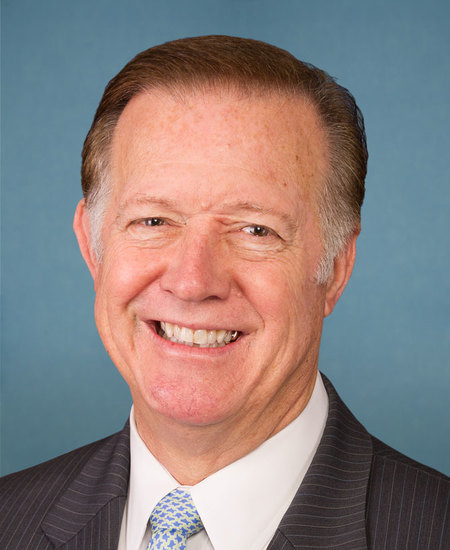
Rep. Randy K. Weber, Sr.
Sponsored bills
Maddy summaryHR 5184, the School Security Enhancement Act, amends existing education law to allow schools and school districts to use current funds for specific security upgrades. It directs local educational agencies to spend funds already allocated under the Elementary and Secondary Education Act on evidence-based security measures like controlled access points (e.g., metal detectors), bullet-resistant doors, crisis notification systems for law enforcement, and infrastructure to help first responders during emergencies. The bill directly affects schools seeking to strengthen campus safety using existing resources, without requiring new federal funding. Key provisions include installing technology for remote building control during crises and systems to quickly notify parents during safety incidents. All proposed security measures must align with evidence-based effectiveness where available, as determined by the state.
Maddy summaryThis bill amends the Infrastructure Investment and Jobs Act to require the federal Broadband Equity, Access, and Deployment Program to comply with the Freedom of Information Act (FOIA). It allows the public to request government records about how broadband funding is allocated and spent, increasing transparency. This directly affects agencies like the Federal Communications Commission (FCC) managing the program and enables citizens to access information on federal broadband spending decisions. The change removes prior exemptions from FOIA requirements for this specific program.
Maddy summaryHR 5130, the "Finish It Act," requires the Department of Defense to use stored border wall construction materials (valued at approximately $300 million) for building permanent barriers along the U.S.-Mexico border within 30 days of the bill's enactment. It mandates that states receiving materials certify they will use them exclusively for border barriers, with penalties for unused materials (requiring repayment of the original cost) and imposes a 1% budget cut for every two days of delay in implementation. The bill also demands a detailed report from the Department of Defense within 90 days, including internal communications about storage costs and contracts with private landowners. This legislation directly affects the Department of Defense and border states, focusing on redirecting existing resources rather than creating new funding or construction.
Maddy summaryThis is a ceremonial resolution (HRES 622), not a substantive bill. It expresses the U.S. House of Representatives' gratitude and congratulations to the U.S. Coast Guard for its maritime border security efforts in fiscal year 2022. The resolution cites specific achievements like interdicting over 330,000 pounds of narcotics, 12,500 illegal immigrants, and 6,300 vessel boardings. It has no policy impact or legal effect - it solely serves to honor the Coast Guard's service.
Maddy summaryHR 5084 designates the U.S. Postal Service facility at 1106 Main Street in Bastrop, Texas, as the "Sergeant Major Billy D. Waugh Post Office." This bill updates all official federal references - including laws, maps, and documents - to use the new name for the location. It directly affects the Bastrop post office and federal records referencing it, without altering postal services or policies. The change is purely ceremonial and procedural, honoring Sergeant Major Billy D. Waugh through the facility's name.
Maddy summaryHR 5073, titled the "Promoting Domestic Energy Production Act," is a tax code amendment affecting oil and gas companies. It changes how businesses calculate adjusted financial statement income by removing specific deductions related to intangible drilling and development costs from their financial reports. The bill requires companies to disregard depreciation and depletion expenses taken into account on their financial statements for these costs when computing taxable income. This applies to tax years beginning after December 31, 2022, directly impacting oil and gas producers who use these accounting methods. The bill does not create new energy policies but alters tax accounting rules for the industry.
Maddy summaryHCONRES 57 is a non-binding concurrent resolution expressing Congress's support for Israel. It states three key points: (1) that Israel is not a racist or apartheid state, (2) that Congress rejects antisemitism and xenophobia, and (3) that the U.S. will remain a steadfast supporter of Israel. This resolution does not create new laws or alter policies - it simply records the expressed sentiment of Congress. It directly affects the U.S. government's public stance on Israel, with no legal effect on citizens or other entities.
This resolution condemns Iran for the 1988 massacre of political prisoners. It also urges the Biden Administration and U.S. allies to publicly condemn the massacre and to pressure Iran to provide information to the families of the victims.
Preserving Safety Net Integrity Act of 2023 This bill enacts with the force and effect of law the final rule of the Department of Homeland Security titled Inadmissibility on Public Charge Grounds and published on August 14, 2019. The bill also nullifies the final rule issued by DHS titled Public Charge Ground of Inadmissibility and published on September 9, 2022. The 2019 final rule made it more likely that a non-U.S. national ( alien under federal law) would be denied admission or lawful permanent resident status because that individual is likely to become a public charge (i.e., receive certain public benefits). The 2022 final rule nullified the 2019 final rule.