

Maddy summaryHR 5636, the "Protect Children’s Innocence Act," prohibits federal criminal penalties for performing gender-affirming medical care on minors under specific circumstances. It defines prohibited care as surgeries (like hysterectomy or mastectomy), puberty blockers, and hormone therapies at supraphysiologic doses, with exceptions for medical emergencies, intersex conditions, or life-threatening illnesses. The law only applies when the care involves interstate commerce (e.g., payments, communications, or travel across state lines). Minors receiving such care cannot be prosecuted, but they may sue providers for civil damages. The bill directly affects minors under 18, healthcare providers, and families seeking gender-affirming medical treatment.
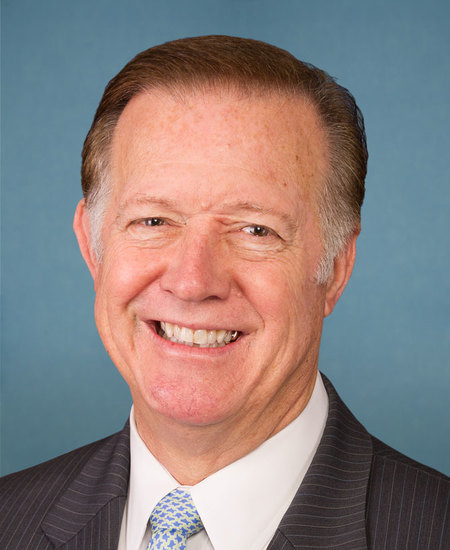
Rep. Randy K. Weber, Sr.
Sponsored bills
Maddy summaryThis bill prohibits federal funding for colleges and universities that require students or staff to get a COVID-19 vaccine to enroll, work, or access services. It directly affects institutions of higher education receiving federal funds, such as those participating in student aid programs. The key provision blocks all federal financial support if an institution enforces such vaccine requirements as a condition of enrollment, employment, or benefits. The law does not ban vaccine mandates outright but ties federal funding to compliance with this prohibition.
Maddy summaryHRES 711 is a non-binding resolution expressing the House of Representatives' support for designating a month as "American Patriotism Month." It does not create new laws or affect any individuals, groups, or policies. The resolution serves solely as a symbolic gesture to highlight patriotism, with no concrete policy changes or implementation mechanisms. As a procedural resolution, it has no legal effect and does not alter existing laws or government operations.
Maddy summaryHR 4831, the Fair Pay for Federal Firefighters Act, increases pay for wildland firefighters employed by the Forest Service or Department of the Interior during fiscal years 2024-2025. It establishes special pay rates (ranging from 1.5% to 42% above standard General Schedule rates, depending on grade) that replace regular pay for these workers. The bill also creates a new "incident response premium pay" provision, entitling eligible firefighters to 450% of their hourly rate for each day deployed on qualifying wildfires or fire-related incidents, capped at $9,000 annually per employee. This premium pay is excluded from calculations for benefits like leave accruals, overtime, or retirement. The bill directly affects federal wildland firefighters whose duties focus on forest, range, or wildland fires (not structural fires).
Maddy summaryHR 1435, the Preserving Choice in Vehicle Purchases Act, amends the Clean Air Act to restrict states from implementing vehicle emissions rules that limit the sale or use of new gasoline-powered cars. It directly affects states with stricter emissions standards (like California) by adding a new definition that blocks state rules "directly or indirectly" limiting internal combustion engine vehicles as defined in federal regulations as of January 1, 2023. The bill requires the EPA to revoke existing state emissions waivers granted between January 2022 and the bill’s enactment if they don’t comply with this new definition. This creates a concrete federal standard preventing states from advancing policies that could reduce demand for conventional vehicles.
Maddy summaryHR 5465, the Congressional Access to Bureaucratic Offices Act (CABO Act), requires federal agency heads to allow Members of Congress and their staff access to agency headquarters buildings during regular business hours. It mandates that access be granted upon presentation of valid congressional identification (for Members) or a staff badge while accompanied by the employing Member (for staff), with exceptions for areas requiring secret-level security clearance. The bill also ensures this access applies during declared emergencies (like national emergencies under the National Emergencies Act or public health emergencies), without imposing additional costs by using existing agency funds. This directly affects how federal agencies manage physical access for congressional personnel.
Maddy summaryHR 5455, the Collision Avoidance Systems Act of 2023, allows automakers to install pulsating light systems as rear-end collision avoidance technology on new vehicles. The bill requires the Secretary of Transportation to issue new regulations within 180 days updating Federal Safety Standard 108 to include performance-based rules for these systems. Specifically, it defines a "pulsating light system" as a high-mounted brake light that flashes rapidly (up to 4 times for no more than 1.2 seconds) before switching to steady light, with a 5-second lockout period after braking stops. This directly affects vehicle manufacturers who must comply with the updated safety standards for brake lights.
Maddy summaryHRES 685 is a symbolic House resolution honoring country music legend Hank Williams on the 100th anniversary of his birth. It recognizes his life, legacy, and influence on country music through three specific acknowledgments: his generation-defining impact on the genre, his contributions to American music and culture, and his role in transforming country music into a major cultural force. The resolution does not create new laws, impose obligations, or affect any individuals or groups - it is purely a commemorative gesture with no concrete policy changes. It was introduced by multiple representatives and passed by the House as a formal tribute.
Maddy summaryHR 5448, the Countering CCP Fentanyl Trafficking Act, requires the President to identify and sanction Chinese government officials who knowingly assist Mexican drug cartels with fentanyl production or trafficking. The bill mandates the President to submit a public list of these officials within 60 days of enactment, updating it annually for 10 years. Sanctions include blocking U.S. assets of listed individuals and denying them visas or entry into the United States. The law includes limited exemptions for UN-related activities and national security operations, and expires after 10 years.
Maddy summaryHR 3152, the "Fight CRIME Act," aims to maintain international restrictions on Iran's missile-related activities by requiring diplomatic efforts to extend these restrictions before they expire in October 2023. The bill mandates annual reports detailing U.S. diplomatic strategies, potential impacts of expiration, and measures to deter missile technology transfers to Iran. It establishes sanctions against foreign individuals or entities that knowingly support Iran's missile or drone programs, including asset freezes and visa restrictions. These sanctions apply regardless of whether UN restrictions remain in effect after their expiration, directly affecting foreign entities involved in these activities.