

Maddy summaryHR 4316, the Citizen Ballot Protection Act, amends the National Voter Registration Act to allow states to require mail voter registration applicants to provide proof of U.S. citizenship after federal elections. This change applies specifically to the state mail voter registration form, adding a citizenship verification step that states may implement following federal election cycles. The bill does not alter current in-person registration requirements or the timing of citizenship proof for initial registration. It directly affects voters who submit registration applications by mail for federal offices. The law would take effect upon its enactment.
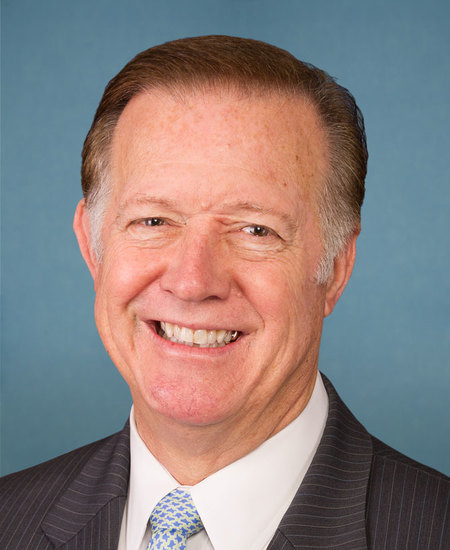
Rep. Randy K. Weber, Sr.
Sponsored bills
Maddy summaryHR 7273 cancels unspent funds from two federal programs supporting electric vehicle charging infrastructure. It rescinds unused balances from the National Electric Vehicle Infrastructure Formula Program (under the Infrastructure Investment and Jobs Act) and another highway grant program, redirecting them to the U.S. Treasury for deficit reduction. This bill does not affect current grants or future funding for EV projects; it only redirects unobligated money already allocated but not yet spent. The policy change is purely financial, with no new requirements or impacts on states, businesses, or consumers.
Maddy summaryHCONRES 90 is a non-binding congressional resolution condemning the Biden administration's January 26, 2024, decision to indefinitely pause LNG export permit approvals under the Natural Gas Act. It claims this pause harms U.S. economic interests (including jobs and exports to European allies, which accounted for over 50% of U.S. LNG shipments), weakens security partnerships in Europe, and undermines climate goals by reducing a lower-emission energy alternative to Russian gas. The resolution urges the administration to reverse the pause but has no legal effect, as it does not change any laws or permit processes. It is a symbolic statement of disapproval, not a policy change.
Maddy summaryHJRES 114 is a joint resolution seeking congressional disapproval of a Federal Highway Administration (FHWA) rule that would have required tracking greenhouse gas emissions as part of assessing performance for the National Highway System. The rule, published in the Federal Register in December 2023, aimed to establish specific metrics for evaluating highway system performance, including emissions data. If approved, this resolution would nullify the rule, preventing the FHWA from implementing the emissions tracking requirement. This action directly affects how the FHWA measures highway system performance, specifically regarding environmental metrics.
Maddy summaryThis bill requires the U.S. Secretary of State to submit annual reports detailing China and Russia's relationships with the Taliban. The reports must describe military/intelligence ties, Chinese extractive industry contracts (including critical minerals and energy deals), and Russian military cooperation or recruitment efforts involving the Taliban. These reports are submitted to specific congressional committees focused on foreign affairs and intelligence. The bill creates a new annual reporting requirement without imposing direct financial or operational changes on affected parties.
This resolution expresses the sense of the House of Representatives that former President Trump did not engage in insurrection or rebellion against, nor give aid or comfort to the enemies of, the United States.
Maddy summaryThis bill prohibits U.S. real estate purchases by nationals or entities tied to specific foreign governments designated as "adversaries," including China, Russia, North Korea, Iran, Cuba, Venezuela (under Maduro), and certain foreign terrorist organizations. It directly affects foreign governments and their agents (like trustees or fiduciaries) seeking to buy public or private U.S. property. The President is directed to take necessary actions to enforce this ban, overriding other existing laws. The prohibition covers all U.S. states, territories, and possessions, including Puerto Rico and Guam.
Maddy summaryThis bill establishes a fast-track process for Congress to review presidential requests to cancel or rescind funding from appropriations bills. The President must submit detailed proposals within 10 days of an appropriations bill passing, specifying which funds to rescind, the reasons, and remaining funding amounts. Congress then has just 3 days to introduce an "approval bill" that can only approve the rescission without any other changes, with a 30-day deadline for action. If Congress fails to act within 30 days, the proposed rescission is automatically rejected, and the original funding remains in place. This process aims to provide a streamlined, time-limited mechanism for Congress to consider presidential spending reduction requests.
Maddy summaryThis resolution disapproves a Department of Energy rule that would have set new energy efficiency standards for consumer furnaces. The rule, published in the Federal Register (88 Fed. Reg. 87502), aimed to require furnace manufacturers to produce models meeting higher energy conservation levels. If enacted, this resolution would cancel the rule, preventing it from taking effect. As a result, current energy efficiency standards for furnaces would remain unchanged, and manufacturers would not face the new requirements.
Maddy summaryHJRES 107 is a congressional resolution seeking to block a Federal Communications Commission (FCC) rule published on January 22, 2024 (89 Fed. Reg. 4128). The resolution aims to disapprove the FCC's rule implementing digital discrimination protections under the Infrastructure Investment and Jobs Act, which would have required internet providers to prevent discriminatory practices. If passed, this resolution would nullify the FCC rule, preventing it from taking effect under the Congressional Review Act (Chapter 8 of Title 5, U.S. Code). The bill directly affects the FCC's regulatory authority over digital discrimination enforcement in broadband services.