

Maddy summaryThis bill amends the Law Enforcement Officers Safety Act (LEOSA) to expand where current and retired law enforcement officers can carry concealed firearms. It specifically allows qualified officers to carry in Federal facilities like post offices and courthouses (previously restricted), clarifies they may carry on public property and transportation, and updates firearms training requirements to accept certification from any state-certified instructor. The key change requires officers to meet recent firearms training standards (using flexible state-based criteria), rather than relying solely on their former agency's standards. This directly affects retired officers seeking to carry in more public spaces and federal buildings without needing prior agency certification.
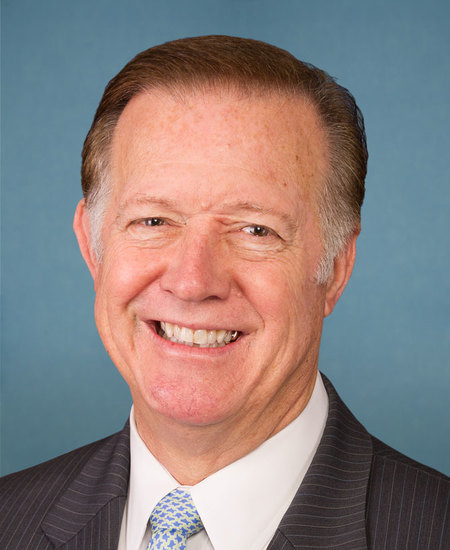
Rep. Randy K. Weber, Sr.
Sponsored bills
Maddy summaryHJRES 138 is a joint resolution seeking congressional disapproval of a Centers for Medicare & Medicaid Services (CMS) rule that would have clarified eligibility for health insurance subsidies under the Affordable Care Act for Deferred Action for Childhood Arrivals (DACA) recipients and certain noncitizens. The rule, submitted on May 8, 2024, aimed to allow these individuals to access premium tax credits, cost-sharing reductions, and health plans through ACA marketplaces. This resolution, if enacted, would block the rule from taking effect under the Congressional Review Act, directly preventing DACA recipients and the specified noncitizens from qualifying for these benefits. The bill does not create new policy but halts an existing regulatory clarification.
Maddy summaryHRES 1239 is a symbolic House resolution condemning the rise of antisemitism on U.S. college campuses and criticizing university administrators who enable such incidents. It specifically urges the Department of Education to enforce compliance with civil rights laws protecting students from discrimination based on national origin or religion, and calls for potential federal funding cuts against schools failing to address antisemitic harassment. The resolution directly affects campus administrators, student groups, and institutions receiving federal funds, but does not create new laws or penalties. It focuses on urging enforcement of existing civil rights protections under Title VI of the Civil Rights Act.
Maddy summaryThis bill directs the U.S. Secretary of State to develop a strategy advocating for Taiwan’s full membership or observer status in Interpol, the international police organization. It requires the U.S. to actively seek support from Interpol member states and report to Congress on efforts to secure Taiwan’s participation. The bill aims to address Taiwan’s current lack of access to Interpol’s global crime-fighting communications system (I-24/7), which limits real-time sharing of criminal intelligence. This directly affects Taiwan’s ability to collaborate with international police on security threats and share information on criminal activities. The policy change focuses on U.S. diplomatic advocacy, not altering Taiwan’s legal status.
Maddy summaryHR 8459, the Stopping Traffickers and Their Accomplices Act of 2024, requires abortion providers to notify the National Human Trafficking Hotline within 24 hours if they reasonably suspect a patient is a trafficking victim. It mandates annual staff training on identifying trafficking victims and submitting certification of training completion. Violations carry penalties: $10,000 per failure to report or $1,000 per day for training noncompliance. The bill directly affects abortion providers and facilities, imposing new reporting obligations without creating a right to abortion or requiring victims to self-report. State attorneys general may also sue providers for violations.
Maddy summaryHouse Joint Resolution 147 seeks to disapprove an Occupational Safety and Health Administration (OSHA) rule that would have established a process for workers to designate a representative to accompany OSHA inspectors during workplace safety inspections. The rule, published in the Federal Register on April 1, 2024, aimed to formalize this "walkaround" representative process during inspections. Under a federal disapproval procedure (Chapter 8 of Title 5, U.S. Code), this resolution would invalidate the rule if passed. As a result, the designated representative process would not take effect, meaning OSHA inspections would proceed without this specific worker representation mechanism.
Maddy summaryHRES 1235 is a non-binding resolution expressing the House of Representatives' view that certain federal welfare programs - including Temporary Assistance for Needy Families (TANF), Medicaid, SNAP, and housing assistance - discourage marriage by reducing benefits for married couples compared to single parents. It cites examples like combined income calculations that may lower aid for married households, potentially costing a single parent of two children up to $14,544 annually in reduced benefits. The resolution urges the government to review and reform such programs to eliminate financial penalties on marriage but does not change existing laws or policies. As a procedural resolution, it serves only to state the House's position, not to enact new requirements.
Maddy summaryHR 8434 designates the United States Postal Service facility at 107 North Hoyne Avenue in Fritch, Texas, as the "Chief Zeb Smith Post Office." This bill changes the official name of the physical post office location for all federal references, including laws, maps, and documents. It directly affects the postal facility in Fritch by establishing its new official designation. The bill has no policy or funding impact - it is purely a ceremonial naming resolution.
Maddy summaryThis bill strengthens oversight of administrative spending actions by requiring the Director to submit detailed waiver explanations and budgetary impact estimates to congressional Budget Committees for any executive branch action exempting spending from budget neutrality rules. It modifies the threshold for such exemptions to apply only to actions increasing direct spending by $1 billion over 10 years or $100 million in any single year. The bill also clarifies that the purpose of the administrative PAYGO rules is to maintain budget neutrality for discretionary spending decisions. These changes apply directly to federal agencies making administrative spending decisions that exceed the new thresholds. The bill repeals a sunset provision and adds new reporting requirements for budget submissions.
Maddy summaryHR 7581 requires the Attorney General to submit three new reports within 270 days of enactment, focusing on data gaps affecting law enforcement safety. The bill mandates a detailed analysis of violent attacks against officers (including ambushes), non-criminal aggressive incidents not currently reported, and mental health impacts from such events. These reports will assess current data collection systems, training effectiveness, resource availability, and disparities in reporting across federal, state, and local law enforcement. The goal is to inform better prevention strategies and resource allocation for officer safety and wellness, without creating new funding or programs.