

Maddy summaryThe TAKE IT DOWN Act (HR 8989) creates new federal criminal penalties for publishing nonconsensual intimate images or deepfakes without consent, directly affecting platforms hosting user-generated content and individuals who share such material. It defines "deepfake" as AI-generated intimate content falsely depicting someone, and prohibits publishing these without consent - especially when the victim expected privacy - imposing fines or up to 3 years in prison for offenses involving minors. The bill also requires "covered platforms" (like social media sites) to establish a 48-hour removal process for reported nonconsensual content and shields platforms from liability when removing content in good faith. The Federal Trade Commission enforces these provisions as unfair or deceptive practices.
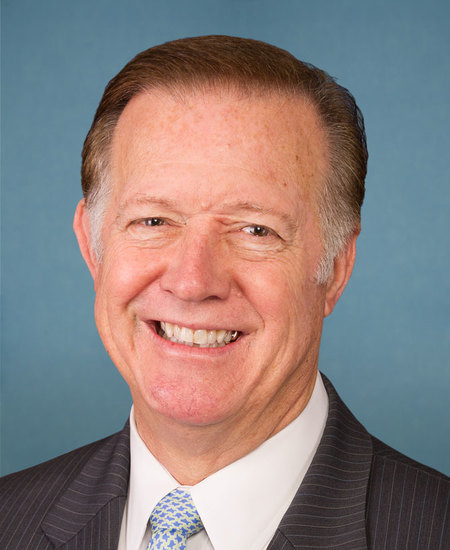
Rep. Randy K. Weber, Sr.
Sponsored bills
Maddy summaryThis bill restricts federal agencies from engaging in voter registration or mobilization activities. It revokes Executive Order 14019 (which promoted voting access) and prohibits agencies from using federal funds to contract with nonprofits for voter registration, absentee ballot applications, or voter mobilization on agency property or websites. It also amends the Higher Education Act to ban voter registration activities in Federal Work-Study programs and requires agencies to report on past voter registration efforts within 30 days of enactment. The bill directly affects federal agencies, nonprofit organizations receiving federal funds, and college campuses operating work-study programs.
Maddy summaryThis bill prohibits federal funding for elementary and secondary schools that partner with Chinese government-funded programs, including Confucius Institutes, Confucius Classrooms, or other entities receiving support from China's government (e.g., through teaching materials, personnel, or funds). It directly affects schools with these specific ties to the People's Republic of China. The prohibition takes effect one year after enactment, with the Education Secretary required to notify schools and provide compliance guidance within 90 days of enactment. The policy change blocks federal education funds for schools meeting the defined criteria, without altering existing educational content or curriculum standards.
Maddy summaryThis bill ends judicial deference to federal agency interpretations of laws (known as "Chevron deference"). It requires agencies to review past interpretations they relied on under Chevron, publish revised positions, and only issue rules when explicitly authorized by Congress. The bill also mandates that courts interpret statutes themselves rather than favoring agency views, requires criminal penalties to include proof of intent ("mens rea"), and ensures agency decisions are based only on publicly accessible materials. These changes directly affect federal agencies, courts, and individuals or businesses subject to agency regulations or penalties.
Maddy summaryHJRES 170 is a resolution seeking congressional disapproval of a federal rule that would have required new housing projects financed by the Department of Housing and Urban Development (HUD) or the Department of Agriculture (USDA) to meet specific energy efficiency standards. The rule, published in April 2024, aimed to set these standards for new construction in federally subsidized housing. If passed, this resolution would block the rule under the Congressional Review Act, making it legally void. It directly affects developers and builders of HUD- and USDA-financed housing by removing the requirement to comply with these energy standards.
Maddy summaryThe Conscience Protection Act of 2024 would strengthen protections for health care providers, facilities, and organizations that refuse to participate in or provide coverage for abortions, assisted suicide, or other procedures conflicting with their religious or moral beliefs. It creates a private right of action allowing individuals or entities to sue when their conscience rights are violated, and requires the Department of Health and Human Services to enforce existing conscience protections through the Office for Civil Rights. The bill prohibits discrimination against health care entities that decline to provide or facilitate these services, while ensuring these protections don't interfere with emergency care requirements under existing law. It also establishes clearer enforcement mechanisms, including the ability to terminate federal funding for non-compliance with conscience protections.
Maddy summaryHR 8823, the Clear the ROADS Act of 2024, requires states to take steps to prevent reckless highway obstructions that endanger public safety. It directly affects states receiving federal highway funds by threatening a 10% reduction in those funds if they fail to certify they've made "reasonable efforts" to prohibit non-government individuals from recklessly blocking traffic on federal-aid highways. The bill mandates that the Transportation Secretary issue implementing regulations within 180 days and begins withholding funds starting October 1, 2025, or after a state's next legislative session. This policy change links federal funding to state enforcement against specific types of roadway blockages, without specifying penalties or enforcement methods for individuals.
Maddy summaryHR 8803, the Illegal Labor Accountability Act of 2024, increases civil penalties for employers who violate U.S. immigration laws related to hiring, recruiting, or referring unauthorized workers. The bill triples existing fines: for example, penalties for first-time violations jump from $250 to $750 per worker, and repeat violations increase from $5,000 to $15,000 per violation. These changes directly affect employers who hire or refer undocumented workers, raising the financial consequences for such violations. The bill amends Section 274A(e)(4)(A) of the Immigration and Nationality Act to implement these higher penalties.
Maddy summaryThis resolution recognizes June 19, 2024, as Juneteenth Independence Day, acknowledging its historical significance as the anniversary of the end of slavery in the U.S. (specifically referencing Union soldiers' announcement in Galveston, Texas, on June 19, 1865). It does not create new policy but formally encourages all Americans to observe the day through ceremonies and educational activities. The resolution emphasizes Juneteenth's role in honoring African American freedom and its importance to U.S. history and cultural heritage. It follows the 2022 law that established Juneteenth as a federal holiday, focusing solely on symbolic recognition and annual observance.
Maddy summaryHRES 1305 is a procedural resolution that formally rescinds subpoenas issued by the January 6th Select Committee to four individuals (Stephen Bannon, Mark Meadows, Daniel Scavino Jr., and Peter Navarro) and withdraws the committee’s recommendations finding them in contempt of Congress. The bill specifically cancels subpoenas from September 2021, October 2021, and February 2022, along with related contempt resolutions adopted in 2021-2022. It does not alter legal proceedings but withdraws the committee’s authority to enforce these actions. The resolution is supported by House members who argue the committee was partisan and illegitimate, though the bill itself only addresses the committee’s procedural actions.