

Maddy summaryThis bill requires the HUD Inspector General to provide annual testimony before the House Financial Services Committee and Senate Banking Committee by October 1 each year. The testimony must cover specific areas: efforts to detect fraud/waste, audit and investigation capabilities, program improvement opportunities, and ongoing oversight activities. It directly affects HUD's Inspector General and the designated congressional committees by establishing a formal reporting requirement. The bill does not change HUD programs but mandates regular transparency about oversight work.
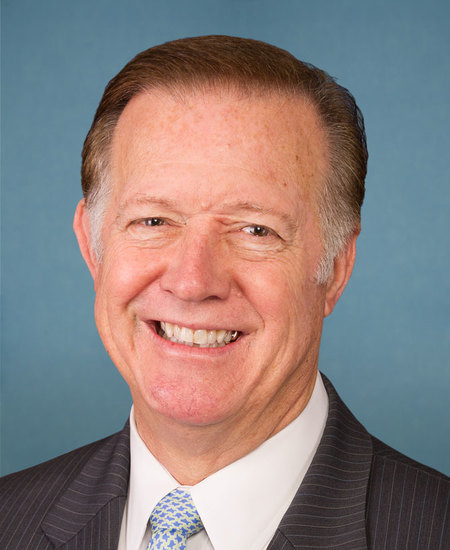
Rep. Randy K. Weber, Sr.
Sponsored bills
Maddy summaryHRES 1374 is a non-binding House resolution honoring correctional officers nationwide for their service and sacrifice. It specifically recognizes 29 fallen officers who died in the line of duty and acknowledges the daily risks, bravery, and professionalism of all correctional officers in maintaining facility safety. The resolution calls for supporting officers' well-being through adequate resources and training, while encouraging public appreciation for their role in upholding justice. As a commemorative measure, it does not create new laws or funding requirements.
Maddy summaryThis is a commemorative resolution (HRES 1369) honoring Corey Comperatore, a volunteer firefighter, U.S. Army Reserves veteran, and community leader from Sarver, Pennsylvania, who died on July 13, 2024. The resolution formally mourns his passing and celebrates his life, noting he left behind his wife, Helen, and two daughters, Allyson and Kaylee. It recognizes his service to the Buffalo Township Volunteer Fire Department, his military service, and his role as a devoted member of Cabot Methodist Church. As a ceremonial resolution, it has no policy impact or direct effect on legislation or constituents beyond this formal acknowledgment.
Maddy summaryThe Secret Service Readiness Act of 2024 requires the Secret Service to establish uniform fitness standards for Special Agents and Uniformed Division Officers that apply equally to all applicants, regardless of gender. These standards must be at least as rigorous as the current fitness requirements for male applicants and existing personnel. The Director of the Secret Service must implement these standards within 90 days of the bill’s enactment and submit a report on the process to Congress within 180 days. This bill directly affects Secret Service personnel by standardizing fitness requirements to ensure consistency and maintain current performance expectations.
Maddy summaryHR 9045, the Community Association Reporting Exemption Act, exempts certain community associations from a federal reporting requirement. It amends Title 31 of the U.S. Code to add a new exemption category for "entity subject to taxation under section 528 of the Internal Revenue Code," which covers qualifying homeowners' associations (HOAs) already taxed under that IRS provision. This change removes a specific reporting obligation these associations previously had to fulfill. The bill directly affects HOAs that meet the IRS Section 528 tax criteria, simplifying their federal compliance.
Maddy summaryHR 9034, the Secret Service Accountability Act, would prevent federal funds from being used for the salary or expenses of Secret Service Director Kimberly Cheatle. This bill directly affects the current director by blocking all federal funding for her compensation and related costs. The key provision prohibits any federal money from covering her salary or expenses, regardless of other laws. This is a funding restriction targeting the director's position, not a change to the Secret Service's operations or public policies.
Maddy summaryHJRES 164 is a congressional resolution seeking to block a rule issued by the Department of Commerce regarding firearms license requirements. It directly targets the rule published in the Federal Register (89 Fed. Reg. 34680), which would have revised licensing procedures for firearms dealers. If passed, the resolution would prevent this rule from taking effect by invoking the congressional disapproval process under federal law. The bill does not create new regulations but aims to halt an existing rule affecting gun license applicants and dealers.
Maddy summaryHR 9017 lowers federal oil and gas royalty rates from 16.67% to 12.5% and reduces minimum lease bids from $10 to $2 per acre. It also cuts annual rental rates for leases (from $3-$15 to $1.50-$2 per acre) and eliminates a fee for expressing interest in leases. The bill creates new "noncompetitive leasing" options for existing leases producing low volumes (e.g., ≤15 barrels oil/day or ≤60,000 cubic feet gas/day), allowing leaseholders to continue operations without bidding. These changes directly affect oil and gas leaseholders on federal lands, particularly smaller producers with existing low-production leases.
Maddy summaryThis bill prevents U.S. funding for United Nations agencies if Palestine gains any status beyond its current observer status. It amends two existing laws (from 1990 and 1994) to replace the phrase "full membership" with "any status, rights, or privileges beyond observer status" in funding restrictions. The law directly affects U.S. financial contributions to UN bodies, ensuring funds are withheld if Palestine achieves full membership or equivalent standing. It explicitly excludes Taiwan from these provisions but does not alter Palestine’s existing observer status at the UN.
Maddy summaryHR 4848, the Censorship Accountability Act, allows individuals to sue federal employees who, while acting in their official capacity, deny others their First Amendment rights (such as free speech or assembly). It directly affects federal employees (excluding the President/Vice President) who may restrict protected expression under federal law. Key provisions create a private right of action for victims to seek legal redress in court, with courts able to award attorney fees to the winning party. The bill explicitly excludes lawsuits against the federal government for employment-related conduct and clarifies that unconstitutional sections won’t invalidate the rest of the law.