

Maddy summaryThis bill provides $280 million in federal grants to assist South Texas farmers and ranchers who suffered crop losses in 2023-2024 due to Mexico's failure to deliver water as required by the 1944 U.S.-Mexico water treaty. The funds, administered by Texas through its Department of Agriculture, will reimburse eligible producers based on their documented financial losses from the water shortage. The assistance directly affects agricultural producers with operations along the Rio Grande who experienced economic harm during the specified crop years. The program follows the same process as a prior agricultural disaster aid program (Section 102 of Public Law 107-206).
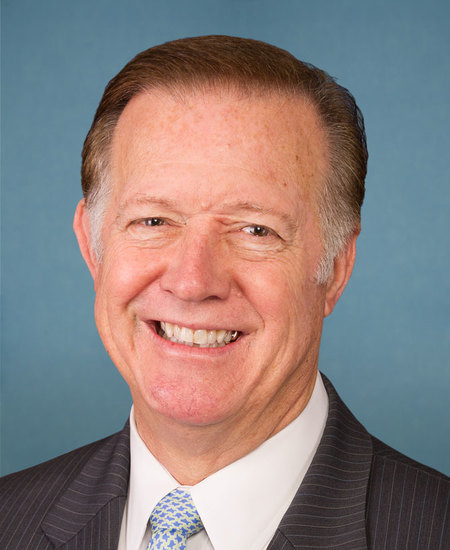
Rep. Randy K. Weber, Sr.
Sponsored bills
Maddy summaryThis bill establishes a commission to study whether the Weitzman National Museum of American Jewish History in Philadelphia should be transferred to the Smithsonian Institution. The commission, composed of 8 members appointed by congressional leaders with expertise in Jewish American history and museum administration, will examine the museum's collections, financial status, governance, and feasibility of transfer within two years. The commission must submit a report detailing findings, a fundraising plan, and legislative recommendations for any potential transfer. The bill does not transfer the museum but creates a process to evaluate the possibility.
Maddy summaryHR 7438 directs the U.S. Treasury to mint commemorative coins for the 2026 FIFA World Cup, including 100,000 $5 gold coins, 500,000 $1 silver coins, and 750,000 half-dollar coins. The coins will be sold to the public at face value plus surcharges ($35, $10, and $5 per coin, respectively), with all surcharge revenue paid to FWC2026 US, Inc. for U.S. soccer programs. These funds must support soccer initiatives, particularly in underserved communities and youth development, as specified in the bill. The coins are legal tender but will only be issued during 2026, with no net cost to the U.S. government.
Maddy summaryHR 2892, the WARN Act, directs the Comptroller General to study how local alert systems deliver weather emergency information during events like storms or power outages. The study will evaluate different alert methods - including social media - and develop best practices for clearer, faster public notifications. It requires a report to Congress within one year, but the bill itself creates no new laws or directly affects any group. This is a procedural study bill focused on improving future emergency communication systems.
Maddy summaryHR 10299, the Medicaid Funds Integrity Act of 2024, amends federal Medicaid law to prohibit using federal funds for gun violence prevention or intervention programs. Specifically, it adds a new provision (paragraph 28) to Section 1903(i) of the Social Security Act, blocking federal financial participation for such programs under Medicaid. This directly affects state Medicaid programs that might have sought federal funding for initiatives addressing gun violence. The bill creates a concrete funding restriction, ensuring Medicaid dollars cannot be spent on these specific types of programs.
Maddy summaryHR 7480, the Disabled Veterans Housing Support Act, changes how housing programs calculate income eligibility for veterans. It requires states and local governments to exclude service-connected disability compensation from the Department of Veterans Affairs (VA) when determining if a veteran qualifies as "low or moderate income" for HUD housing programs (like Section 8 or public housing). This directly helps disabled veterans whose VA disability pay would otherwise disqualify them from housing assistance they need. The bill also mandates a report within one year examining how VA disability pay is treated across HUD programs and recommending improvements to better serve veterans. The change simplifies access to housing support by ensuring VA benefits aren't counted as income for these programs.
Maddy summaryThe Kairo Act of 2024 requires child care providers receiving federal funds (like Child Care Development Block Grants or Head Start) to create a "parent’s bill of rights" document. This document must include specific information for parents, such as child abuse hotline contacts, access to facility inspection reports, procedures for reviewing video recordings of incidents, and policies on staff training. Providers must distribute this written document to parents within 45 days of the law’s effective date or before a child’s first day in care. The law applies directly to center-based, family, and religious child care providers receiving federal funding, aiming to increase transparency and parent access to facility records.
Maddy summaryThe Working Dog Commemorative Coin Act (HR 807) directs the U.S. Treasury to mint three types of commemorative coins honoring working dogs' service: $5 gold coins, $1 silver coins, and half-dollar coins with specific weight and composition requirements. Each coin will carry a surcharge ($35 for $5 coins, $10 for $1 coins, $5 for half-dollars) that will be paid directly to America's VetDogs to support their programs providing service dogs for veterans, the disabled, and others. The coins will be issued in 2027 with designs reflecting working dogs' roles in military, detection, therapy, and assistance work. The legislation specifies that all surcharge revenue must fund America's VetDogs' operations without creating new government programs. This is a commemorative measure focused on honoring working dogs' contributions through coin sales, with all surcharge funds going to a specific nonprofit organization.
Maddy summaryThe No Discrimination in Housing Act would deny the federal low-income housing tax credit (LIHTC) to housing developers and entities that implement diversity, equity, and inclusion (DEI) initiatives. This credit, a key incentive for building affordable housing, would no longer be available to entities with DEI programs, including partnerships and S corporations. For business structures like partnerships, the denial applies to the entire entity - not just individual owners - meaning the credit is lost at the organizational level. The provision would take effect for tax years beginning after the bill is enacted.
Maddy summaryThis bill blocks the Department of Housing and Urban Development (HUD) from implementing or enforcing the "Affirmatively Furthering Fair Housing" rule (2023) and prevents HUD from reissuing a similar rule without new congressional approval. It requires HUD to reinstate the "Preserving Community and Neighborhood Choice" rule (2020) as fully effective. The bill directly affects HUD's regulatory authority over housing programs but does not create new housing benefits or requirements for residents. It focuses solely on altering HUD's rulemaking process regarding fair housing enforcement.