

Defending Students' Civil Rights Act of 2021 This bill prohibits the use of critical race theory or critical race pedagogy in any federally funded program or activity. Specifically, the bill includes the use of critical race theory or critical race pedagogy as a violation of Title VI of the Civil Rights Act of 1964, which prohibits discrimination based on race, color, or national origin in federally funded programs or activities. The bill defines critical race pedagogy as the separation of students or teachers, or the assignment of characteristics or assumptions, based on race, color, or national origin. The bill defines critical race theory as a curriculum that establishes specified principles relating to race or sex, including that (1) one race or sex is inherently superior to another, (2) the United States is fundamentally racist or sexist, and (3) an individual bears responsibility for the past actions of others of the same race or sex.
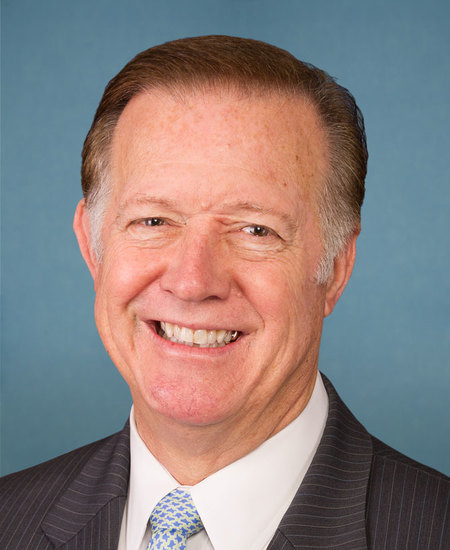
Rep. Randy K. Weber, Sr.
Sponsored bills
Make the Migrant Protection Protocols Mandatory Act of 2021 This bill requires the Department of Justice (DOJ) to remove certain aliens from the United States while such an alien's application for admission is pending. Specifically, if an alien arrived by land from a foreign country bordering the United States and the alien is not clearly and beyond a doubt entitled to admission into the United States, DOJ must return that alien to that bordering foreign country while the alien's application for admission is pending. (Currently, DOJ may choose to detain such an alien or return the alien to the bordering foreign country while the application for admission is pending.)
Teleabortion Prevention Act of 2021 This bill restricts the use of telehealth for chemical abortions (also known as medication abortions). Specifically, it requires a provider who dispenses or prescribes medication for a chemical abortion to physically examine the patient, be physically present at the location of the chemical abortion, and schedule a follow-up visit. The bill provides an exception for a chemical abortion that is necessary to save the life of a mother whose life is endangered by a physical disorder, illness, injury, or condition. The bill establishes criminal penalties—a fine, a prison term of up to two years, or both—for a provider who does not comply with the requirements. A patient who undergoes a chemical abortion may not be prosecuted.
This bill sets out informed consent requirements for, and restricts the authority of the federal government to require, vaccinations. Specifically, the bill requires written, informed consent from any individual who receives a vaccine in the United States and imposes a criminal fine for violations of this requirement. In addition, the bill prohibits the federal government from requiring vaccinations of U.S. citizens or federal employees unless the citizen or employee is advised in writing of all known risks of, consults with a physician about, and provides voluntary informed consent for the required vaccine.
Open Schools Responsibly Act This bill limits civil liability for elementary and secondary schools and institutions of higher education relating to any harm arising from exposure to, or infection by, COVID-19 suffered by a student, employee, or visitor. Specifically, a school or institution shall not be liable for such harm if the school or institution was in compliance with applicable state requirements. However, a school or institution may be liable for acts or omissions that constitute willful or criminal misconduct, gross negligence, reckless misconduct, or a conscious flagrant indifference to the rights or safety of the individual harmed.
Empowering Law Enforcement Act of 2021 This bill addresses issues relating to immigration enforcement. The bill declares that state and local law enforcement have inherent authority to investigate and arrest individuals to assist federal immigration enforcement. (Currently, state and local law enforcement may take certain immigration enforcement actions upon entering into an agreement with U.S. Immigration and Customs Enforcement.) The Department of Homeland Security (DHS) must reimburse state and local law enforcement for the costs of holding or transporting a detained alien. DHS may detain an alien beyond the removal period (generally the window in which DHS must remove an alien after a final order of removal) upon making certain certifications, such as a certification that the alien's release would threaten community safety. DHS may renew this certification every six months after giving the alien an opportunity to request reconsideration of the certification. An alien challenging such detention may only do so by filing an application for a writ of habeas corpus. Certain aliens subject to mandatory detention may be held without time limitation while removal proceedings are pending. DHS must detain an alien who is present in the United States without lawful status if the alien has been convicted for driving while intoxicated. DHS must establish a process to determine whether an alien not subject to mandatory detention and who has tried to comply with a removal order should be detained or released with conditions. The Department of Justice must include information about immigration law violations in the National Crime Information Center database.
Criminal Alien Removal Clarification Act of 2021 This bill subjects to deportation an alien who at any time after admission has been convicted of a felony or two misdemeanors under state or federal law. Currently, an alien is subject to deportation for a single conviction for certain felonies (such as an aggravated felony), two or more convictions for crimes involving moral turpitude, or being a drug addict.
No Fly for Illegals Act This bill limits using federal funds to compensate an airline for transporting an alien who is not lawfully present in the United States. Specifically, federal funds may not be used to compensate an airline for such an individual's entry into the United States or for relocation within the United States unless the transportation is to remove the individual from the United States or to protect the individual from an imminent threat to life or physical safety.
No Frivolous Application for Short-Barreled Shotguns Act or the NFA SBS Act This bill removes certain short-barreled shotguns from the definition of firearms for purposes of the National Firearms Act. It also eliminates the prohibition on the sale or transportation of such shotguns in interstate commerce and treats persons who acquire or possess a short-barreled shotgun as meeting the registration or licensing requirements for such shotguns where such requirements are determined by reference to the National Firearms Act. The bill preempts state or local laws that impose a tax or recordkeeping requirements on short-barreled shotguns. The Department of Justice must destroy records relating to the registration of shotguns described by this bill within one year after the enactment of this bill.
Migrant Accountability Act of 2021 This bill modifies the treatment of unaccompanied alien children, including by transferring functions for the care and custody of such children from the Office of Refugee Settlement within the Department of Health and Human Services (HHS) to the Department of Homeland Security (DHS). Currently, the office provides care for apprehended unaccompanied children, while DHS is typically responsible for detained alien adults. Under this bill, if an immigration officer determines that a qualifying unaccompanied child is inadmissible, the officer may return that child to the child's country of nationality or country of last habitual residence. Currently, only an unaccompanied child who is a national or habitual resident of a country bordering the United States may be returned. The Department of State must negotiate with other countries concerning the repatriation of children. Currently, the State Department is only required to negotiate such agreements with countries bordering the United States. For an unaccompanied child who reaches 18 years of age while in custody, the bill repeals a requirement for DHS to consider the least restrictive setting available for that individual's custody or supervision. Currently, DHS must make such a consideration when such an individual reaches 18 years of age. Before placing an unaccompanied child with a sponsor claiming to be the child's biological relative, DHS must confirm this relationship using DNA technology. A state may refuse placement of an unaccompanied child in the state, including at a federal facility, unless the placement is with a sponsor who is the child's confirmed biological relative.