

Teleabortion Prevention Act of 2023 This bill restricts the use of telehealth for chemical abortions (also known as medication abortions). Specifically, it requires a provider who dispenses or prescribes medication for a chemical abortion to physically examine the patient, be physically present at the location of the chemical abortion, and schedule a follow-up visit for the patient. The bill provides an exception for a chemical abortion that is necessary to save the life of a mother whose life is endangered by a physical disorder, illness, injury, or condition. The bill establishes criminal penalties—a fine, a prison term of up to two years, or both—for a provider who does not comply with the requirements. A patient who undergoes a chemical abortion may not be prosecuted.
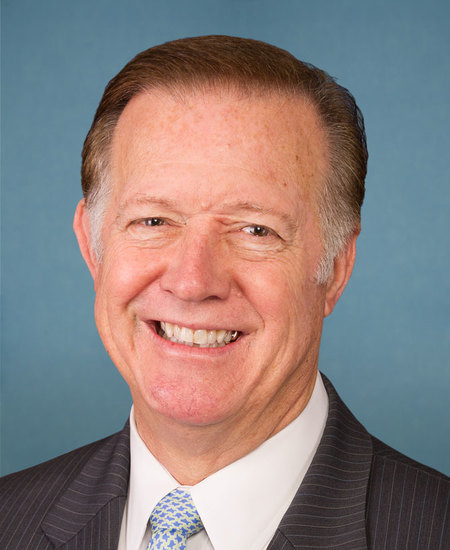
Rep. Randy K. Weber, Sr.
Sponsored bills
History and Tradition Protection Act of 2023 This bill limits the types of relief that may be awarded in civil suits that involve violations of the Constitution's Establishment Clause, which prohibits the government from establishing a religion. Current law provides a statutory civil cause of action against state and local government actors for violations of constitutional rights, also known as Section 1983 lawsuits. The bill limits relief for Section 1983 lawsuits that involve violations of the Establishment Clause to injunctive and declaratory relief (i.e., nonmonetary relief) and prohibits the award of attorneys' fees in these cases, including those that involve monuments, public buildings, official seals, and government proceedings. The bill applies the same restrictions to similar lawsuits against federal agencies.
Standardizing Thresholds Of Penalties for Fentanyl Act or the STOP Fentanyl Act This bill reduces the drug quantity thresholds that trigger a mandatory minimum prison term for a defendant who manufactures, distributes, imports, exports, or possesses with intent to distribute fentanyl. The bill also creates enhanced criminal penalties for certain violations involving fentanyl that was imported along the U.S.-Mexico border. Specifically, the bill reduces from 400 to 5 grams the fentanyl quantity and from 100 to 0.05 grams the fentanyl analogue quantity that trigger a mandatory minimum prison term for high-level first-time or repeat offenders. It also reduces from 40 to 0.5 grams the fentanyl quantity and from 10 to 0.005 grams the fentanyl analogue quantity that trigger a mandatory minimum prison term for low-level first-time or repeat offenders. Additionally, the bill creates enhanced mandatory minimum prison terms for importing or exporting fentanyl that was imported along the U.S.-Mexico border.
No User Fees for Gun Owners Act This bill prohibits a state or local government from imposing any insurance requirement, tax, user fee, or similar charge as a condition of the manufacture importation, acquisition, transfer, or continued ownership of a firearm or ammunition, with the exception of a proportionate sales tax. The bill imposes the same prohibition under the Internal Revenue Code for firearms, pistols, or revolvers, but allows for the assessment of a proportionate sales tax.
Authorization for the Use of Military Force to Combat, Attack, Resist, Target, Eliminate, and Limit Influence Resolution or the AUMF CARTEL Influence Resolution This joint resolution authorizes the President to use the Armed Forces against foreign nations, foreign organizations, or foreign persons affiliated with foreign organizations that the President determines are involved in trafficking fentanyl or fentanyl-related substances into the United States. The joint resolution also authorizes the use of force against those determined to have used force or violence in specified ways, such as engaging in violence or intimidation to control territory to be used for illicit means. The joint resolution deems nine named cartels as having met the criteria for the President to use force against them. Force authorized by this joint resolution may only be used against organizations and persons located outside of the United States. The authority expires five years after the date of this joint resolution's enactment.
Protect Our Military Families' 2nd Amendment Rights Act This bill broadens the scope of allowable firearms transactions involving active duty service members and their spouses. Specifically, the bill allows a licensed gun dealer, importer, or manufacturer to sell or ship a firearm or ammunition to the spouse of a member of the Armed Forces on active duty outside the United States. Current law already allows a licensed dealer, importer, or manufacturer to sell or ship a firearm or ammunition to a member of the Armed Forces on active duty outside the United States. The bill also specifies that, for purposes of federal firearms laws, a member of the Armed Forces on active duty, or his or her spouse, is a resident of the state in which (1) the member or spouse maintains legal residence, (2) the permanent duty station of the member is located, and (3) the member maintains a home from which he or she commutes to the permanent duty station.
Maddy summaryThis bill establishes a new process for the Attorney General to designate foreign organizations as "significant transnational criminal organizations" based on their criminal activity affecting U.S. commerce or threatening U.S. security. Members of these designated organizations, as well as their spouses and children who knew about the membership, are barred from entering the United States. The designation process requires congressional notification, allows for review after 2 years, and permits asset freezes of the organization's U.S. assets. Organizations can seek judicial review of their designation, and Congress can revoke designations through a special procedure.
Maddy summaryHRES 29 is a procedural resolution that would amend House rules to create the "Committee on the Elimination of Nonessential Federal Programs." This committee would study and recommend cutting underperforming or nonessential federal programs, requiring annual reports listing such programs and submitting related legislation. The resolution also establishes expedited procedures for bills reported by this committee, including limiting debate to 10 hours and making motions to proceed highly privileged. It does not directly affect constituents but changes House committee structure and procedures.
Maddy summaryThis bill establishes a "regulatory budget" system requiring federal agencies to estimate and report the costs of regulations on businesses, especially small businesses. It mandates the President to submit annual projections of regulatory costs for proposed rules, and creates a process for Congress to set limits on how much regulatory costs can grow. The Congressional Budget Office would analyze regulatory cost impacts of proposed legislation, while agencies would need to conduct cost-benefit analyses for significant regulations. The bill aims to increase transparency around regulatory costs and provide Congress with tools to monitor and control regulatory burdens on businesses.
Maddy summaryHRES 8 is a formal resolution introduced by the U.S. House of Representatives in January 2023 to impeach Secretary of Homeland Security Alejandro Mayorkas. The resolution alleges three specific violations: (1) failing to maintain border security, citing record migrant encounters and fentanyl seizures under his leadership; (2) providing false testimony to Congress about border security; and (3) spreading false claims about Border Patrol agents whipping migrants during a 2021 incident. It claims these actions violated his constitutional duties and federal law. As an impeachment resolution, it does not enact policy but seeks to refer the case to the Senate for trial.