

Maddy summaryHR 509, the Debt Cancellation Accountability Act of 2023, prohibits the federal government from canceling student loan debt for groups of borrowers (e.g., all teachers or all borrowers in a specific state) without explicit congressional approval. It directly affects borrowers with federal student loans under parts B, D, or E of the Higher Education Act by requiring the Education Secretary to submit detailed requests to Congress before any "class-based" cancellation exceeding $1 million total. The bill mandates that Congress must specifically appropriate funds for such programs, and the Secretary must justify the need, legal authority, and why group cancellation is used instead of individual reviews. Existing targeted programs (like those for specific professions) remain exempt if they assess eligibility on a case-by-case basis.
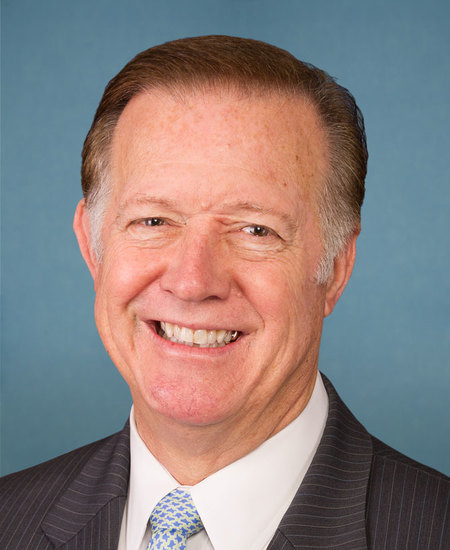
Rep. Randy K. Weber, Sr.
Sponsored bills
Maddy summaryThis bill expands foreign investment review to cover U.S. agriculture by requiring transactions involving foreign control of agricultural businesses to undergo scrutiny by the Committee on Foreign Investment (CFIUS). It classifies agricultural supply chains as both critical infrastructure and critical technologies, directly affecting foreign entities seeking to acquire or influence U.S. farms, food production, and supply chains. The bill mandates annual reports from the Secretary of Agriculture and the Government Accountability Office on foreign investments in agriculture, including risks to food security and intellectual property. These provisions aim to mitigate potential threats to U.S. food supply chains from foreign adversaries through enhanced oversight.
Maddy summaryThis bill prohibits all federal funding from being provided to EcoHealth Alliance, Inc. and its directly controlled subsidiaries, related organizations, or subgranted entities. It directly affects EcoHealth Alliance by cutting its access to federal grants, contracts, or other funding sources. The bill also requires the Government Accountability Office (GAO) to study and report on all federal funds provided to EcoHealth Alliance - whether intentionally or accidentally - to Chinese entities like the Wuhan Institute of Virology or the Chinese Communist Party, during the prior decade. The report must detail these funds and include any related agreements involving foreign entities. The bill focuses on restricting funding flows and requiring transparency, not on policy outcomes or advocacy.
Maddy summaryThis bill requires healthcare providers to give the same medical care to infants born alive during abortions as they would to any newborn, and to immediately admit such infants to a hospital. It mandates reporting of non-compliance to law enforcement and imposes penalties including up to 5 years in prison for violations. Women who undergo abortions can file civil lawsuits seeking money damages for injuries, three times the abortion cost, and punitive damages if care standards are not met. The bill also clarifies that abortion includes intentionally killing an unborn child or terminating pregnancy without specific exceptions (e.g., after viability to preserve life or removing a dead fetus).
Maddy summaryHR 22, the *Protecting America’s Strategic Petroleum Reserve from China Act*, blocks the U.S. government from selling petroleum from the Strategic Petroleum Reserve to entities under Chinese Communist Party control or unless sellers guarantee the oil won’t be exported to China. It directly affects the Department of Energy’s management of the reserve and any foreign entities seeking to purchase reserve petroleum. The key mechanism requires the Secretary of Energy to prohibit sales to China-linked entities or impose strict export restrictions on any sale. This policy change aims to prevent strategic petroleum resources from reaching entities tied to China’s government.
Maddy summaryHRES 52 is a non-binding House resolution proposing that the U.S. flag be lowered to half-staff on January 22 each year to memorialize individuals affected by abortion policies since the 1973 Roe v. Wade decision. It specifically references the anniversary of Roe v. Wade (January 22, 1973) and the 2022 overturning of that ruling. The resolution encourages the public to observe this gesture as a memorial and urges lawmakers to support legislation respecting "the sanctity of life." As a symbolic resolution, it does not create new law or directly affect any specific group.
Maddy summaryHR 486 prohibits the District of Columbia government from using any federal funds to allow non-citizen individuals to vote in local elections. The bill requires DC to certify in writing that it does not permit non-citizen voting when applying for or receiving federal funds. This applies to all federal funds provided to DC on or after the bill's introduction date. The law directly affects DC's ability to fund election administration with federal resources if non-citizen voting is permitted.
Maddy summaryHR 472, the Fighting Post-Traumatic Stress Disorder Act of 2023, requires the Attorney General to develop a report within 150 days of enactment on programs to provide specialized mental health services for public safety officers (including police, firefighters, EMTs, and 911 dispatchers) and telecommunicators. The report must propose evidence-based trauma care, peer support, and family services to address job-related PTSD and acute stress disorder, while ensuring confidentiality for those seeking help. It will also outline efficient implementation plans using in-person and telehealth options across state, tribal, territorial, and local levels, plus draft legislative language and funding estimates. The bill directly targets public safety workers facing significantly higher PTSD rates (30% vs. 20% general population) and elevated suicide risks, including an estimated 125-300 annual police suicides.
Maddy summaryHR 484, the Natural Gas Tax Repeal Act, repeals Section 136 of the Clean Air Act, which established a methane emissions and waste reduction incentive program for natural gas systems. This directly affects natural gas operators who previously participated in the program by ending their eligibility for associated incentives. The bill also rescinds any unobligated funds allocated under that program before its repeal. The change removes a federal requirement for the industry to reduce methane emissions through this specific incentive mechanism.
Ensuring American Voters Act of 2023 This bill prohibits states from registering an individual to vote in federal elections unless the individual provides documentary proof of U.S. citizenship.