

Maddy summaryHRES 396 is a non-binding House resolution recognizing motherhood on Mother's Day. It expresses support for the term "mother" and criticizes language alternatives like "pregnant people" or "birthing person," while stating mothers are defined as women. The resolution contains no policy changes or concrete effects - it is purely symbolic, affirming traditional definitions of motherhood without altering laws or impacting any programs. It was introduced by multiple House members and referred to the Education and Workforce Committee.
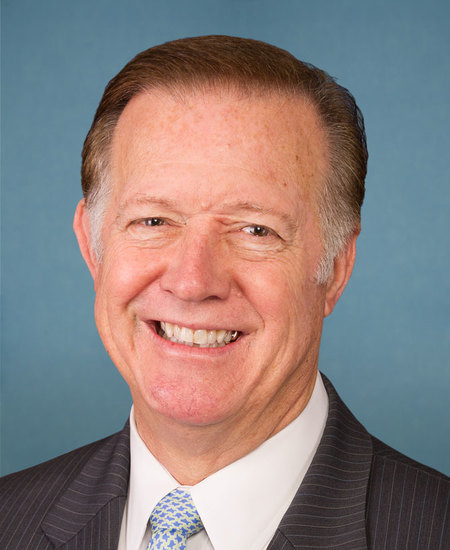
Rep. Randy K. Weber, Sr.
Sponsored bills
Maddy summaryThe Pay Our Correctional Officers Fairly Act adjusts pay for Bureau of Prisons employees currently assigned to the "Rest of U.S." pay locality. It directs that if an employee's worksite is within 200 miles of another pay locality, they will be paid according to the nearest locality with the highest pay rate - replacing the lower "Rest of U.S." rate. This applies to correctional officers and other Bureau of Prisons staff, but excludes employees whose worksite is more than 200 miles from any other locality. The change takes effect 180 days after the bill is enacted.
Maddy summaryHR 3175, the Regulation Reduction Act of 2023, requires federal agencies to repeal two existing regulations before issuing a new rule, and three for "major rules" (those with significant economic impact). For major rules, the new rule's cost must not exceed the cost of the repealed rules, and the Office of Management and Budget must certify this. Agencies must also submit a 90-day review to Congress identifying costly, ineffective, duplicative, or outdated regulations. This bill directly affects federal agencies and the businesses, states, and local governments subject to federal regulations.
Stand Your Ground Act of 2023 This bill establishes affirmative defenses for individuals who use (or threaten or attempt to use) force in the commission of certain federal criminal violations. First, an individual is justified in using (or threatening or attempting to use) non-deadly force if the individual reasonably believes it is necessary to defend against an imminent use of unlawful force. An individual who uses or threatens to use non-deadly force in accordance with this affirmative defense does not have a duty to retreat before using or threatening to use such force. Second, an individual is justified in using (or threatening or attempting to use) deadly force if the individual reasonably believes it is necessary to prevent imminent death or great bodily harm or to prevent the imminent commission of a forcible felony. An individual who uses, threatens, or attempts to use deadly force in accordance with this affirmative defense does not have a duty to retreat and has the right to stand his or her ground so long as the individual is not engaged in a criminal activity and is in a place where he or she has a right to be.
Maddy summaryThis bill removes a restriction that previously barred people in jail or prison while awaiting trial from receiving Medicaid health benefits. It directly affects individuals in custody pending legal proceedings by allowing states to provide Medicaid coverage for their medical care during this time. The bill also allocates $50 million in planning grants to help states develop systems to enroll these individuals, recruit healthcare providers who can serve them, and establish electronic billing for services provided in correctional facilities or through outpatient care. Key provisions require states to assess healthcare needs, eliminate policy barriers, and create plans to increase provider participation in Medicaid for this population.
Maddy summaryHR 3039, the DRIVE Act, prohibits the Federal Motor Carrier Safety Administration (FMCSA) from requiring speed limiting devices on trucks weighing over 26,000 pounds operating in interstate commerce. This directly affects commercial trucking companies and drivers transporting goods across state lines. The bill's key provision explicitly bans the FMCSA from issuing any rule mandating such devices, which are typically set to limit vehicle speed. The law applies specifically to interstate trucking operations and does not affect state-level regulations.
Maddy summaryHR 3072 prohibits federal agencies from using appropriated funds to partner with nonprofits for voter registration, mobilization, or distributing voting materials on agency property or websites. It delays implementation of certain election activities under Executive Order 14019 until agencies submit reports to Congress about their voter registration plans, with exceptions for activities already covered by existing law. The bill also bans voter registration or mobilization efforts in federal work-study programs at colleges. These provisions directly affect federal agencies, their contractors, and higher education institutions receiving federal work-study funds. The law applies to fiscal years starting in 2023 and requires specific reporting to congressional committees.
Scope 3 Act This bill prohibits any securities law requirement that an issuer of securities must disclose the greenhouse gas emissions of its value chain (i.e., scope 3 emissions).
This resolution expresses U.S. support for Israel and its efforts to defend its right to existence. The resolution also declares that the United States and international community must prevent Iran from acquiring or building nuclear weapons.
Maddy summaryHR 3001, the Embrace Fossil Fuel Recruitment Act, requires public high schools and colleges receiving federal education funding to grant fossil fuel companies the same student recruitment access as other energy sectors (like renewables or utilities). The bill mandates that schools provide fossil fuel employers equal opportunities to connect with students for job and internship opportunities, mirroring access given to competitors in other energy fields. Failure to comply could result in colleges losing federal financial aid eligibility under the Higher Education Act, as non-compliance would be treated as a violation of core funding requirements. This bill directly affects public K-12 schools and colleges participating in federal education programs, focusing solely on recruitment access without altering energy policies or environmental regulations.