

Maddy summaryThe Stop TSP ESG Act (HR 3406) requires the Thrift Savings Fund (TSP) to delegate voting rights on securities to a qualified professional asset manager instead of its governing board. This amendment to Section 8438(f) of Title 5, U.S. Code, directly affects the TSP, which manages retirement savings for federal employees. The key mechanism mandates that voting on securities must be handled by an external professional manager, removing direct TSP Board control over investment decisions. The bill's title indicates it aims to prevent the TSP from incorporating ESG (Environmental, Social, and Governance) factors into its investment strategy.
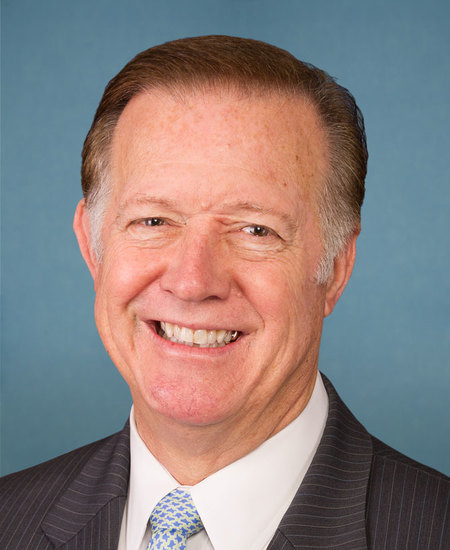
Rep. Randy K. Weber, Sr.
Sponsored bills
Maddy summaryThis bill requires the Comptroller General to annually investigate nationwide theft of mail and USPS property for five years, reporting findings to specific congressional committees. The reports must detail current USPS theft prevention measures and offer concrete recommendations for improving security. This directly affects the U.S. Postal Service by mandating regular oversight and providing Congress with data to inform future policy decisions. The legislation focuses on establishing a structured reporting process to address theft patterns, without specifying new funding or enforcement actions.
Maddy summaryThe Empowering Law Enforcement Act of 2023 would allow state and local law enforcement officers to enforce federal immigration laws by investigating, arresting, and detaining individuals who are in the United States without proper authorization. The bill requires the Department of Homeland Security to add certain immigration violators (including those with final removal orders or expired visas) to the National Crime Information Center database and establishes procedures for transferring aliens apprehended by state officers to federal custody within 48 hours. It extends detention periods for some individuals and provides legal immunity for state officers who enforce immigration laws within their official duties. The bill also mandates that DHS create training materials for state and local law enforcement on immigration enforcement procedures. These provisions would directly affect state and local law enforcement agencies, immigration detainees, and the federal government's immigration enforcement system.
Maddy summaryHR 3455, the TSP Act, prohibits the Thrift Savings Fund (TSP) from investing in any "security of concern." This directly affects federal employees and retirees whose retirement savings are held in the TSP, as their accounts would no longer include certain investments tied to countries identified as national security threats. A "security of concern" includes stocks listed in a "country of concern" (per the Director of National Intelligence's annual report), companies incorporated in such countries, or firms generating over 50% of revenue there. The law bans all forms of these investments, including through mutual funds or synthetic instruments like equity swaps, without exception.
Maddy summaryThe Housing PLUS Act of 2023 modifies federal homeless assistance funding under the McKinney-Vento Act to ensure grantees providing supportive services (like job training or addiction treatment) or requiring conditions for housing (such as sobriety) cannot be restricted from receiving funds. It mandates that at least 30% of Continuum of Care funds each year must support entities offering these wraparound services. The bill directly affects homeless assistance grantees, project sponsors, and faith-based organizations receiving federal housing funds. It also requires the Secretary to report annually to Congress confirming compliance with these funding rules.
U.S.-Israel Cooperation Expansion Act This bill provides that it is U.S. policy to (1) support bilateral training between U.S. and Israeli law enforcement for sharing best practices related to anti-terrorism, community policing, and managing mass casualties; and (2) continue to counter threats to U.S. and Israeli security and embassy protection posed by illicit cross-border tunneling and unmanned aerial systems.
National Law Enforcement Officers Remembrance, Support and Community Outreach Act This bill directs the Department of Justice (DOJ) to establish a National Law Enforcement Officers Remembrance, Support, and Community Outreach Program. The bill further directs DOJ to award a grant under the program to the National Law Enforcement Officers Memorial Fund for the expenses associated with community outreach, public education, and officer safety and wellness programs operated by the of the National Law Enforcement Officers Memorial Fund and National Law Enforcement Museum.
Maddy summaryHRES 399 is a symbolic resolution expressing the U.S. House of Representatives' support for designating the week of May 7-13, 2023, as "National Correctional Officers Week." It honors correctional officers for their service in maintaining safety and dignity within correctional facilities, recognizing their role in protecting public safety and managing inmate care. The resolution does not create new laws or policies but formally acknowledges the contributions of correctional officers across the United States. It directly affects correctional officers by providing a nationally recognized day of appreciation for their work.
Maddy summaryHR 3328 (Protecting Children From Experimentation Act of 2023) prohibits healthcare professionals from performing or referring for gender transition procedures on minors under 18. The bill defines "gender transition procedures" to include puberty-blocking drugs, cross-sex hormones, and surgeries (like genital or non-genital procedures) aimed at altering physical characteristics to match a gender different from a minor’s biological sex. It excludes care for minors with medically verified disorders of sex development or conditions requiring urgent medical treatment. Violations could result in fines, up to 5 years in prison, or both for providers, while minors receiving such care cannot be prosecuted.
Maddy summaryHR 3256, the Preventing Executive Climate Overreach Act, would eliminate the legal effect of Executive Order 14096. This order, issued by the President to advance environmental justice in federal programs, would no longer be enforceable. The bill's key provision directly states that the executive order "shall have no force or effect." As a result, the administration would be unable to implement environmental justice policies based on that order.