Save Rural Hospitals Act of 2021 This bill establishes an area wage adjustment floor for Medicare hospital payments in states that are not frontier states and excludes such adjustments from certain budget neutrality rules.
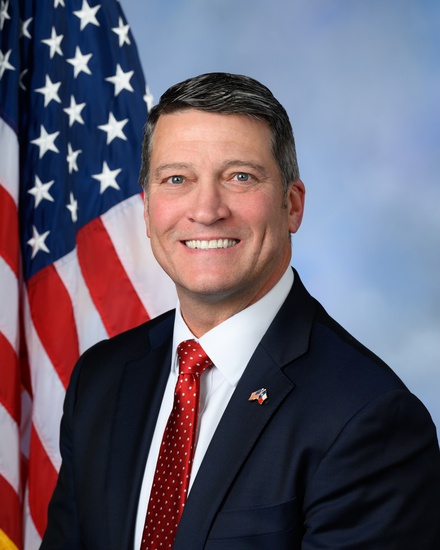
Rep. Ronny Jackson
Sponsored bills
Foreign Gain-of-Function Research Prevention Act of 2021 This bill prohibits the use of federal funds to conduct or support gain-of-function research involving potential pandemic pathogens by China, Russia, Iran, North Korea, or other foreign adversaries. Gain-of-function research is any research that is anticipated to confer an attribute on a pathogen to enhance its pathogenicity or transmissibility in mammals. If the Department of State finds that an entity has used funds for prohibited research, the entity may not receive any federal funding for a period of five years.
Defense Community Teacher Support Act This bill makes certain teachers who teach in military impacted communities eligible for student loan forgiveness. A school in a military impacted community is served by a local educational agency for which at least 20% of the students in average daily attendance in all schools served by the agency during the preceding school year had a parent on active duty. Specifically, the bill directs the Department of Education to cancel up to $17,500 of federal student loans for a borrower who is an elementary or secondary school teacher employed for five consecutive years in a school in a military impacted community. In addition, a teacher who is required to move due to a permanent change in duty station of their spouse may meet the five-year teaching requirement by teaching in multiple schools in different military impacted communities.
Physician Shortage GME Cap Flex Act of 2021 This bill excludes certain hospitals that establish shortage specialty programs from the cap on full-time equivalent residents that is otherwise applicable, and provides for a new building period, for purposes of graduate medical education payments under Medicare.
Campus Free Speech Restoration Act This bill addresses expressive activities (e.g., peacefully assembling, distributing literature, or carrying signs) on college campuses. First, the bill generally prohibits a public institution of higher education (IHE) that participates in federal student-aid programs from restricting noncommercial expressive activities on campus. Further, the bill prohibits a public IHE from receiving federal funds if the Department of Education determines that the public IHE (1) maintains a policy that infringes upon the expressive rights of students; or (2) maintains or enforces time, place, or manner restrictions on expressive activities, except in limited circumstances. In addition, the bill prohibits retaliation against an individual because the individual reported or complained about restrictions on expressive activities or participated in an investigation or hearing. The bill also requires a private IHE that receives federal funds to provide students with its policies related to expressive rights. The bill also establishes a framework for investigating complaints and for IHEs to regain eligibility for federal funds.
Manufacturing API, Drugs, and Excipients in America Act or the MADE in America Act This bill establishes a tax credit for taxpayers engaged in medical production activities in certain areas and contains other provisions related to pharmaceuticals. An eligible taxpayer may claim a tax credit equal to 25% of qualified expenditures related to the production of pharmaceuticals, medical devices, or other related items in a designated qualified opportunity zone with a poverty rate higher than 30%. The bill provides for increases to this tax credit in certain situations, such as if a substantial portion of the employees reside in areas with certain poverty levels. In addition, the Food and Drug Administration (FDA) must continue programs to facilitate the development and review of new drug or biological products that are manufactured using certain advanced manufacturing technologies. The bill imposes various requirements on these programs, including deadlines for evaluating such a technology. Furthermore, the Department of Health and Human Services must ensure timely and effective internal coordination and alignment between FDA field investigators and the staff of the Center for Drug Evaluation and Research's Office of Compliance and Drug Shortage Program regarding reports and feedback related to facility inspections.
Reopening to address Every COmplete Record request for Devoted Servicemembers Act of 2021 or the RECORDS Act of 2021 This bill directs the Office of the Archivist of the United States to take specified steps to address record request backlogs. Specifically, the office must take actions to ensure that (1) the number of individuals employed by the National Personnel Records Center is equal to or exceeds the number of such individuals employed on March 2, 2020, and (2) the percentage of such individuals regularly reporting to work in person is equal to or exceeds the percentage of such individuals regularly reporting to work in person on that date. The office shall submit to specified congressional committees a report that provides a comprehensive plan to address the record request backlog of the National Personnel Records Center and improve the efficiency and responsiveness of operations at the center, identifies measurable goals with respect to the comprehensive plan and metrics for tracking progress toward such goals, and describes strategies to prevent future record request backlogs.
Ending Critical Race Theory in D.C. Public Schools Act This bill prohibits any employee of the District of Columbia Public Schools or the District of Columbia Public Charter Schools from compelling a teacher or student to adopt, affirm, adhere to, or profess ideas that promote race or sex stereotyping or scapegoating.
This bill expands eligibility for Post-9/11 GI Bill benefits to members of the National Guard who perform certain full-time service at the request of the President or the Secretary of Defense (i.e., full-time National Guard duty). Specifically, the bill eliminates the existing requirement that eligible full-time service must be in response to a declared national emergency. The bill also specifies that training is not included as full-time service for purposes of eligibility for these members.
Compensation for Americans Act of 2021 This bill requires the Department of State to negotiate with China to secure compensation for China's distortion of information related to the spread of COVID-19. The bill also contains other China-related provisions, such as those imposing sanctions on certain Chinese individuals and entities. As part of such negotiations, the President shall (1) freeze Chinese assets subject to U.S. jurisdiction; (2) suspend the required review of any proposed acquisition of a U.S. entity by a Chinese entity; (3) impose sanctions on Chinese entities in certain industries, such as artificial intelligence and pharmaceuticals; (4) impose sanctions on various individuals, including Chinese government officials and Chinese citizens responsible for stealing intellectual property from U.S. entities; and (5) prohibit using federal funds to procure goods manufactured or sourced from a Chinese company, if such goods pose a supply chain risk to U.S. national security. The President may terminate such prohibitions and sanctions if China and the United States come to an agreement regarding compensation related to COVID-19. The Department of the Treasury shall establish a public repository with information about entities that are owned, financed, or controlled by the Chinese government. Other provisions in this bill include (1) imposing export controls on telecommunications equipment that would help China carry out censorship or surveillance, (2) banning researchers affiliated with China's military from obtaining visas, and (3) requiring U.S. World Bank representatives to end China's eligibility for World Bank assistance.