

Maddy summaryHR 4610 amends federal tax law by changing a specific date in the Tax Reform Act of 1984 from October 9, 1969, to March 1, 1985. This adjustment aligns federal tax rules with the Texas Constitution, allowing the State of Texas to continue leveraging the Permanent University Fund (PUF) for public university funding without triggering federal tax penalties. The PUF, which supports Texas public universities, has historically benefited from a special tax rule enabling its financial investments, and this bill maintains that benefit. The change takes effect upon the bill's enactment.
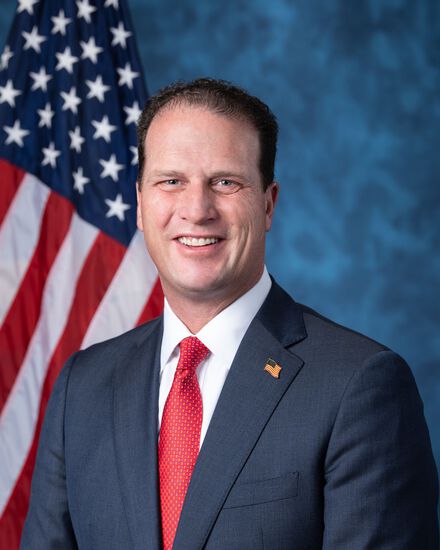
Rep. August Pfluger
Sponsored bills
Maddy summaryHR 3358, the Mission not Emissions Act, prohibits federal contractors from being required to report greenhouse gas emissions or climate-related financial risks. The bill blocks compliance with the proposed Federal Acquisition Regulation rule that would have mandated contractors to disclose Scope 1, Scope 2, and Scope 3 emissions, create emissions inventories, or set emissions reduction targets for validation. It directly affects businesses holding federal contracts by removing these specific reporting obligations. The law focuses solely on eliminating disclosure requirements, not on changing emissions standards or reduction efforts.
Maddy summaryHR 4558, the LIZARD Act, directs the U.S. Fish and Wildlife Service to immediately withdraw a proposed rule that would have listed the dunes sagebrush lizard as endangered. This bill stops the federal government from finalizing or implementing that specific rule or any substantially similar rule regarding the lizard's status. The legislation directly affects the regulatory process for the dunes sagebrush lizard under the Endangered Species Act. It does not change current protections for the species but halts a specific proposed regulatory action.
Maddy summaryThe Digital Economy Cybersecurity Advisory Act of 2023 establishes a new 5- to 25-member advisory board within the National Telecommunications and Information Administration (NTIA). The board, composed of cybersecurity experts from government, private sector businesses, network operators, and technology vendors (excluding lobbyists), will provide recommendations on securing networks, supply chains, and fostering innovation in digital infrastructure. It focuses on practical policies like protecting critical protocols (e.g., Border Gateway Protocol) and removing barriers to trust in information networks. The board will serve for up to 4 years before terminating, with members appointed by the NTIA Assistant Secretary without pay.
Maddy summaryHR 4343, the Organ Donation Clarification Act of 2023, amends the National Organ Transplant Act to permit limited noncash reimbursements for organ donors, such as medical costs, lost wages, travel expenses, and dependent care. It allows federal or state pilot programs to test these reimbursements under strict ethical oversight, aiming to increase donation rates without enabling financial incentives. The bill directly affects potential organ donors and transplant recipients by addressing financial barriers to donation, such as costs of medical care and lost income, while prohibiting cash payments or tradable benefits. These pilots must measure impacts on donation rates, donor demographics, and fairness in organ distribution, with reports to Congress after three years.
Saving Organs One Flight at a Time Act This bill requires the Transportation Security Administration (TSA) and the Federal Aviation Administration (FAA) to jointly issue regulations, as necessary, to enable air carriers to transport human organs for transplant above wing (i.e., in the cabin of an aircraft). Among other things, the regulations must include consideration of protocols for air control outages; a requirement that air carriers implement a protocol for a person to accompany organs to and from the aircraft and between connecting flights; and a standardized process for commercial air carriers to accept, handle, and manage organs in transit. The TSA and the FAA must also consult with the Organ Procurement and Transplantation Network to identify metrics for the handling of organs and organ-related tissue by air carriers.
Maddy summaryHR 4300, the Real Emergencies Act, prohibits the President from declaring national emergencies, major disasters, or public health emergencies under three specific federal laws *based on climate change*. It directly affects the President and federal agencies that manage emergency declarations under the National Emergencies Act, the Stafford Act, and the Public Health Service Act. The bill's key provision explicitly bans using climate change as a justification for these emergency declarations, without altering existing emergency powers for other reasons. This is a procedural restriction on executive authority, not a change to climate policy or emergency response mechanisms.
Maddy summaryHJRES 44 is a congressional resolution seeking to block a 2021 rule by the Bureau of Alcohol, Tobacco, Firearms, and Explosives (ATF). The rule classified firearms with stabilizing braces as "short-barreled rifles," which would have required additional licensing and regulation. This resolution uses a specific legal process (under Title 5, U.S. Code) to formally disapprove the ATF rule, meaning the rule would no longer be in effect. It directly affects firearm owners, manufacturers, and dealers who would have been subject to the rule’s requirements.
Maddy summaryHJRES 45 is a congressional disapproval resolution targeting a specific Department of Education rule about federal student loans. It seeks to block the rule implementing "One-Time Federal Student Loan Debt Relief" (including modifications to Perkins, FFEL, and Direct Loan programs) by invoking the Congressional Review Act. If passed, this resolution would nullify the rule, preventing the Department of Education from using it to modify or waive student loan obligations. The bill directly affects borrowers who might have qualified for debt relief under the targeted rule.
Maddy summaryHR 277 would require Congress to approve major federal regulations before they take effect. Major rules are defined as those with significant economic impact ($100 million+ annually), major cost increases for consumers or industries, or significant adverse effects on competition, employment, or innovation. Agencies must submit detailed information about these rules to Congress, including cost-benefit analyses, before they can take effect. Congress would have 70 session days to approve the rule with a joint resolution; if they don't act within that timeframe, the rule would not take effect. This would increase congressional oversight of federal regulations and require more detailed information about proposed rules before they become law.