

Maddy summaryHR 4826 requires the FTC and CDC to study how social media platforms collect data and affect teens under 18, including mental health impacts and usage patterns. The study must examine data collection practices, algorithm use, daily screen time, and potential harms, with a report to Congress due within one year of enactment. The bill defines "social media platform" as any service with at least 30 million monthly U.S. users, targeting major platforms for this research. This is a procedural study mandate, not a regulatory change, directly affecting large platforms but focusing on teen users.
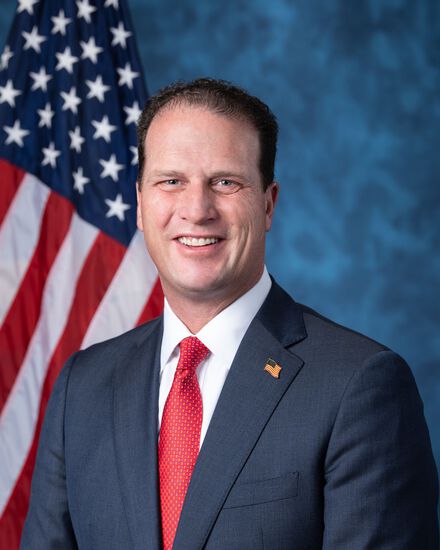
Rep. August Pfluger
Sponsored bills
Maddy summaryHCONRES 57 is a non-binding concurrent resolution expressing Congress's support for Israel. It states three key points: (1) that Israel is not a racist or apartheid state, (2) that Congress rejects antisemitism and xenophobia, and (3) that the U.S. will remain a steadfast supporter of Israel. This resolution does not create new laws or alter policies - it simply records the expressed sentiment of Congress. It directly affects the U.S. government's public stance on Israel, with no legal effect on citizens or other entities.
Maddy summaryHJRES 83 is a congressional resolution seeking to block a specific immigration rule. It targets a rule issued by U.S. Citizenship and Immigration Services (USCIS) and the Executive Office for Immigration Review (EOIR) on May 16, 2023, which addressed "Circumvention of Lawful Pathways" in immigration processes. If approved, the resolution would nullify this rule, preventing it from taking effect under federal law. This action directly affects how USCIS and immigration courts apply this particular policy to immigration cases. The resolution uses a standard procedural mechanism (Chapter 8 of Title 5, U.S. Code) to disapprove the rule without altering broader immigration law.
Maddy summaryThe Strong Communities Act of 2023 creates a new grant program to fund law enforcement training. It provides competitive grants to local law enforcement agencies, allowing them to send officers and recruits to training programs at eligible entities (like colleges or police departments). To receive training benefits, participants must agree to serve full-time in their local community for four years within a specified distance from their long-term residence (7 miles or 20 miles depending on county size). Failure to complete this service requires repayment of the training benefits received.
This bill allows livestock producers and their employees to take certain actions against crested caracaras to protect livestock. (Crested caracaras are protected under the Migratory Bird Treaty Act.) Specifically, livestock producers and their employees may (1) take (i.e., capture, kill, disperse, or transport) a crested caracara that they reasonably believe will cause death, injury, or destruction to livestock; or (2) in the course of taking or attempting to take the crested caracara, cause injury to the bird. Livestock producers and their employees must submit an annual report to the U.S. Fish and Wildlife Service (FWS) on crested caracaras taken under this bill. The FWS must make this reporting form available on its website. Currently, the FWS has a special permit process under the Migratory Bird Treaty Act for the taking of crested caracaras.
Maddy summaryThis bill directs the U.S. Treasury to mint commemorative coins marking the Marine Corps' 250th anniversary in 2025. It authorizes three coin types: $5 gold coins (max 50,000), $1 silver coins (max 400,000), and half-dollar coins (max 750,000), with surcharges of $35, $10, and $5 respectively. The surcharge proceeds will fund the Marine Corps Heritage Center's educational programs, with no net cost to taxpayers as the Treasury must recover all minting costs through the surcharges. The coins can only be issued during 2025, and the Treasury must ensure all costs are covered before distributing funds to the Heritage Foundation.
Maddy summaryHR 4721, the Main Street Tax Certainty Act, makes a permanent the 20% tax deduction for eligible small business owners under Section 199A of the tax code. This provision directly affects pass-through business owners (like S-corps, partnerships, and sole proprietorships) who qualify for the deduction. The bill achieves this by removing the temporary expiration language (subsection (i)) from the existing tax code provision. The key change is ending the need for annual congressional extensions of this deduction, providing long-term tax certainty for small businesses.
Maddy summaryThis bill, HR 1282 (Major Richard Star Act), expands benefits for certain military retirees by allowing them to receive both veterans' disability compensation and military retirement pay simultaneously. It specifically affects combat-related disabled retirees under Chapter 61 of the military retirement system who have fewer than 20 years of service. The key change removes the automatic reduction of military retirement pay when these retirees also receive disability compensation, as amended in Section 1413a(b)(3) of Title 10. Technical updates to the law’s structure and effective date (starting after enactment) complete the provisions.
Maddy summaryHR 4690, the Gray Zone Defense Assessment Act, requires the U.S. government to assess and improve its capacity to counter "gray zone" state-led actions - such as disinformation, cyberattacks, or economic coercion - below the threshold of military conflict. The bill mandates two key reports: a presidential review within 180 days evaluating U.S. interagency capabilities to identify and respond to such campaigns, and a State Department report detailing its capacity to coordinate responses to adversaries like China, Russia, and Iran. These reports must include recommendations for better coordination, resources, and thresholds for action, with classified and unclassified summaries for Congress. The law aims to strengthen the U.S. government’s whole-of-government approach to countering gray zone tactics that challenge national interests without triggering direct military conflict.
Protecting Kids from Fentanyl Act of 2023 This bill permits the use of the Preventive Health and Health Services Block Grant to address fentanyl in educational institutions. Specifically, grant funds may be used to (1) purchase naloxone or other opioid overdose reversal drugs for educational institutions, (2) train school nurses and other personnel on how to administer them, and (3) provide fentanyl awareness classes or materials to students.