

Maddy summaryThe Laken Riley Act (HR 7511) would require federal authorities to detain non-citizens charged with or convicted of burglary, theft, larceny, or shoplifting offenses. It also creates new legal standing for state attorneys general to sue federal immigration officials in federal court if they believe immigration enforcement decisions (like releasing aliens or granting parole) cause financial harm exceeding $100 to the state or its residents. The bill amends immigration laws to expand detention requirements for certain property crimes and allows states to seek court orders to enforce immigration policies. It does not create new criminal penalties but modifies existing immigration enforcement procedures. The bill’s findings and political language about the Laken Riley case are not part of its policy provisions.
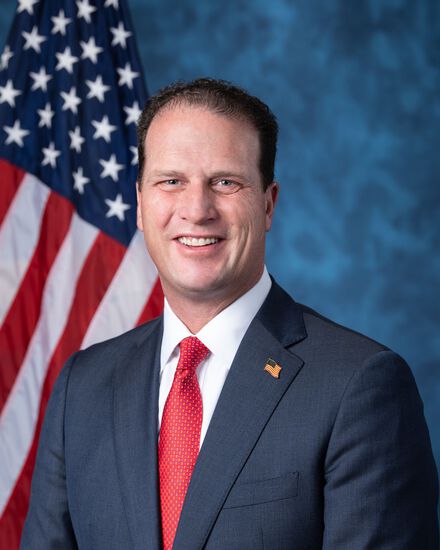
Rep. August Pfluger
Sponsored bills
Maddy summaryThis bill would require U.S. immigration authorities to detain undocumented immigrants who are charged with, arrested for, convicted of, or admit to committing robbery offenses, rather than releasing them on bond. It amends immigration law to add robbery (defined by local jurisdiction) to the list of offenses triggering mandatory detention under specific inadmissibility categories. The Secretary of Homeland Security must issue a detainer to local authorities to hold these individuals if not already detained. This applies to undocumented immigrants already in immigration proceedings under certain inadmissibility grounds.
Maddy summaryThis bill changes how firearm license violations are handled. It requires the federal government to give license holders (like dealers) 30 business days to correct self-reported violations before taking enforcement action, including license revocation. License holders can also choose to challenge license revocations in federal court within 10 days instead of requesting an administrative hearing. The law specifically defines "self-reported violation" and clarifies that minor or clerical errors cannot be considered "willful" violations. These provisions directly affect firearm license holders by altering the enforcement process for regulatory compliance.
Maddy summaryThis bill directs the Secretary of State to actively use U.S. diplomatic resources, including the voice and influence of U.S. diplomats and officials at the International Boundary and Water Commission, to advance efforts ensuring Mexico complies with the 1944 water treaty. It requires U.S. officials to work toward establishing reliable water delivery agreements under the treaty for the Colorado, Tijuana, and Rio Grande rivers. The key mechanism is mandating diplomatic engagement to address Mexico's compliance with treaty obligations, aiming to secure predictable water flows for U.S. users. The bill affects U.S. diplomatic operations and water management coordination with Mexico, focusing on treaty implementation rather than new water infrastructure.
Maddy summaryHR 7470, the Secure U.S. Leadership in Space Act of 2024, changes tax rules to treat spaceports similarly to airports for financing purposes. It allows spaceports to issue tax-exempt bonds (like airports do) for construction and operations, directly benefiting spaceport developers and operators. Key provisions include defining "spaceport" broadly to cover manufacturing, launch/reentry services, and flight control facilities, while adding exceptions for federal use and excluding spaceport bonds from state bond limits. The bill clarifies that spaceports do not need public access to qualify for these tax benefits. This policy change aims to support private investment in U.S. space infrastructure through existing tax financing mechanisms.
Maddy summaryHR 7450, the Protecting Privacy in Purchases Act, prohibits payment card networks and covered entities (like payment processors) from requiring or assigning merchant category codes that specifically identify firearms retailers as different from general stores or sporting goods retailers. This directly affects firearms retailers and payment networks by preventing them from using business classification codes that could flag firearm sales. The bill establishes an enforcement process where the Attorney General investigates complaints, issues remediation notices, and can seek court injunctions for non-compliance, while preempting state or local laws on this issue. It does not create private lawsuits for individuals.
This joint resolution nullifies the final rule issued by the Animal and Plant Health Inspection Service (APHIS) titled Importation of Fresh Beef From Paraguay and published on November 14, 2023. The final rule allows for the importation of fresh (chilled or frozen) beef from Paraguay into the United States under certain conditions. The United States prohibits or restricts the importation of certain animals and animal products to prevent the introduction of various animal diseases, including foot-and-mouth disease (FMD). In response to a request from Paraguay to allow the importation of fresh beef from Paraguay into the United States, APHIS conducted a risk analysis. APHIS concluded that fresh beef could be safely imported from Paraguay, provided that certain conditions are met. These conditions include that (1) FMD has not been diagnosed in the exporting region within the previous 12 months; (2) the meat originated from premises where FMD has not been present during the lifetime of any bovines slaughtered for U.S. meat export; and (3) APHIS may periodically conduct on-site evaluations and subsequent inspections of the slaughter facilities, records, and operations.
Maddy summaryHR 7176, the "Unlocking our Domestic LNG Potential Act of 2024," streamlines approval processes for U.S. liquefied natural gas (LNG) export terminals. It grants the Federal Energy Regulatory Commission (FERC) exclusive authority to approve or deny LNG export facility projects, requiring FERC to deem such exports "consistent with the public interest" unless specific legal exceptions apply. The bill explicitly preserves the President’s authority to block LNG exports under sanctions laws targeting countries designated as state sponsors of terrorism. This directly affects LNG companies seeking export permits and FERC’s regulatory role, without altering existing environmental or safety regulations.
Maddy summaryHR 7239, the Drug-Free Social Media and Digital Communities Act of 2024, makes it a federal crime to distribute controlled substances using social media or online platforms. It doubles standard penalties for first offenses, including imprisonment terms, fines, and supervised release, with a minimum 1-year sentence (except for small marijuana amounts), and triples penalties for repeat offenses with a minimum 3-year sentence. The law specifically targets "interactive computer services" like social media platforms, internet access providers, and educational institution services. It directly affects individuals selling drugs online and requires platforms enabling such activity to face stricter legal consequences under federal drug laws.
Maddy summaryHR 7249, the SUBMIT IT Act, requires the President to submit both the National Security Strategy and the annual budget request to Congress before the leadership of either chamber can invite the President to deliver a State of the Union Address. The bill amends the Congressional Budget Act to change the deadline from "First Monday in February" to "President submits budget request prior to delivering any State of the Union address." This directly affects the President's timing for submitting these key documents and Congress's leadership regarding scheduling the State of the Union. The bill aims to address repeated delays in submissions (e.g., Biden's FY2024 budget submitted 31 days late) by aligning the State of the Union invitation with the statutory requirement for timely submissions.