

Maddy summaryHR 7808, the EARLY Minds Act, amends the Public Health Service Act to require states receiving federal mental health funds to include evidence-based prevention and early intervention strategies for children and adolescents in their state plans. It allows states to use up to 5% of their annual mental health allotment to support these programs, which aim to prevent, delay, or reduce the severity of mental health issues before they become serious. States must report biennially to Congress by 2025 on the programs they implement, including demographics served, outcomes like reduced care access delays, and how programs lessen the onset of serious mental illness. The bill directly affects states administering federal mental health funds and targets youth populations aged 0-18.
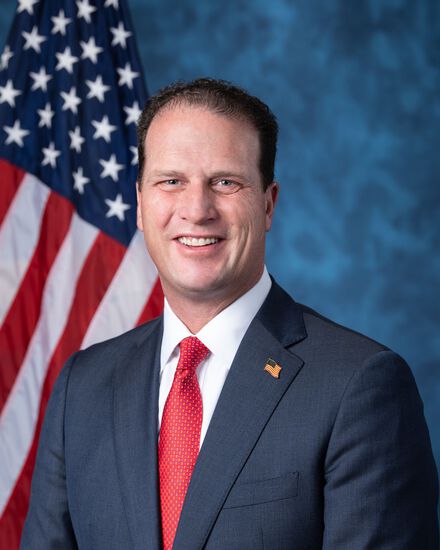
Rep. August Pfluger
Sponsored bills
Maddy summaryHCONRES 86 is a non-binding congressional resolution expressing that a carbon tax would harm the U.S. economy. It states that such a tax would raise energy prices for essentials like gasoline, electricity, and home heating, disproportionately affecting low-income families, the elderly, and fixed-income individuals. The resolution argues a carbon tax would reduce economic growth, encourage businesses to move overseas, and weaken U.S. global competitiveness, urging focus on pro-growth energy policies instead.
Maddy summaryHR 7801, the Sultana Steamboat Disaster Commemorative Coin Act of 2024, authorizes the U.S. Mint to produce commemorative coins honoring the 1865 Sultana steamboat disaster - the worst maritime disaster in U.S. history, which killed nearly 1,200 people. The bill specifies three coin types ($5 gold, $1 silver, and half-dollar clad) to be minted between January 1, 2027, and December 31, 2027, with surcharges from sales directed to the Sultana Historical Preservation Society for museum development and artifact preservation. The coins will be sold at face value plus surcharges ($5-$35 per coin), and the funds must support constructing a museum, exhibits, and preserving disaster-related history. This bill does not create new laws but enables commemorative coin sales to fund a specific historical preservation effort.
Maddy summaryHR 6727 establishes the United States Foundation for International Conservation, a nonprofit organization that will provide grants to support long-term management of protected and conserved areas in eligible countries. The Foundation requires a 2:1 cost match from other sources, demands host country and community consent through binding agreements, and prioritizes areas with high biodiversity or species of significant importance. It will be governed by a Board of Directors including government officials and private sector experts, operate for 10 years with $1 million authorized for 2024 and $100 million annually from 2025-2035, and must follow international conservation standards while prohibiting funding for countries supporting terrorism or violating human rights.
Maddy summaryThis bill amends the Clean Air Act to change how national air quality standards are implemented and reviewed. It extends the timeline for reviewing air quality standards from 5 to 10 years, requires consideration of economic impacts and feasibility when setting standards, and mandates that the EPA issue implementing regulations and guidance at the same time as new standards. It also gives states more time (up to 3 years) to correct deficiencies before federal plans are imposed, and adds wildfire mitigation measures as factors that can be considered in air quality designations. The bill directly affects states, local governments, and businesses that must comply with air quality regulations, particularly those in ozone and particulate matter nonattainment areas. These changes aim to create a more balanced implementation process that considers both environmental protection and practical economic considerations.
Maddy summaryThis resolution (HRES 149) is a symbolic congressional statement condemning Russia's actions in Ukraine, specifically the forcible transfer and abduction of Ukrainian children. It directly addresses the Russian government, citing evidence including Ukrainian reports of over 2,300 children kidnapped and Russia's policy granting citizenship to children born in occupied territories after February 24, 2022. The resolution formally declares these actions violate the Genocide Convention (Article II(e)) and claims Russia is attempting to erase Ukrainian identity by targeting children. As a non-binding resolution, it holds no legal force but expresses the House's official stance against these practices.
Maddy summaryHR 7725 would block federal funding for graduate medical schools that require students or staff to adopt specific statements about race, gender, or identity (like claiming systemic racism or collective guilt), use race-based distinctions in admissions or programs, maintain DEI offices, or mandate "diversity statements" for admission. It directly affects graduate medical schools at colleges/universities receiving federal financial aid, including student loans. The bill exempts medical education about race-related health needs, demographic data collection for reporting, and religious institutions from adhering to policies conflicting with their beliefs. Schools violating these rules would lose eligibility for federal funds, though they could still comply with anti-discrimination laws and provide general academic instruction.
Maddy summaryHR 7695, the "No FAMS at the Border Act of 2024," prohibits the deployment of Federal Air Marshals (FAMS) to the U.S. southern and northern borders for border security or immigration processing, including aiding the Department of Homeland Security (DHS) with processing individuals deemed "illegal aliens" or immigrants. The bill directly affects FAMS personnel, DHS, and border agencies by restricting their use at border checkpoints. It includes a limited exception only if the DHS Secretary formally determines and certifies in writing that a "border crisis" exists to specific congressional committees (the Senate Commerce Committee and House Homeland Security Committee), and the Secretary cannot delegate this authority. This bill creates a clear policy change by banning FAMS at borders for immigration-related duties unless a certified crisis occurs.
Maddy summaryThis bill prohibits U.S. app stores, hosting services, and distributors from enabling foreign adversary-controlled applications (like TikTok, owned by ByteDance) to operate within U.S. borders. It requires companies to provide users with their data in a machine-readable format before a ban takes effect, and imposes civil penalties of up to $5,000 per affected user for violations. The law directly affects major app platforms, app stores, and internet hosting services, targeting applications owned by entities controlled by designated "foreign adversary" countries (e.g., China). It includes exemptions for companies that divest U.S. operations to non-adversary entities before the ban date.
Maddy summaryThis bill prohibits states and local jurisdictions from hiring non-U.S. citizens to run federal elections (such as for president or Congress). It requires that all individuals administering these elections must be U.S. citizens, directly affecting election offices and their hiring practices. The rule applies to all federal election administration roles and takes effect after the bill is signed into law. This is a straightforward eligibility requirement for election staff, with no additional mechanisms or exemptions described in the text.