

Maddy summaryThe Nuclear Waste Administration Act of 2024 establishes a new independent agency, the Nuclear Waste Administration, to manage the permanent disposal of nuclear waste, transferring responsibilities from the Secretary of Energy. It creates a consent-based siting process requiring agreements with states, local governments, and tribes before building facilities, and establishes a Working Capital Fund to ensure waste generators pay the full cost of disposal. The bill sets specific deadlines for developing storage facilities by 2034 and repositories by 2060, while requiring environmental reviews, public input, and oversight through a new Nuclear Waste Oversight Board. This new agency will oversee all aspects of nuclear waste management, including transportation, storage, and disposal, with accountability measures including annual reports and public transparency.
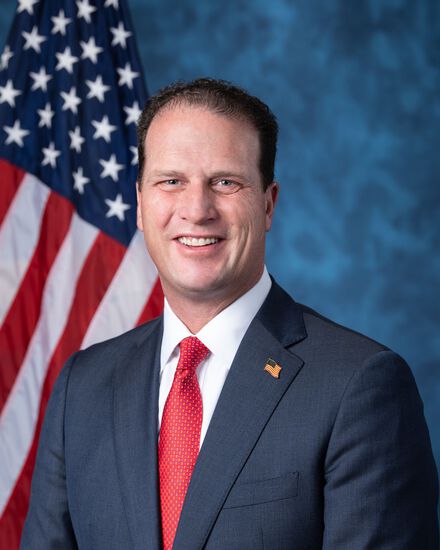
Rep. August Pfluger
Sponsored bills
Maddy summaryThis bill clarifies Medicare rules to allow doctors to provide certain critical medications directly in their offices without extra administrative hurdles. It specifically amends a Medicare provision (Section 1877(b)(2) of the Social Security Act) to remove a requirement that drugs furnished in-office must follow specific administrative rules, effective May 11, 2023. The bill also directs the removal of conflicting Medicare guidance published in 2021 and 2023, which had previously restricted this practice. This change directly affects Medicare beneficiaries (seniors) and doctors' offices that supply covered medications during patient visits. It streamlines access to necessary drugs by eliminating an unnecessary barrier to in-office medication administration under Medicare.
Maddy summaryHJRES 136 is a resolution seeking to block an Environmental Protection Agency (EPA) rule that would have set new emissions standards for light and medium-duty vehicles sold in 2027 and later model years. The EPA rule, published in April 2024, aimed to require vehicle manufacturers to meet stricter pollution limits for these vehicles. If passed, this resolution would cancel the rule, preventing the EPA from enforcing the new standards. It uses a congressional process that allows Congress to reject agency rules with a simple majority vote.
Maddy summaryHRES 1485 designates the third Friday of September each year as "National POW/MIA Recognition Day" to honor prisoners of war and missing-in-action military personnel. The resolution expresses the House's support for this designation and encourages Americans to observe the day through community commemorations, displaying the POW/MIA flag, and performing acts of service for families of those affected. It does not create new laws or alter existing policies but builds on the existing National POW/MIA Flag Act (Public Law 116-67) that requires the POW/MIA flag to be flown on federal properties. The resolution focuses on symbolic recognition and public engagement rather than substantive policy changes.
Maddy summaryThis bill mandates a DHS-led interagency working group to assess threats to U.S. undersea telecommunications cables and landing stations, specifically focusing on risks from China, Russia, Iran, and other "foreign entities of concern." The group must produce a report within one year detailing existing security efforts, vulnerabilities (including reliance on foreign repair vessels), and recommendations for improving protection against espionage, cyber threats, physical damage, and natural disasters. The report will also evaluate whether DHS should lead security operations and propose new coordination mechanisms with private cable operators and international allies. This is a procedural measure requiring a study - no new security mandates - directly affecting federal agencies, cable infrastructure operators, and U.S. national security planning.
Maddy summaryThis bill restricts federal funding for jurisdictions that limit cooperation with federal immigration enforcement. It defines a "sanctuary jurisdiction" as any state or local government that prohibits sharing immigration status information or complying with federal detainer requests (except for crime victims/witnesses). Starting after enactment, such jurisdictions lose eligibility for federal funds intended to provide food, shelter, healthcare, legal services, or transportation to undocumented immigrants. The law directly affects cities and states with specific immigration policies, not the immigrants themselves.
Maddy summaryThis bill (HJRES 163) is a congressional disapproval resolution targeting an Environmental Protection Agency (EPA) rule finalized on May 9, 2024. The EPA rule established new emissions standards for greenhouse gases from fossil fuel power plants (both new and existing) and repealed a previous rule called the Affordable Clean Energy Rule. The resolution would block this EPA rule from taking effect by invoking the Congressional Review Act (Chapter 8 of Title 5, U.S. Code). If passed, it would prevent the EPA rule from being enforced, directly affecting fossil fuel power plant operators and the EPA’s regulatory authority over emissions.
Maddy summaryH.J. Res. 139 is a congressional resolution seeking to disapprove a rule issued by the Centers for Medicare & Medicaid Services (CMS) on May 10, 2024. The rule would have established minimum staffing requirements for long-term care facilities and required transparency in Medicaid payment reporting. If passed, this resolution would block the rule from taking effect, preventing these new staffing and reporting requirements from being implemented. The bill directly affects long-term care facilities and Medicaid programs by halting the enforcement of these specific standards.
Maddy summaryHJRES 133 is a congressional resolution seeking to block an Environmental Protection Agency (EPA) rule titled "Greenhouse Gas Emissions Standards for Heavy-Duty Vehicles-Phase 3." This rule, published in the Federal Register on April 22, 2024, established new emissions requirements for large trucks and commercial vehicles. The resolution, if passed, would prevent the EPA rule from taking effect by formally disapproving it under standard congressional review procedures. The measure directly affects the EPA’s regulatory authority and vehicle manufacturers who would have been required to comply with the proposed standards.
Maddy summaryH.J. Res. 117 is a joint resolution that would disapprove an Environmental Protection Agency (EPA) rule concerning the reconsideration of National Ambient Air Quality Standards for particulate matter. The EPA rule, published on March 6, 2024, was part of the agency’s process to review these standards, which set limits for harmful air pollutants. This resolution invokes a congressional disapproval procedure under federal law to block the rule from taking effect. If enacted, the rule would have no force or effect, preserving the existing air quality standards for particulate matter.