

Maddy summaryHR 138, the Lowering Costs for Caregivers Act of 2025, expands tax-advantaged health savings by allowing taxpayers to use funds in Health Savings Accounts (HSAs), Flexible Spending Accounts (FSAs), and Health Reimbursement Arrangements (HRAs) to cover medical expenses for their parents, not just their spouse. The bill amends the Internal Revenue Code to explicitly include parents as eligible dependents under these accounts, removing prior restrictions. This change directly affects caregivers - primarily adult children supporting aging parents - who will now have greater flexibility to use pre-tax funds for their parents' medical care. The provisions apply to expenses incurred after December 31, 2024, and aim to reduce out-of-pocket costs for family caregivers.
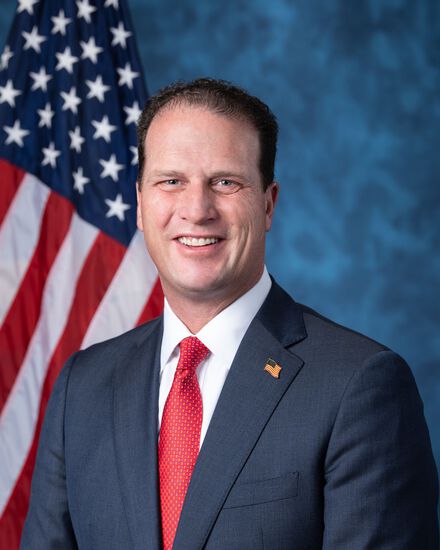
Rep. August Pfluger
Sponsored bills
Maddy summaryThis bill (HR 6244) designates the U.S. Postal Service facility at 1535 East Los Ebanos Boulevard in Brownsville, Texas, as the "1st Lieutenant Andres Zermeno Post Office Building." It updates all federal references to the building to reflect this new name. The bill has no policy provisions or funding changes - it solely honors 1st Lieutenant Andres Zermeno through a commemorative name designation. The building will now be officially referred to by this name in all government documents and records.
Maddy summaryThis bill names the Department of Veterans Affairs community-based outpatient clinic in Plano, Texas, as the "U.S. Congressman Sam Johnson Memorial VA Clinic." It changes the facility's official designation in all government documents, maps, and references, honoring the late Congressman Sam Johnson. The bill does not alter the clinic's services, funding, or operations - only its name. This is a ceremonial designation with no policy or programmatic impact.
Maddy summaryThis bill updates federal law to ensure tribal child support enforcement agencies have the same access to tax information as state agencies. It amends the Social Security Act and Internal Revenue Code to explicitly include tribal organizations receiving federal grants under Section 455(f) in provisions allowing the use of tax refund data to collect overdue child support payments. Tribal agencies will now be treated equally with state agencies for accessing tax information and receiving reimbursement for enforcement reports. This change directly affects Native American tribes operating child support programs and the parents and children they serve, enabling more effective collection of overdue support.
Maddy summaryThis bill, HR 1097 (Everett Alvarez, Jr. Congressional Gold Medal Act of 2023), authorizes the award of a Congressional Gold Medal to Everett Alvarez, Jr., in recognition of his service as a U.S. Navy pilot and Vietnam War prisoner of war. It directly honors Alvarez, who was the first U.S. pilot shot down in the Vietnam War, spent over 8.5 years in captivity, and later served in the Peace Corps and Veterans Administration. The bill’s key mechanism is directing the U.S. Mint to strike a gold medal bearing his name and image, with bronze duplicates available for sale to cover costs. It does not create new policies or affect any group beyond the honoree.
Maddy summaryHR 8784, the FREE Act, requires federal agencies to replace slow, discretionary permitting systems with a streamlined "permit by rule" process. Applicants would certify compliance with written requirements, and permits would automatically be approved within 30 days unless the agency proves non-compliance. Agencies must first report on all current permits and identify which could switch to this system, with a deadline of 240 days after enactment. This directly affects federal agencies managing permits and applicants seeking permits, aiming to reduce delays while maintaining enforcement for violations through audits and appeals.
Maddy summaryThis bill requires the Department of Homeland Security's (DHS) Under Secretary for Intelligence and Analysis to conduct an annual audit of the Office of Intelligence and Analysis' information systems and large data collections (bulk data). The audit must follow existing intelligence oversight guidelines, and the Under Secretary must submit the findings to specific congressional committees within 30 days of completing the audit. The required committees are the House Homeland Security and Intelligence committees, and the Senate Homeland Security and Intelligence committees. This bill establishes a routine transparency measure for DHS intelligence operations, directly affecting DHS's internal oversight process.
Maddy summaryHR 5401, the 9/11 Memorial and Museum Act, provides a one-time federal grant of $5 million to $10 million to the National September 11 Memorial & Museum (operated by the World Trade Center Foundation). The grant funds the museum's operations, security, and maintenance, with specific requirements including free admission for veterans, first responders, and victims' families, dedicated weekly free public hours, and annual financial audits. The museum must also report annually to Congress on how the funds were used. This bill directly affects the museum's financial operations and access policies, not broader legislative changes.
Maddy summaryHJRES 228 is a congressional disapproval resolution targeting an Environmental Protection Agency (EPA) rule published on November 18, 2024 (89 Fed. Reg. 91094). The resolution seeks to block the EPA rule titled "Waste Emissions Charge for Petroleum and Natural Gas Systems: Procedures for Facilitating Compliance, Including Netting and Exemptions," which would have established specific procedures for emissions charges in the oil and gas sector. If passed, this resolution would prevent the EPA rule from taking effect, effectively nullifying its requirements for petroleum and natural gas companies. This is a procedural measure under federal law, not a new policy.
Maddy summaryHR 9125, the Patient Access to LTCH Care Act, adjusts Medicare payments for long-term care hospitals (LTCHs) treating patients with complex medical conditions. It increases payment rates by 5% or 10% for LTCHs based on the number of major complications or comorbidities a patient has, with specific thresholds tied to Medicare coding. The bill also sets annual caps on payment increases ($50,000 for 2025-2026, 110% of prior year for later years) and creates exceptions to ensure patients with severe wounds, specific diagnoses (like septicemia or pulmonary issues), or post-COVID care receive appropriate coverage. This directly affects LTCHs and Medicare beneficiaries with high-acuity conditions requiring specialized care.