

Maddy summaryThe ACES Act (HR 530) mandates a study by the National Academies to examine cancer rates and deaths among veterans who served as aircrew members (e.g., pilots, navigators) in fixed-wing military aircraft. The study will identify potential exposure risks (like chemicals) linked to 12 specific cancers (including brain, lung, prostate, and melanoma) and use VA, DoD, and CDC data to analyze prevalence and mortality. It does not change benefits or laws but requires a final report to the VA and congressional committees. The study directly affects veterans with the defined aircrew service history.
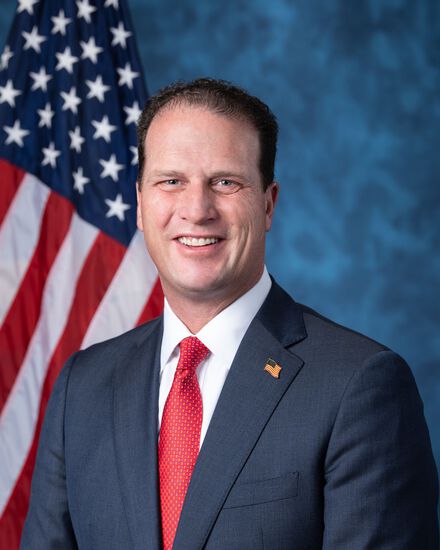
Rep. August Pfluger
Sponsored bills
Maddy summaryHR 3180, the Taiwan Representative Office Act, would rename the Taipei Economic and Cultural Representative Office in Washington, D.C., to the "Taiwan Representative Office." This change would apply to all U.S. government references, documents, and official purposes, ensuring consistency in communications. The bill explicitly states it does not restore formal diplomatic relations with Taiwan or alter U.S. policy on Taiwan’s international status, aligning with the Taiwan Relations Act and Six Assurances. It directly affects the operational name of Taiwan’s unofficial U.S. representative office and requires the Secretary of State to negotiate this name change with Taiwan’s office. The policy aims to provide Taiwan with practical diplomatic treatment equivalent to other foreign entities, without changing the U.S. stance on Taiwan’s sovereignty.
Maddy summaryHRES 373 is a symbolic resolution expressing support for designating May as "Fallen Heroes Memorial Month" to honor U.S. military service members who died in service. It urges the President to issue an annual proclamation designating May as this commemorative month, recognizing over 1.3 million fallen service members and calling on Americans to reflect on their sacrifice. The resolution does not create new laws or requirements but formally requests a presidential proclamation to honor these veterans and their families. It directly affects the President (who would issue the proclamation) and the public (who are encouraged to participate in remembrance). This is a non-binding ceremonial gesture, consistent with existing Memorial Day observances.
Maddy summaryHR 3134, the Emergency Care Improvement Act, allows Medicare and Medicaid to reimburse freestanding emergency centers (FECs) for specific emergency services. The bill defines FECs as 24/7 facilities meeting state emergency care standards, with physician staffing, hospital referral agreements, and quality programs - currently operating in over 118 locations, primarily in Texas. It amends coverage rules to include FECs under Medicare Part B and Medicaid for "specified emergency services" (excluding certain evaluation codes), sets payment rates based on outpatient department standards, and extends EMTALA emergency care laws to cover these centers. This policy change directly affects FECs and Medicare/Medicaid beneficiaries by enabling reimbursement for emergency care previously excluded from coverage.
Maddy summaryHR 3142, the Secure U.S. Leadership in Space Act of 2025, amends the federal tax code to provide spaceports with financial treatment similar to airports. It specifically allows spaceports to qualify for tax-exempt bonds used for infrastructure development and creates special rules for government leases of spaceport land. The bill defines "spaceport" broadly to include facilities for spacecraft manufacturing, launch services, reentry operations, and cargo transport. These changes directly benefit spaceport developers and operators seeking tax advantages for building and operating commercial space infrastructure. The policy change modifies existing tax code sections (142, 146, 149) to exclude spaceport bonds from certain state tax limits and federal guarantee restrictions.
Maddy summaryHR 3147, the "Transparency and Honesty in Energy Regulations Act," prohibits federal agencies from using estimates of the climate damage costs from carbon, methane, and nitrous oxide emissions (known as the "social cost" metrics) when creating new rules or guidance. This applies to all agencies, including the EPA, and bans these calculations from cost-benefit analyses required under major executive orders. The bill also requires agencies to report to Congress within 120 days of enactment on how often they previously used these metrics in rulemaking since 2009. The law directly affects how agencies develop environmental regulations by removing specific climate cost estimates from their decision-making process.
Maddy summaryThis bill (HR 3113) prohibits federal funding for most emergency response maps after fiscal year 2026, requiring any funded map to meet specific digital and accessibility standards. It directly affects federal agencies and public safety agencies (like police or fire departments) that use these maps for emergencies at government-owned sites (e.g., buildings or campuses). Key provisions mandate maps must be digital, stored in the U.S., integrate with safety software, display precise features (like exits, hazards, and utility points), and be verifiable via site inspections. The bill also requires the Secretary of Homeland Security to develop a strategy for procuring compliant maps for federal sites within one year. Note: The bill’s title ("Uniform School Mapping Act") appears inconsistent with its actual focus on federal emergency response maps, not school mapping.
Maddy summaryThis bill amends federal law to allow qualified active and retired law enforcement officers who already meet specific certification standards (under sections 926B and 926C) to carry concealed firearms in school zones while on duty. It removes the existing prohibition that prevented such officers from carrying concealed weapons in school areas, but only for those already authorized under current law. The change applies solely to officers with pre-existing authorization, not to all police or new categories of personnel. It does not alter school safety requirements for other individuals or create new exceptions.
Maddy summaryThis bill designates the POW/MIA Memorial and Museum under construction in Jacksonville, Florida, as the official "National POW/MIA Memorial and Museum." It requires the museum to submit a detailed report to Congress within 90 days, including a five-year budget, organizational structure, bylaws, and accreditation details. The designation may be withdrawn if the museum is not operational within five years of the bill's enactment or if the required report is late. The museum honors prisoners of war and those missing in action since World War II through educational exhibits and reflective spaces for the public.
Maddy summaryHR 3033, the "Protecting the Mailing of Firearms Act," repeals a federal law (18 U.S.C. §1715) that previously prohibited mailing firearms and related items. This bill directly affects firearm sellers, buyers, and the U.S. Postal Service by removing the ban on mailing firearms, ammunition, and components. It also prohibits the Postmaster General from creating rules that would block firearm mailings or require disclosure of sales receipts, transaction records, or firearm serial numbers. The law takes effect immediately for pending cases and prevents new restrictions on firearm shipping through the postal system.