

Maddy summaryHRES 768 is a symbolic House Resolution expressing congressional support for Israel following Hamas' October 7, 2023 attacks. It condemns Hamas' actions, reaffirms Israel's right to self-defense, and calls for the immediate release of hostages. The resolution references the U.S. commitment to Israel's security through existing military aid programs, including the 2016 U.S.-Israel Memorandum of Understanding, and emphasizes enforcement of laws like the Taylor Force Act to prevent U.S. aid from reaching terrorist groups. As a symbolic resolution, it does not create new policy but serves as a statement of congressional support for Israel.
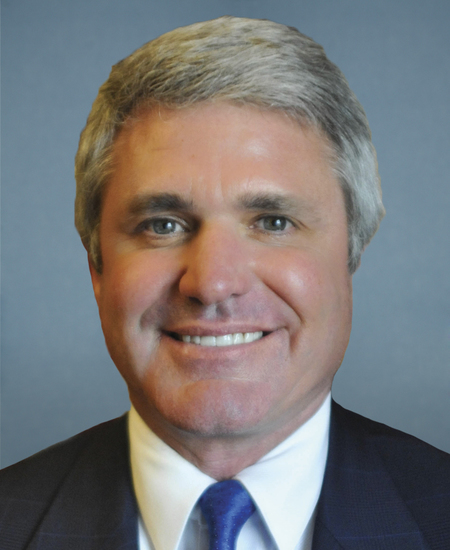
Rep. Michael T. McCaul
Sponsored bills
Maddy summaryHR 2973, the MARITIME Act of 2023, directs the Secretary of Defense (with the Secretary of State) to develop a coordinated maritime security capability in the Middle East to protect allies' people, infrastructure, and shipping lanes from Iranian naval threats and groups like terrorist organizations or pirates. The bill requires a detailed strategy report within 60 days, assessing existing partnerships (like the Combined Maritime Forces), Israel's integration, and intelligence coordination gaps, plus a feasibility study for a funding mechanism within 90 days. It focuses on enhancing U.S.-led efforts already underway, not creating new forces or funding. The bill directly affects U.S. allies and partners in the Middle East, particularly those under U.S. Naval Forces Central Command's responsibility.
Health Care Practitioner Disaster Protection Act This bill extends certain liability protections available for health care practitioners who provide voluntary health care services in declared emergencies through a community health center other than the one that initially sponsored them. Current law makes the liability protections available to volunteer practitioners that are sponsored by a particular community health center. This bill maintains the liability protections for a volunteer practitioner who provides services through a different community health center if the center (1) seeks the assistance of the volunteer practitioner to respond to a declared emergency, and (2) promptly notifies the Department of Health and Human Services that the volunteer practitioner will be providing services.
Maddy summaryThis bill ensures Coast Guard personnel continue receiving pay during budget gaps specific to the Coast Guard. It mandates automatic funding for military members (including reserves), qualified civilian employees, and contract workers providing essential support during a "Coast Guard-specific funding lapse" - defined as when no Coast Guard funding bill passes before the fiscal year begins. The bill covers pay and benefits for these groups until a formal funding bill is enacted or a budget resolution without Coast Guard funding passes. It does not apply to general government shutdowns but targets only Coast Guard operations. The measure aims to prevent disruptions to critical Coast Guard missions during funding delays.
Maddy summaryHR 5857, the "No IDs for Illegals Act," prohibits federal funding for the U.S. Immigration and Customs Enforcement (ICE) Secure Docket Card Program and similar Department of Homeland Security initiatives. This bill directly affects ICE and DHS by blocking all federal financial support for these specific immigration enforcement programs. The key provision is a funding ban, preventing the use of taxpayer dollars to establish, implement, or support the Secure Docket Card Program. It does not change immigration laws or requirements for individuals, only restricting federal financial backing for this particular program.
Maddy summaryHR 5838, the SAFER Act, changes how asylum claims are assessed for migrants apprehended at the U.S. border during large-scale migration events. It revises the "credible fear" interview standard to require officers to determine if an asylum seeker is "more likely than not" eligible for asylum and if their claims are "more likely than not" true. The bill also mandates prioritizing removal cases for these migrants, requires scheduling hearings to allow fair access to legal counsel, and directs the hiring of at least 150 additional immigration judges to speed up court processing. It includes reporting requirements on processing times, legal representation rates, and in-absentia removal orders for migrants in these prioritized cases.
Maddy summaryThis bill ensures continued pay for certain U.S. Customs and Border Protection (CBP) and Immigration and Customs Enforcement (ICE) employees during a government funding gap in fiscal year 2024. It specifically covers CBP agents at Southwest, Northern, and maritime border ports of entry, and ICE officers conducting immigration enforcement (including detainment/removal) and investigations into criminal operations like drug trafficking and human smuggling. The funding, drawn from general Treasury funds, would apply if a budget lapse begins on October 1, 2023, and would last until January 1, 2024, or until new funding is enacted. It directly affects these frontline enforcement personnel by guaranteeing their salaries during a potential government shutdown.
Maddy summaryHR 5641, the Pay Our Troops Act, ensures military personnel and their support staff continue receiving pay during fiscal year 2024 if Congress fails to pass regular budget appropriations. It appropriates existing Treasury funds to cover pay and allowances for active-duty troops, reserve components, and civilian employees or contractors supporting military operations. The bill automatically terminates on January 1, 2025, or earlier if Congress enacts a regular budget or continuing resolution. This provision directly affects service members, Department of Defense staff, and Coast Guard personnel (when not under the Navy) during budget implementation gaps.
Maddy summaryThis bill raises the mandatory minimum prison sentence for trafficking minors under 18 from the previous term to **not less than 25 years or life imprisonment** under federal law (18 U.S.C. § 1591). It directly affects individuals convicted of trafficking children, increasing penalties for this specific offense. The key mechanism is amending the existing sentencing provision to eliminate lower minimums and mandate these severe penalties. The bill focuses solely on strengthening criminal penalties for child trafficking, with no new funding or program requirements.
Maddy summaryHR 1435, the Preserving Choice in Vehicle Purchases Act, amends the Clean Air Act to restrict states from implementing vehicle emissions rules that limit the sale or use of new gasoline-powered cars. It directly affects states with stricter emissions standards (like California) by adding a new definition that blocks state rules "directly or indirectly" limiting internal combustion engine vehicles as defined in federal regulations as of January 1, 2023. The bill requires the EPA to revoke existing state emissions waivers granted between January 2022 and the bill’s enactment if they don’t comply with this new definition. This creates a concrete federal standard preventing states from advancing policies that could reduce demand for conventional vehicles.