

Maddy summaryThis bill requires health insurance plans (both private and Medicare) to cover routine patient costs for children with rare pediatric diseases participating in approved clinical trials, even when care is provided by non-network providers. Specifically, it mandates that insurers apply the same copay or coinsurance rate for non-participating providers as they would for in-network providers during clinical trial participation. The law expands the definition of "routine costs" to include consultation and referral services related to these trials and updates Medicare coverage rules to align with this requirement. These changes apply to plans beginning January 1, 2024, directly affecting families of children with rare pediatric cancers enrolled in qualifying clinical trials.
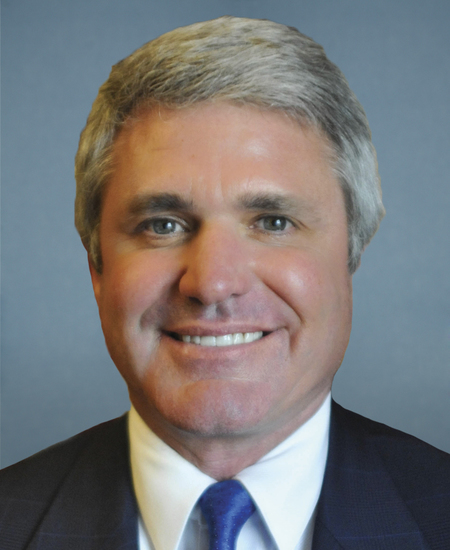
Rep. Michael T. McCaul
Sponsored bills
Maddy summaryHR 4847, the Safeguarding Syria Sanctions Act, prohibits the Treasury Department from extending or renewing any temporary licenses allowing transactions with Syria's Assad regime for earthquake relief after the initial 180-day period. It directly affects the Treasury Department (which must halt new licenses) and humanitarian groups relying on exemptions, though existing pre-earthquake humanitarian licenses remain in effect. The bill mandates that Treasury notify Congress 15 days before any changes to Syria sanctions regulations, including new licenses or authorizations. Its core purpose is to maintain existing U.S. sanctions against the Assad regime and its allies (Russia/Iran), preventing potential exploitation of relief efforts for regime gain.
Maddy summaryHR 3611, the Kazakhstan Permanent Normal Trade Relations Act of 2023, makes Kazakhstan's existing "normal trade relations" (NTR) status permanent by removing the need for annual U.S. presidential reviews under the Trade Act of 1974. This bill directly affects U.S. trade policy with Kazakhstan, ending the requirement for the President to annually determine whether Kazakhstan meets emigration freedom standards (which it has satisfied since 1997). The key provision allows the President to formally extend permanent NTR treatment to Kazakhstan's products, eliminating the current annual review process. Once enacted, Kazakhstan would automatically receive the same most-favored-nation tariff rates as other NTR countries, streamlining trade without further congressional action.
Maddy summaryThe Bear Protection Act of 2023 (HR 3518) prohibits the interstate and international trade of bear viscera (internal organs like gallbladders) and products containing them, such as traditional medicine ingredients. It directly affects businesses, importers, exporters, and anyone involved in trading these items across state lines or internationally. The bill creates criminal penalties (up to 1 year in prison or $25,000 fines) and civil enforcement through the Department of the Interior, while allowing limited exceptions for wildlife law enforcement and Native American cultural practices. It aims to reduce poaching and habitat loss by cutting demand for bear parts, particularly targeting trade linked to declining bear populations in Asia and the U.S.
Maddy summaryHR 3033, the Solidify Iran Sanctions Act of 2023, repeals the expiration date (sunset) from the 1996 Iran Sanctions Act. This permanently maintains existing U.S. sanctions targeting Iran's weapons programs, ballistic missile development, and support for terrorism. The bill directly affects Iran's government and entities involved in these activities by ensuring sanctions remain in effect without needing periodic renewal. It does not impose new sanctions but preserves current policy by removing the automatic expiration provision.
Maddy summaryThe Border Reinforcement Act of 2023 requires the immediate resumption of border wall construction along the US-Mexico border using previously allocated funds, with annual goals to complete 200 miles of wall until operational control is achieved. It mandates a comprehensive 5-year technology investment plan for border security systems, including surveillance and detection technology, and sets staffing requirements for U.S. Border Patrol, including a target of 22,000 full-time equivalent agents by 2025. The bill also requires U.S. Customs and Border Protection to publish monthly operational statistics on border encounters, drug seizures, and other border security metrics. Additionally, it includes provisions for DNA collection at land borders, eradication of certain vegetation impeding border security, and a report on Mexican cartels as potential foreign terrorist organizations.
Maddy summaryThis bill would require Medicare to cover FDA-approved blood tests that screen for multiple cancers simultaneously (like breast, lung, or colorectal cancer) for beneficiaries. It directly affects Medicare recipients aged 65+ who could access these new screenings once per year, without prior authorization. The key provision adds "multi-cancer early detection screening tests" to Medicare's covered services under Part B, defining them as blood tests analyzing cell-free DNA, while maintaining existing coverage for standard screenings like mammograms. The bill does not change current coverage for individual cancer screenings but ensures Medicare keeps pace with new medical technology.
Maddy summaryThe Emergency Care Improvement Act would permanently allow freestanding emergency centers (FECs) to receive Medicare and Medicaid reimbursement for emergency services. FECs are independently licensed facilities operating 24/7 with on-site physicians, providing emergency care equivalent to hospital-based emergency rooms. The bill sets payment rates for FECs equal to hospital outpatient department rates for higher-level emergency services, based on existing Medicare payment structures. This change would apply to over 110 FECs, mostly in Texas, which previously operated under a temporary pandemic waiver and demonstrated 21.8% cost savings to Medicare for similar care.
Maddy summaryHR 1401, the END FENTANYL Act, requires U.S. Customs and Border Protection (CBP) to review and update its field inspection manuals at least every three years. This ensures CBP's border inspection practices consistently address new smuggling methods used to hide drugs like fentanyl and human trafficking. The bill mandates that CBP submit reports to specific congressional committees after each update, detailing the changes made to inspection policies. This directly affects CBP officers and border security operations by standardizing how they detect and respond to evolving smuggling tactics.
Maddy summaryHR 589, the MAHSA Act, imposes U.S. sanctions on Iran's Supreme Leader, President, and affiliated entities responsible for human rights abuses and terrorism. It targets the Supreme Leader's Office, the President's cabinet, security forces involved in the crackdown following Mahsa Amini's death, and entities financing abuses. The bill requires the President to annually determine and apply existing sanctions - like property blocking and visa bans - against these individuals and entities. This directly affects Iran's top leadership and security apparatus, aiming to hold them accountable for abuses including the Morality Police's role in Amini's detention and the subsequent violent suppression of protests.