

Maddy summaryThe BUILD GREEN Infrastructure and Jobs Act establishes a $50 billion annual grant program (2025-2034) to fund electrified transportation infrastructure projects that reduce greenhouse gas emissions and improve transportation access. It prioritizes projects in frontline, vulnerable, or disadvantaged communities (requiring 40% of funds), with 30-40% allocated to rural areas and 60-70% to urban areas. The bill mandates recipients use 5% of grant funds for workforce training, pay a minimum wage of $17 per hour (increasing annually), and use renewable energy sources for project operations. Eligible projects include electric buses, rail systems, port infrastructure with EV charging, and micromobility initiatives that reduce emissions and improve transportation services.
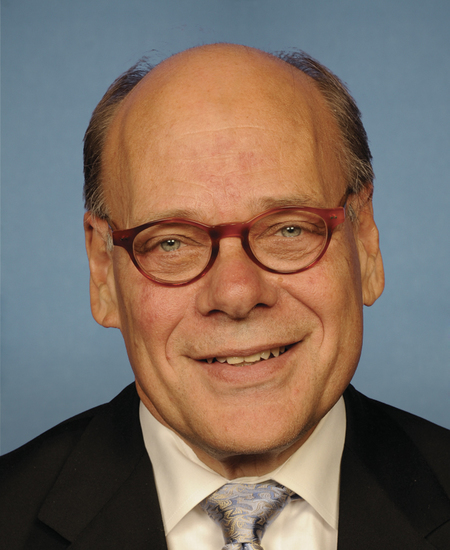
Rep. Steve Cohen
Sponsored bills
Maddy summaryThis bill provides $280 million in funding for the Department of Education's Office for Civil Rights (OCR) for fiscal year 2024, with funds available through September 2025. The OCR investigates school discrimination complaints related to race, sex, disability, and other protected characteristics. This funding directly supports the OCR's ability to handle civil rights cases involving students and schools nationwide, without creating new student requirements or altering existing laws.
Maddy summaryHR 8196, the SCAM Debt Act, amends the Fair Debt Collection Practices Act to prevent deceptive debt collection practices, primarily affecting consumers facing debt collection lawsuits. The bill requires debt collectors to provide consumers with a 30-day written notice before legal action, including detailed debt information like the original debt amount, default dates, and payment history. It also mandates that debt collectors include specific evidence in court filings, such as the original debt agreement, chain of title documentation showing ownership transfer, and proof the statute of limitations hasn't expired. These changes aim to increase transparency and prevent misleading claims during debt collection proceedings.
Maddy summaryHRES 1184 is a resolution recognizing the 50th anniversary of the Ms. Foundation for Women, a national organization founded in 1973 that focuses on advancing gender and racial justice through support for women of color-led movements. The resolution commends the foundation's president, Teresa Younger, and acknowledges the organization's work in promoting equality and justice for all people. As a commemorative resolution, it does not create new laws or policies but formally honors the foundation's history and mission.
Maddy summaryThe Wounded Warrior Workforce Enhancement Act creates federal grants to expand training programs for orthotics and prosthetics specialists. It provides $1-1.5 million per grant to eligible colleges to establish or grow master's programs, with priority given to institutions partnering with VA or military medical facilities. Covered veterans (those with limb loss or mobility impairments) receive admission and financial aid preference in these programs. A separate $5 million grant funds a Center of Excellence to research and improve orthotics/prosthetics education for veterans, service members, and civilians. The bill authorizes $15 million for program grants and $5 million for the Center in fiscal year 2025.
Maddy summaryThe CROWN Act of 2024 prohibits discrimination based on hair texture or style commonly associated with race or national origin, such as braids, locs, cornrows, twists, or afros. It directly affects individuals - particularly people of African descent - who face workplace, school, housing, or public accommodation discrimination due to natural or protective hairstyles. The bill expands existing federal civil rights laws (like Title VI, the Fair Housing Act, and Title VII) to explicitly include hair-based discrimination, requiring compliance in federally funded programs, housing, employment, and public spaces. It clarifies that grooming policies targeting these hairstyles violate anti-discrimination protections without creating new legal standards.
Maddy summaryThe Captive Primate Safety Act prohibits the import, export, sale, transport, breeding, or possession of certain nonhuman primates - including chimpanzees, gorillas, monkeys, and their hybrids - in interstate or foreign commerce. It directly affects private owners, breeders, and commercial traders of these animals, with limited exceptions for pre-enactment animals (requiring registration with the U.S. Fish and Wildlife Service and restrictions on breeding/sale) and registered research facilities. The law amends the Lacey Act to add these primates to prohibited species lists, effective upon enactment, with regulations to be issued within 180 days. Enforcement remains active even if regulations are delayed, ensuring immediate prohibitions on commercial trade and possession.
Maddy summaryHR 8167, the Wounded Warrior Research Enhancement Act, authorizes $30 million in fiscal year 2025 funding to improve limb replacement devices and care for military personnel, veterans, and civilians who have experienced combat-related amputations, traumatic brain injuries, or other serious physical injuries. The bill directs the Defense and Veterans Affairs Secretaries to award competitive, peer-reviewed research grants focused on preventing amputations, determining optimal treatment timing, developing better materials and technologies, and addressing aging-related challenges with prosthetics. These grants aim to enhance clinical care and quality of life for individuals with limb loss by advancing evidence-based solutions. The law requires annual reports to Congress detailing research progress and priorities.
Maddy summaryHRES 1166 is a symbolic resolution expressing congressional support for Earth Day. It urges the President to issue an Earth Day proclamation, encourages Americans to take specific environmental actions (like addressing pollution and supporting indigenous stewardship), and calls for global efforts to advance climate goals. The resolution does not create new laws or directly affect any groups - it serves as a non-binding statement of support for environmental action. It references historical environmental milestones but focuses on reaffirming the need for year-round climate and environmental protection efforts.
Maddy summaryThis resolution symbolically recognizes April 11-17, 2024, as the seventh annual "Black Maternal Health Week." It highlights the disproportionately high maternal mortality and morbidity rates faced by Black women in the U.S., citing data showing Black women are 2-3 times more likely to die from pregnancy-related causes than White women. The resolution emphasizes systemic racism, healthcare inequities, and barriers like limited access to care as key factors contributing to these disparities. It calls for policy action - including support for the Black Maternal Health Momnibus Act - but does not create new laws or allocate funding.