

Maddy summaryThis bill extends a temporary COVID-19 emergency waiver that allows nurse aides in training to count hours worked during the pandemic toward their certification requirements at nursing facilities. It specifically permits these hours to satisfy the 75-hour minimum training requirement and allows facilities to conduct competency evaluations on-site if states don’t offer them weekly. The waiver remains in effect for at least 24 months after enactment, with a requirement for the Secretary to study its continued appropriateness within one year. The policy directly affects nurse aides working in skilled nursing facilities and nursing facilities under federal Medicare/Medicaid rules. It does not create new training programs but maintains pandemic-era flexibility for staffing.
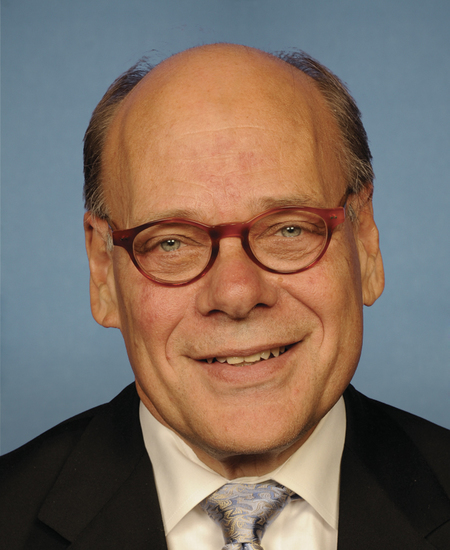
Rep. Steve Cohen
Sponsored bills
Maddy summaryHR 415, the "End the Threat of Default Act," repeals the statutory debt ceiling (section 3101 of Title 31, U.S. Code), which currently limits how much the federal government can borrow. This would eliminate the need for Congress to approve increases to the borrowing cap, removing the risk of a government default on its debts. The bill directly affects the Treasury Department’s ability to manage federal borrowing, as it would no longer require congressional action to authorize new debt issuance. The technical amendments update references to the debt ceiling in other laws to reflect this change.
Maddy summaryThis bill, HR 35 (Close the Medigap Act of 2023), prohibits Medicare supplemental insurance (Medigap) insurers from denying coverage or charging higher premiums based on health status, pre-existing conditions, genetic information, or age. It directly affects Medicare beneficiaries (particularly those with pre-existing conditions) and requires insurers to offer guaranteed issue coverage starting January 1, 2024, with full implementation by 2029. Key mechanisms include banning health-based pricing discrimination, requiring insurers to spend at least 65% of individual policy premiums on healthcare (increasing to align with NAIC recommendations), and improving transparency on the Medicare Plan Finder website. The bill does not change Medicare Part A/B benefits but ensures broader access to supplemental coverage without health-related barriers.
Maddy summaryThe Assuring Medicare’s Promise Act of 2023 directs that taxes collected under the net investment income tax (a tax on investment income for high earners) be added to the Medicare Hospital Insurance Trust Fund, which helps finance Medicare Part A benefits. It modifies the tax code to include certain business income of high-income individuals (with modified adjusted gross income over $400,000 for single filers or $500,000 for joint filers) in the tax base, but includes a phase-in mechanism to limit immediate tax increases. This bill primarily affects high-income taxpayers and aims to strengthen Medicare’s financial stability by increasing trust fund revenue.
Maddy summaryHR 33 would expand Medicare to cover dental, vision, and hearing services for beneficiaries, which are currently not covered under Medicare. The bill provides 100% coverage for preventive dental services in 2024, with basic dental services gradually increasing to 80% coverage by 2027. Vision coverage would include routine eye exams and corrective lenses at 80% coverage, while hearing services would cover hearing exams and hearing aids at 80% coverage. The bill includes specific limitations, such as two dental cleanings per year and one pair of glasses every 24 months, with the Secretary of Health and Human Services having authority to apply additional limitations or modify coverage based on medical recommendations. The changes would take effect on January 1, 2024.
Maddy summaryThis bill bans the use of hydrofluoric acid (HF) at U.S. petroleum refineries to prevent mass casualty incidents. It prohibits new refineries from using HF starting immediately and requires existing refineries (currently using HF at ~40 facilities) to switch to safer alternatives within 5 years. The law includes a $37,500 civil penalty for violations and explicitly blocks the EPA from granting waivers. This directly affects refineries using HF and protects communities within 25 miles of these facilities, where over 14 million people live near HF-using refineries.
Maddy summaryHJRES 227 proposes a constitutional amendment to abolish the Electoral College and establish a direct national popular vote for President and Vice President. Under this amendment, voters would cast a single ballot for a presidential-vice presidential pair, and the pair receiving the most votes nationwide would be elected. The amendment requires ratification by three-fourths of state legislatures and would take effect one year after ratification, directly changing how the President and Vice President are chosen across all states and the District of Columbia.
Maddy summaryThe ProTECT Act of 2024 bans the hunting, taking, or importing of hunting trophies from species listed as "threatened" under the Endangered Species Act. It directly affects hunters, importers, and businesses involved in trading trophies of threatened species, which currently face fewer protections than endangered species. The bill extends existing prohibitions - previously limited to endangered species - to explicitly cover threatened species, including banning permits for such activities and defining "trophy" to include processed animal parts. This creates a uniform ban on trophy hunting and trade for all listed threatened species, closing a gap in current law.
Maddy summaryThis bill extends funding for the existing Public Health Service Act program focused on raising public awareness about Alzheimer's disease and related dementias. It authorizes $33 million annually for fiscal years 2025 through 2029 to support public health education and outreach initiatives. The program directly affects public health organizations and community groups that develop and distribute educational materials about Alzheimer's prevention, diagnosis, and care. The key provision is the multi-year funding extension, ensuring continued support for nationwide awareness efforts without altering the program's core structure.
Maddy summaryThe CASC Act establishes a National Climate Adaptation Science Center and nine Regional Climate Adaptation Science Centers to provide scientific expertise for managing natural resources, cultural resources, and ecosystem services in response to climate change. These centers will conduct research, provide education and training, and offer advisory services to Federal agencies, States, Indian Tribes, Tribal organizations, Native Hawaiian organizations, and other partners. The National Center will coordinate with regional centers, develop research priorities, and conduct five-year merit reviews to ensure high-quality climate adaptation science. The bill requires centers to work with diverse partners including Tribal Colleges and Universities, Historically Black Colleges and Universities, and minority-serving institutions to ensure inclusive climate adaptation science.