

Maddy summaryThe Treat and Reduce Obesity Act of 2023 expands Medicare coverage for obesity treatment by allowing a wider range of healthcare providers - including nurse practitioners, dietitians, psychologists, and community-based counseling programs - to deliver intensive behavioral therapy for obesity, provided they coordinate with primary care providers. It also adds Medicare Part D coverage for medications used to treat obesity or for weight loss management in overweight individuals with related health conditions like diabetes or high blood pressure. These changes directly affect Medicare beneficiaries, particularly older adults (65+), who face higher obesity rates and associated costs, including $50 billion annually in Medicare spending for obesity-related care. The bill requires annual reports to Congress on implementation to improve coordination of obesity care across federal health programs.
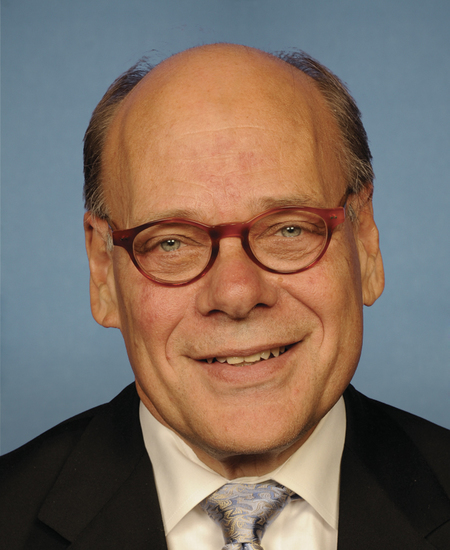
Rep. Steve Cohen
Sponsored bills
Maddy summaryThis bill creates a 4-year transitional coverage period for Medicare to automatically cover "breakthrough medical devices" - new FDA-prioritized devices approved after March 2021 - as "reasonable and necessary" for treatment. During this period, these devices qualify for additional payments under Medicare's hospital and outpatient payment systems without requiring separate approval. After the 4-year period, Medicare must develop regular coverage based on additional data, with automatic coverage for all approved uses if no action is taken within two years. The bill requires Medicare to assign unique codes for these devices within three months of FDA approval and to update payment systems regularly. It also includes special provisions for "specified breakthrough devices" that lack existing Medicare benefit categories, requiring reports on their impact and cost to Congress.
Maddy summaryThis bill, HR 1097 (Everett Alvarez, Jr. Congressional Gold Medal Act of 2023), authorizes the award of a Congressional Gold Medal to Everett Alvarez, Jr., in recognition of his service as a U.S. Navy pilot and Vietnam War prisoner of war. It directly honors Alvarez, who was the first U.S. pilot shot down in the Vietnam War, spent over 8.5 years in captivity, and later served in the Peace Corps and Veterans Administration. The bill’s key mechanism is directing the U.S. Mint to strike a gold medal bearing his name and image, with bronze duplicates available for sale to cover costs. It does not create new policies or affect any group beyond the honoree.
Maddy summaryThe ARTICLE ONE Act would significantly increase congressional oversight of national emergencies by requiring the President to specify which laws they plan to use during an emergency and giving Congress 30 days to approve the declaration before emergency powers can be exercised. The bill would mandate detailed reports from the President about the emergency's circumstances, estimated duration, and planned actions, with additional reports every six months during the emergency. If Congress doesn't approve an emergency declaration within 30 days, the President cannot extend it or use the emergency powers for the same situation. This would limit national emergencies to 30 days unless renewed through congressional approval, fundamentally changing how presidential emergency powers operate.
Maddy summaryHR 2367, the Truck Parking Safety Improvement Act, creates a federal grant program to address commercial truck parking shortages on highways. It provides competitive grants (totaling $175M-$320M over three years) for projects like building new rest areas, expanding parking at ports or truck stops, or improving safety at existing facilities. The program requires all funded parking to be free, publicly accessible to all truck drivers, and maintained without user fees. This directly affects commercial truck drivers, motor carriers, and highway safety by aiming to improve parking access, reduce traffic congestion, and enhance safety on federal-aid highways.
Maddy summaryThis bill requires major airlines to create and regularly update plans aimed at preventing flight delays and cancellations during disruptions like severe weather, staffing shortages, or cybersecurity threats. The plans must detail how airlines will maintain operations, protect staff and technology systems (including crew scheduling), and address known vulnerabilities. Airlines must submit these plans to the Transportation Secretary within one year of the law taking effect, with safeguards for confidential business information. A government audit will assess the plans' effectiveness three years after implementation.
Maddy summaryThis bill extends funding for the National Landslide Preparedness Act through 2028, replacing the previous 2021-2024 authorization period. It directly affects existing federal landslide preparedness programs by continuing their current funding structure without new requirements. The key change is simply updating the program's authorization period in two specific sections of the law (sections 3(h) and 5(e)). The bill does not create new policies or alter how landslide preparedness activities are conducted.
Maddy summaryThe White Oak Resilience Act establishes a voluntary coalition of federal agencies, states, private groups, and landowners to coordinate nationwide efforts restoring white oak forests. It creates a "White Oak Restoration Initiative Coalition" to address policy barriers, recommend improvements, and coordinate cross-boundary projects, while directing the USDA and Interior Departments to conduct assessments and launch 5 pilot restoration projects on federal lands. The bill also creates a dedicated fund through the National Forest Foundation to support white oak reforestation, nursery expansion, and seedling research, and requires a national strategy to address tree seedling shortages affecting restoration. This primarily affects federal land managers, private forest landowners, and tree nurseries by streamlining existing resources to improve white oak regeneration and resilience.
Maddy summaryHR 10456, the SAFE SEX Workers Study Act, requires the Department of Health and Human Services and the Department of Justice to study the impacts of the SESTA/FOSTA law on sex workers and human trafficking investigations. The HHS study will examine how the loss of online platforms (like Backpage) affected sex workers' health, safety, economic stability, and access to harm reduction services. The Justice Department will assess how SESTA/FOSTA changed human trafficking investigations, prosecutions, and law enforcement practices. Both reports must be completed within one year of the bill's enactment and made publicly available.
Maddy summaryThis bill requires Medicare providers to inform patients about breast reconstruction coverage before performing a mastectomy. Specifically, it mandates that providers must tell patients their Medicare coverage includes breast reconstruction surgery following a medically necessary mastectomy (covered under Medicare's existing national policy 140.2) and document this discussion in the patient's medical record. The requirement applies to all mastectomies performed on or after one year after the bill's enactment. It directly affects Medicare beneficiaries undergoing mastectomies and the healthcare providers who perform these procedures, ensuring patients are aware of existing coverage options. The bill does not change Medicare's coverage rules but ensures patients receive clear information about available benefits.