

Maddy summaryThis bill would require states to create a simplified process for out-of-state healthcare providers to join Medicaid and CHIP programs. Qualified providers (those already enrolled in Medicare or another state's program with low fraud risk) could enroll without excessive screening and would be approved for five years. It directly affects children under 21 enrolled in Medicaid or CHIP by expanding access to providers outside their state, particularly in underserved areas. The change applies to all states' Medicaid programs but takes effect three years after enactment.
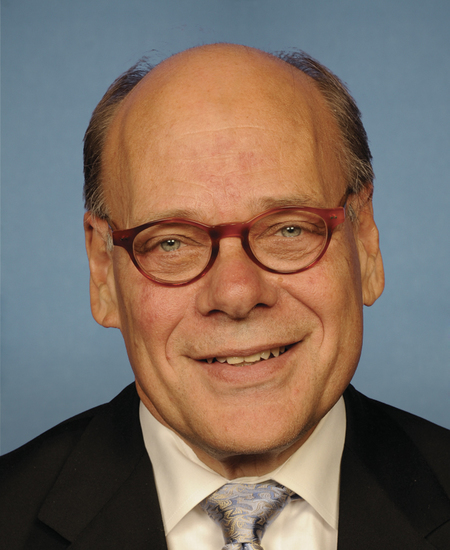
Rep. Steve Cohen
Sponsored bills
Maddy summaryThis bill protects certain public safety workers - like police officers, firefighters, and emergency medical personnel - from job loss or punishment for expressing personal opinions about work-related issues. It allows covered employees to sue employers if they face adverse actions (like termination) for speaking out on topics such as working conditions, safety equipment, pay, policies, or even political/religious views. However, the protection does not cover speech made while on duty, threats of violence, discrimination, disclosure of confidential personal information, or calls to withhold essential services. The law explicitly states it doesn’t override existing civil rights laws like 42 U.S.C. 1983.
Maddy summaryHR 1433, the Kids’ Access to Primary Care Act of 2025, sets a minimum Medicaid payment rate of 100% of Medicare’s rate for primary care services provided to children. It directly affects Medicaid-covered children and expands eligibility for providers to include pediatricians, family medicine physicians, nurse practitioners, physician assistants, certified nurse-midwives, and rural health clinics or Federally-qualified health centers (FQHCs) under specific conditions. Key provisions require Medicaid managed care plans to pay these providers at the minimum rate, with documentation requirements to verify compliance, and exclude emergency department services from the definition of primary care. The bill also mandates a study to track enrollment and payment rate changes across states after implementation.
Maddy summaryHR 1410 expands access to mental health care for 9/11 responders and survivors by allowing licensed mental health providers (not just physicians) to conduct initial health evaluations and certifications under the World Trade Center Health Program. It adjusts the program’s funding formula to account for changing enrollment numbers by linking annual funding to the previous year’s enrollment ratio, and clarifies that deceased individuals are excluded from enrollment counts. The bill also extends the timeframe for adding new health conditions to the program’s list and requires a 2028 report assessing long-term funding needs through 2090. These changes aim to streamline eligibility, improve care access, and ensure sustainable funding for the program.
Maddy summaryThe Food Deserts Act (HR 484) creates a federal grant program to help establish grocery stores in underserved communities by providing capitalization grants to states. States would use these grants to build revolving funds that make low-interest loans to grocery stores meeting specific criteria, such as offering unprocessed foods, affordable pricing, and local hiring. The program prioritizes stores that source from local farms, provide nutrition education, and commit to keeping healthy foods in stock, while requiring applicants to contribute 20% of loan costs from non-federal funds. It authorizes $150 million for fiscal year 2026 to support these loans, which must be repaid over up to 30 years to replenish the revolving fund for future use.
Goldie's Act This bill expands enforcement provisions under the Animal Welfare Act (AWA). Specifically, the bill directs the Department of Agriculture (USDA) to document and record detailed descriptions of violations of the act observed during inspections and investigations. USDA must provide a copy of all records documenting violations to state, local, and municipal animal control or law enforcement officials within 24 hours of such inspections or investigations. Inspections must be held at least once a year of each research facility, the premises of each animal dealer, and each exhibitor of animals. If violations are found during inspections, then USDA must conduct any necessary follow-up inspections until all the violations are corrected. Inspectors must confiscate or destroy in a humane manner animals found to be suffering physical or psychological harm as a result of failure to comply with the AWA. Violators are subject to civil penalties as outlined in the bill.
Maddy summaryThis bill updates federal vehicle safety standards to permit pulsating light systems on high-mounted stop lamps, directly affecting vehicle manufacturers and safety regulators. It requires the Transportation Secretary to issue new regulations within 180 days establishing performance rules for these systems. The key provision defines a "pulsating light system" as one that emits rapid pulses (max 4 pulses within 1.2 seconds) when brakes are applied, then switches to steady light, with a mandatory 5-second lockout period before pulses can repeat after brake release. The bill amends Federal Motor Vehicle Safety Standard 108 to formally allow this technology under specific technical parameters.
Maddy summaryHR 1300, the PSA Screening for HIM Act, requires health insurance plans and issuers to cover prostate cancer screenings without cost-sharing (like copays or deductibles) for men aged 40+ who are at high risk of prostate cancer. This directly affects African-American men and men with a family history of prostate cancer, as defined by the bill. The law amends existing insurance coverage rules to mandate this specific screening coverage, effective for plan years starting January 1, 2026. It does not change screening guidelines but removes financial barriers to recommended screenings for these high-risk groups.
Maddy summaryThe Black History Matters Act directs the National Museum of African American History and Culture to study how public elementary and secondary schools teach Black history across the U.S. The study will identify which schools require this education, assess teaching quality through classroom discussions and materials, and examine how schools measure student learning. It requires the Director to complete the study within three years of the bill’s passage and submit a report to Congress within 180 days of completion. The bill does not change school curricula but aims to gather data on existing practices to inform future education policies. This study directly affects all public schools covered under the Elementary and Secondary Education Act.
Maddy summaryHR 1330 establishes the Smithsonian National Museum of the American Latino, authorizing its location within the National Mall's "Reserve" area. The bill requires the Smithsonian Board to coordinate with federal agencies managing potential museum sites, including notifying relevant congressional committees before land transfers. It mandates that the museum's exhibits and programs accurately represent the diverse cultures, histories, and viewpoints of Hispanic and Latino communities in the U.S., seeking input from a broad range of community experts. The Smithsonian must also submit regular reports to Congress detailing compliance with these representation requirements.