Schedules That Work Act This bill provides employees with the right to request changes to their work schedules related to the number of hours they are required to work or be on call, the location of the work, the amount of notification about work schedule assignments, and fluctuations in work hours. Employers must negotiate in good faith with employees who make such requests and comply with certain work schedule notice and split shift pay requirements for retail, food service, cleaning, hospitality, or warehouse employees.
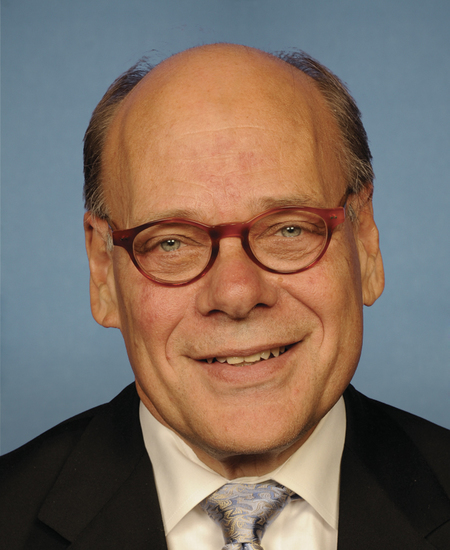
Rep. Steve Cohen
Sponsored bills
Promoting Local Arts and Creative Economy Workforce Act of 2022 or the PLACE Act This bill establishes or modifies various programs that support opportunities for education or job training in a creative industry or occupation.
Defending Ukraine Sovereignty Act of 2022 This bill authorizes security assistance for Ukraine, requires sanctions against Russia if it escalates hostilities in or against Ukraine, and addresses related issues. The bill (1) authorizes the Department of Defense to use various authorities to provide and expedite the delivery of defense articles to support Ukraine's armed forces, (2) allows the President to exercise drawdown authority to provide defense articles to Ukraine, and (3) authorizes the Department of State to provide International Military Education and Training assistance to Ukraine. The President must periodically determine whether Russia's government is significantly escalating hostilities in or against Ukraine and whether such an escalation has the aim or effect of undermining Ukraine's government or interfering with Ukraine's sovereignty or territorial integrity. If the President determines that Russia's government has engaged in such escalation, the President must impose sanctions on (1) certain government officials, including Russia's president and prime minister; (2) certain Russian financial institutions; (3) entities involved in certain transactions involving Russian debt; (4) entities (and corporate officers of such entities) involved in constructing or operating Russia's Nord Stream 2 natural gas pipeline; and (5) certain entities involved in Russian resource extraction industries. The President may terminate such sanctions after certifying to Congress that Russia's government has taken certain actions, such as entering into an agreed settlement with Ukraine's legitimate democratic government. The bill also authorizes Radio Free Europe/Radio Liberty to explore opening new bureaus to reach new audiences on Russia's periphery. The State Department must establish an initiative to deepen and foster ties with the Baltic states.
Safer Streets Act of 2022 This bill directs the Department of Justice to award grants to units of local governments and neighborhood or community-based organizations in jurisdictions with high rates of violent crime. Grants may be used to support law enforcement purposes or community violence prevention purposes, such as hiring additional officers, acquiring surveillance equipment, and promoting prevention programs.
Assessing Monetary Influence in the Courts of the United States Act or the AMICUS Act This bill requires certain disclosures in relation to amicus briefs (i.e., briefs that are filed by those who are not a party to a case but have an interest in the case). Specifically, each amicus brief that is filed in a U.S. court of appeals or the Supreme Court must list the name of any person who contributed (1) to the preparation or submission of the brief, (2) at least 3% of the gross annual revenue of the entity filing the brief for the previous year, or (3) more than $100,000 in the previous year to the filer. Such requirements do not apply to routine commercial transactions that are unrelated to amicus brief filings. The bill also prohibits those who file amicus briefs from giving gifts or providing travel to a judge of a U.S. court of appeals or a justice of the Supreme Court, except for reimbursements for travel expenses in relation to law school appearances. Violators are subject to civil penalties.
Fire Sale Loophole Closing Act This bill imposes restrictions on the transfer of business inventory firearms by a firearms importer, manufacturer, or dealer whose license is revoked or denied. An individual who violates the restrictions is subject to criminal penalties—a fine, prison term of up to one year (or five years if the violation was willful), or both.
Protecting Immigrants From Legal Exploitation Act of 2021 This bill establishes that certain acts of immigration-related fraud shall be punished by fines, imprisonment, or both. The bill provides for such punishment for a person who knowingly or recklessly executes a scheme or artifice in a matter arising under immigration law to (1) defraud any person; or (2) obtain anything of value from any person through false pretenses, representations, or promises. A person who knowingly and falsely represents that such person is an attorney or accredited representative in any matter arising under immigration law shall be subject to such punishment. The Department of Justice (DOJ) may seek civil injunctions to stop an immigration service provider from further engaging in fraudulent conduct or willfully misrepresenting the provider's authority to provide representation in immigration matters. An alien who left the United States based on erroneous advice from a person engaged in immigration practitioner fraud or the unauthorized practice of law shall not be barred from reentering the country. An alien may withdraw an application for immigration benefits that was prepared or submitted by an individual engaging in immigration practitioner fraud or the unauthorized practice of law, if the alien had no prior knowledge of the individual's fraudulent or unauthorized status. The Department of Homeland Security (DHS), the Department of State, and DOJ shall develop procedures for allowing such an alien to submit corrected filings. DHS and DOJ shall establish a program to provide grants to eligible nonprofit organizations to provide direct legal services to aliens.
Fair and Independent Experts in Clemency Act or the FIX Clemency Act This bill establishes the independent U.S. Clemency Board, which shall review applications and recommend individuals for clemency directly to the President. It also abolishes the Office of the Pardon Attorney of the Department of Justice and transfers its functions, assets, and personnel to the board.
Repeal Existing Policies that Encourage and Allow Legal HIV Discrimination Act of 2022 or the REPEAL HIV Discrimination Act of 2022 This bill addresses federal and state laws, policies, and regulations that may burden people living with HIV/AIDS. Specifically, the bill directs the Department of Justice (DOJ), the Department of Health and Human Services (HHS), the Department of Defense (DOD), and the White House Office of National AIDS Policy to initiate a national review of federal (including military) and state laws, policies, regulations, and judicial precedents and decisions regarding criminal and related civil commitment cases involving people living with HIV/AIDS. DOJ must transmit to Congress and make publicly available the results of such review with related recommendations. The White House Office of National AIDS Policy must also develop and publicly release guidance to assist states with handling relevant cases. The office, DOJ, HHS, and DOD must transmit to the President and Congress any proposals necessary to implement adjustments to federal laws, policies, or regulations. This bill shall not be construed to discourage the prosecution of individuals who act with the intent to do harm to another individual by intentionally transmitting HIV.
Bringing an End to Harassment by Enhancing Accountability and Rejecting Discrimination in the Workplace Act or the BE HEARD in the Workplace Act This bill expands protections against discrimination and harassment in the workplace and raises the minimum wage for tipped employees. Specifically, the bill (1) makes it an unlawful employment practice to discriminate against an individual in the workplace based on sexual orientation, gender identity, pregnancy, childbirth, a medical condition related to pregnancy or childbirth, or a sex stereotype; and (2) provides a statutory definition for what constitutes workplace harassment. Further, these protections apply to all workplaces, regardless of size, and to all workers, including independent contractors, interns, volunteers, and trainees. The bill prohibits employers from entering into contracts or agreements with workers that contain certain nondisparagement or nondisclosure clauses and prohibits certain predispute arbitration agreements and postdispute agreements. It also establishes grant programs to (1) prevent and respond to workplace discrimination and harassment, (2) provide legal assistance for low-income workers, and (3) establish a system of legal advocacy in states to protect the rights of workers. The bill further provides employees the right to retain their tips and it increases, in specified annual increments, the minimum wage for tipped employees to match the federal minimum wage for nontipped employees. Additionally, the bill requires the Equal Employment Opportunity Commission to provide specified training and resource materials, establish and convene a harassment prevention task force, and establish an Office of Education and Outreach with regard to prohibited discrimination and harassment in employment. The bill also requires specified studies, reports, and research on prohibited workplace harassment.