Maddy summaryHR 8936, the Circuit Court Judgeships Act of 2022, authorizes additional judgeships for specific U.S. Courts of Appeals. It adds 1 judge to the First, Sixth, and Eighth Circuits; 7 to the Second; 2 to the Fourth; 13 to the Fifth; 16 to the Ninth; and 10 to the Eleventh Circuit. The bill amends a table in federal law to reflect these increased judicial staffing levels. This change directly affects the operational capacity of these federal appellate courts by expanding their bench size.
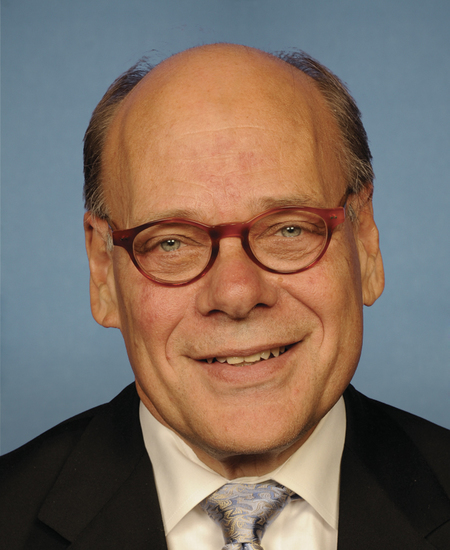
Rep. Steve Cohen
Sponsored bills
Strategic Lawsuits Against Public Participation Protection Act of 2022 or the SLAPP Protection Act of 2022 This bill establishes a motion in federal courts to allow for the dismissal of a claim with prejudice if (1) that claim is shown to be based on the moving party's exercise of free speech, (2) the responding party cannot establish essential elements of the claim or that there is a genuine issue of material fact, and (3) no exception under this bill applies.
Providing Real Opportunities and Lifelong Investments For Everyone Act of 2022 or the PRO-LIFE Act of 2022 This bill establishes new, and modifies existing, programs related to maternal and child health, tax credits and other benefits for parents and caregivers, and support for childcare infrastructure. The bill requires multi-agency efforts to improve maternal health and reduce maternal mortality, particularly among racial and ethnic minority groups, veterans, and other vulnerable populations, by addressing both health-related factors and the social determinants of health (i.e., nonmedical factors that influence health outcomes, such as housing, food security, transportation, and environmental conditions). Additionally, the bill permanently extends the Children's Health Insurance Program (CHIP) and related measures. Further, the bill (1) sets up a family medical leave insurance benefit that entitles employees to a monthly benefit payment for a period of qualified caregiving; and (2) imposes a tax on employers, employees, and self-employed individuals to fund the benefits. The bill also increases the amount of the child tax credit and makes the credit fully refundable and payable in advance on a monthly basis. In addition, the Department of Labor must carry out a program to certify and recognize employers that implement family-friendly workplace programs (e.g., providing paid family and sick leave or subsidizing childcare). The bill also requires support for childcare infrastructure, for example by establishing grants for childcare facilities and scholarship and loan repayment programs for childcare educators.

Governing Unaccredited Representatives Defrauding VA Benefits Act or the GUARD VA Benefits Act This bill imposes criminal penalties and/or fines on individuals for directly or indirectly soliciting, contracting for, charging, or receiving any unauthorized fee or compensation with respect to the preparation, presentation, or prosecution of any claim for Department of Veterans Affairs benefits. The attempted commission of such offenses is also punishable by fine or imprisonment.
Afghan Adjustment Act This bill expands eligibility for special immigrant visas to certain Afghan nationals (and accompanying spouse and children) and addresses related issues. The Department of Homeland Security may provide such visas to Afghan nationals who provided qualifying service as a member of the Afghan Air Force or other specified entities and meet eligibility requirements, such as passing a background check. Currently, special immigrant visas for Afghan nationals are generally only available to those who were employed by or on behalf of the U.S. government in Afghanistan. Such visas shall also be available to an Afghan national who is a qualifying relative of a veteran or member of the U.S. Armed Forces. The bill also modifies procedures for providing lawful permanent resident status to certain classes of Afghan nationals, such as by (1) providing a streamlined process with specified vetting requirements for certain individuals, including those who provided support to the U.S. government in Afghanistan; and (2) preserving the eligibility of certain battered spouses whose eligibility for such status stemmed from a marriage that has terminated. Furthermore, the Department of State (1) must respond to inquiries from Members of Congress about specific applications from Afghan nationals seeking special immigrant or refugee status; and (2) establish an office in Afghanistan to perform certain tasks, such as issuing visas, if no U.S. embassies are operational in Afghanistan. The President must establish a task force to develop and implement a strategy to assist Afghan nationals who qualify for admission to the United States.
Animal Violence Exposes Real Threat of Future Violence Act of 2022 or the AVERT Future Violence Act of 2022 This bill directs the National Institute of Justice within the Department of Justice (DOJ) to study the factors that contribute to acts of animal cruelty. The report must also analyze acts of animal cruelty as a predictor of future violence against humans. Additionally, the bill authorizes DOJ to establish a grant program to support the development and strengthening of detection strategies and early intervention or diversion resources to stop acts of animal cruelty and rehabilitate offenders.
Maddy summaryThe Supreme Court Tenure Establishment and Retirement Modernization Act of 2022 would require the President to nominate one Supreme Court justice every other year (during the first and third years after a Presidential election), with Senate confirmation. New justices would serve an 18-year term before automatically retiring, while current justices would be deemed retired in order of their service duration (starting with the longest-serving) as new appointments occur. If the Court's membership falls below the required number due to vacancies, the most recently retired justice under this system would serve as an associate justice until the full complement is restored. This bill directly affects the appointment process, term lengths, and retirement mechanics for all Supreme Court justices.
Oligarch Assets for Ukrainian Victory Act of 2022 This bill authorizes the Department of Justice to transfer to the Department of State the proceeds of property that was seized pursuant to sanctions imposed on individuals and entities involved with certain Russian government activities (e.g., malicious cyber activities and interference in U.S. elections), to be used to provide assistance to Ukraine to remediate harms caused by Russian aggression towards Ukraine.
Judicial Ethics and Anti-Corruption Act of 2022 This bill makes various changes to the federal framework governing judicial ethics. Among the changes, the bill prohibits federal judges and Supreme Court Justices from owning individual stocks and securities; requires the Judicial Conference of the United States to issue regulations restricting the solicitation or acceptance of gifts in connection with a private judicial seminar; expresses the sense of Congress that the Code of Conduct for U.S. Judges shall apply to Supreme Court Justices; requires federal judges and Supreme Court Justices to report on each association or interest that would require recusal, including any financial interest of a spouse or minor child who resides in the household; and establishes a committee to review complaints against the Supreme Court.
Prohibiting Anticompetitive Mergers Act of 2022 This bill prohibits certain business mergers, modifies the procedures for reviewing mergers, and establishes procedures for reversing certain mergers. Specifically, the bill prohibits mergers that (1) are valued at more than $5 billion in total assets, (2) result in the acquiring entity having a market share of greater than 33% (or a share of a labor market as an employer of greater than 25%), or (3) result in market concentration levels that exceed specified thresholds. The bill also expands the authority of the Federal Trade Commission (FTC) and the Antitrust Division of the Department of Justice (DOJ) to review pending mergers, including whether a merger is likely to harm the competitive process and the effect of a merger on relevant labor markets. Finally, the bill authorizes the FTC and the Antitrust Division of the DOJ to retroactively unwind mergers that are prohibited under the bill or that meet certain other anticompetitive criteria such as a merger that results in a greater than 50% share of a relevant market.