

Maddy summaryHR 3772, the Aviation WORKS Act, expands federal funding for aviation workforce development by creating four new grant programs under the FAA Reauthorization Act. It allocates $20 million annually (2024-2028) for grants targeting aviation manufacturing education, workforce partnerships, and career pathways. The bill directly affects U.S. aircraft manufacturers, higher education institutions with aviation programs, and industry partnerships (including flight schools and air carriers) by funding scholarships, internships, technical training, and outreach to underrepresented communities. Key provisions require projects to support skills development for manufacturing components, career transitions (e.g., for veterans), and local workforce planning. The law aims to strengthen the domestic aviation workforce supply chain through concrete grant mechanisms, not speculative outcomes.
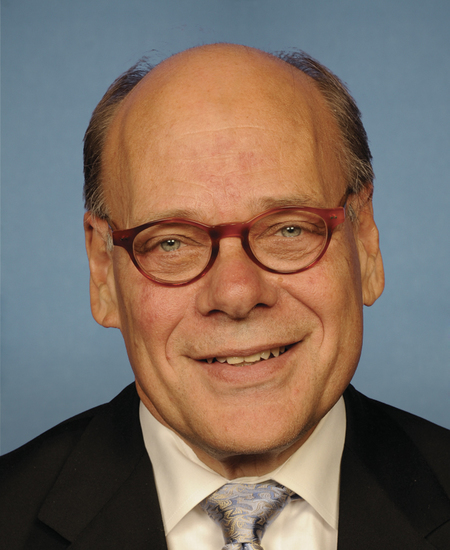
Rep. Steve Cohen
Sponsored bills
Maddy summaryThe Universal School Meals Program Act of 2023 would establish a universal school meals program providing free breakfast and lunch to all children enrolled in participating schools, regardless of family income. Key provisions include eliminating income-based eligibility requirements for school breakfast and lunch programs, setting specific reimbursement rates ($2.80 for breakfast and $4.63 for lunch with annual inflation adjustments), and prohibiting schools from collecting debt for unpaid meals or "shaming" students. The bill also replaces references to "free or reduced price" with "economically disadvantaged students" in related laws and establishes new methods for identifying children from low-income backgrounds. This legislation would directly affect all public schools participating in the National School Lunch Program and School Breakfast Program.
Maddy summaryThis bill removes a barrier for college students seeking food assistance by amending the SNAP program rules. It directly affects students enrolled at least half-time in recognized colleges or training programs, who were previously automatically ineligible unless they met separate requirements. The key change eliminates the prior restriction (in section 6(e)) that barred most higher education students from SNAP, allowing them to qualify under the new provision in section 3(m)(5)(F). The changes take effect January 2, 2024.
Enhancing Questions to Understand Intentions for Pregnancy Act of 2023 or the EQUIP Act of 2023 This bill requires the Centers for Disease Control and Prevention to provide eligible health organizations with demonstration program grants to implement routine screenings about people's pregnancy intentions in order to provide better contraceptive and prepregnancy care.
Maddy summaryHR 3713 creates federal grants to fund comprehensive school-based mental health programs for students in grades K-12, including those in Bureau of Indian Education schools. It requires partnerships between schools and community mental health providers to deliver trauma-informed, culturally appropriate services addressing suicide risk, grief, violence, and trauma exposure. The bill authorizes $300 million annually (2024-2027) for these programs, mandating privacy protections under HIPAA and FERPA, and requires annual reporting on program effectiveness.
Maddy summaryThe Cady Housh and Gemesha Thomas Student Suicide Prevention Act of 2023 requires states to establish a policy mandating annual suicide prevention training for school staff and high school students (grades 9-12). The training must be evidence-based, cover recognizing suicide warning signs, appropriate responses, and referrals to mental health services, while including cultural competency. It allocates $48 million in federal funds, with at least 15% dedicated to supporting this training program, and requires states to collaborate with mental health experts. The bill directly affects school staff and high school students in states that adopt the policy and receive federal funding.
This resolution calls on the Senate to ratify the U.N. Convention on the Elimination of All Forms of Discrimination Against Women, also known as CEDAW.
Maddy summaryThis bill allows the U.S. Postal Service to ship alcoholic beverages under specific conditions. It enables registered businesses (like wineries, breweries, and retailers) to mail alcohol directly to consumers, provided the recipient is at least 21 with valid ID, the shipment isn’t for resale, and state alcohol taxes are paid upfront. The Postal Service must establish rules for delivery, registration, and verification, while explicitly preserving all existing state, local, or tribal laws governing alcohol sales and shipments. The bill does not override state restrictions on alcohol delivery, and the Postal Service remains liable for violations under state law.
Safe Aviation and Flight Enhancement Act of 2023 This bill directs the Federal Aviation Administration to issue regulations requiring all newly manufactured commercial aircraft used in certain extended overwater operations to have additional data recovery features. Specifically, commercial aircraft that are required to have a cockpit voice recorder (CVR) and a flight data recorder (FDR) must be equipped with a means to recover flight data that does not require underwater retrieval, a tamper-resistant method to broadcast to a ground station sufficient information to establish the flight termination location within six nautical miles of the point of impact, and an airframe low-frequency underwater locating device that will function for at least 90 days and that is detectable by current search and rescue systems. Further, the commercial aircraft must be equipped to retain at least the last 25 hours of recorded information. Commercial aircraft that are ordered by an air carrier on or after January 1, 2027, must have the additional recorder system installed. The bill specifies that a third combination CVR/FDR recording mechanism is not required to satisfy the bill's requirements. Compliant technologies may include (1) an automatic deployable flight recorder system (i.e., a CVR, FDR, and emergency locator transmitter housed in one crash-protected, floatable unit), and (2) transmission of flight recorder data (i.e., a system capable of providing satellite transmission of critical flight data that can also assist in identifying the location of a downed aircraft).
Maddy summaryHRES 439 is a non-binding resolution expressing the House of Representatives' support for keeping the U.S. Postal Service (USPS) as an independent federal agency, not subject to privatization. It highlights USPS's constitutional role, self-sustaining nature (relying on service revenue, not taxpayer funds), and its importance to rural communities, e-commerce, and over 600,000 employees. The resolution urges Congress to take action to preserve USPS's independence, emphasizing that privatization could raise prices, reduce services, and harm the nation's mail infrastructure. As a procedural resolution, it does not change law but formally states the House's position.