

UNRWA Accountability and Transparency Act This bill makes changes to U.S. foreign policy in matters concerning the United Nations Relief and Works Agency for Palestine Refugees in the Near East (UNRWA). For purposes of this policy, the bill defines Palestinian refugee as a person who (1) resided from June 1946 to May 1948 in Mandatory Palestine (a region controlled by Britain until 1948), (2) was personally displaced as a result of the 1948 Arab-Israeli conflict, and (3) has not accepted citizenship or other permanent adjustment in status in another country. The bill withholds U.S. funding for the UNRWA unless the Department of State makes certifications concerning the UNRWA's staff, partners, and funding. Specifically, the State Department must certify that neither UNRWA staff and partners nor its funding and facilities are affiliated with terrorism or engaged in the dissemination of anti-American, anti-Israel, or anti-Semitic ideologies. Additionally, the State Department must certify that the UNRWA is subject to comprehensive financial audits by an independent auditing firm and is unaffiliated with any financial institutions that the United States considers to be complicit in money laundering or terror financing. The bill also requires the State Department to implement a plan to encourage other countries to align their activities and efforts regarding the UNRWA with U.S. policy objectives, including the phase out of the UNRWA by resettling Palestinian refugees in countries other than Israel and in territories not controlled by Israel. The State Department must report to Congress on this plan.
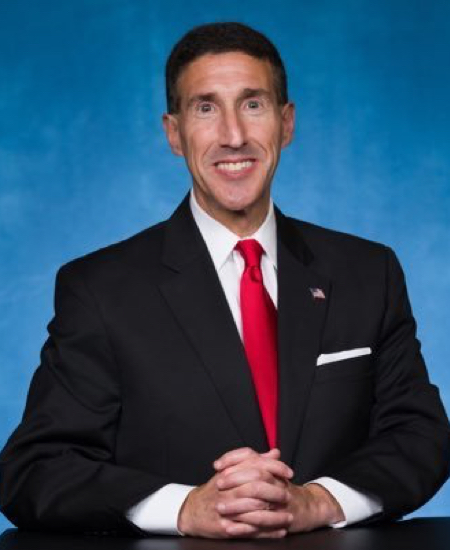
Rep. David Kustoff
Sponsored bills
Alexander Lofgren Veterans in Parks (VIP) Act This bill makes the America the Beautiful-National Parks and Federal Recreational Lands Pass available, without charge, to members of the Armed Forces, veterans, and Gold Star Families. The pass covers the entrance fee and standard amenity recreation fee for all federal recreational lands and waters.
Protecting the Right to Organized, Transparent Elections through a Constitutionally Trustworthy Electoral College Act (PROTECT Electoral College Act) This bill temporarily suspends federal election security grants and conditions receipt of future grants on certain state certifications. The bill also requires a study on the 2020 presidential election. Specifically, the bill suspends through July 1, 2022, election security grants. During this time period, new grants may not be awarded and previous grant funds may not be expended. Further, the bill conditions receipt of future election security grants on a state legislature certifying certain matters, including that the state's mail-in voter verification procedures are specifically established in statute. The state legislature must also certify that unless there is a statute that specifically authorizes the practice, the state (1) does not provide mail-in ballots to voters unless a voter specifically requests a ballot; and (2) does not permit third parties, except for a voter's family member or caregiver, to return a voter's completed ballot. The bill prohibits election assistance funds from being used to further an election procedure that is not expressly set forth in state statute. Additionally, the Government Accountability Office must study and report on the administration of the 2020 presidential election. The report must analyze specific matters for each state that received election security grants, including an analysis of a state's use of these grants and any subsequent actions taken by its state legislature.
Consumer Financial Protection Commission Act This bill removes the Consumer Financial Protection Bureau from the Federal Reserve System, converts the bureau into an independent commission, and modifies its leadership structure. Specifically, the bill eliminates the positions of director and deputy director and establishes a five-person commission appointed by the President and confirmed by the Senate.
This bill directs the Federal Emergency Management Agency (FEMA) to consider any period during which a property was continuously covered by either private flood insurance or flood insurance offered through the National Flood Insurance Program (NFIP) to be a period of continuous insurance coverage, including for the purposes of NFIP subsidies.
This resolution denounces socialism and opposes the implementation of socialist policies in the United States.
Entrepreneurs Need Timely Replenishment (for) Eating Establishments Act or the ENTRÉE Act This bill provides FY2021 supplemental appropriations for the Restaurant Revitalization Fund and modifies requirements related to administration of the fund. The fund was established in response to COVID-19 to make grants to eligible food and beverage purveyors for covering specified costs such as payroll, operational expenses, and paid sick leave. The bill correspondingly rescinds unobligated amounts previously made available for the Economic Injury Disaster Loan Program and coronavirus state and local fiscal recovery funds. Further, the bill requires the Small Business Administration (SBA) to (1) review and process grant applications in the order in which they are received; (2) impose requirements on applicants that reduce waste, fraud, and abuse; and (3) submit and report monthly on an oversight and audit plan outlining the SBA's policies, procedures, and activities with respect to these grants.
Unfair or Deceptive Acts or Practices Uniformity Act This bill eliminates the authority of the Consumer Financial Protection Bureau to take action against a person or service provider for an abusive act or practice in connection with a consumer financial product or service. Additionally, the bureau is prohibited from taking action against an unfair or deceptive act unless the bureau first consults with the primary financial regulatory agency of the person or service provider. Finally, any rulemaking made by the bureau regarding an unfair or deceptive act must comply with certain Federal Trade Commission rulemaking requirements.
Jobs and Opportunity with Benefits and Services for Success Act This bill renames the Temporary Assistance for Needy Families (TANF) program as the Jobs and Opportunity with Benefits and Services (JOBS) program, reauthorizes the program through FY2027, and makes changes relating to work requirements for beneficiaries. States providing aid under the program shall create an individual opportunity plan for each beneficiary. States shall impose work requirements on all work-eligible beneficiaries and shall reduce benefits for noncompliance. (Currently, individual plans are optional under TANF, and states have discretion as to whether to reduce benefits for noncompliant individuals.) States providing aid shall meet annual performance targets related to the number of beneficiaries who exit the program and find unsubsidized employment. The Department of Health and Human Services (HHS) shall reduce grants to states that fail to meet such targets. States shall provide data related to beneficiary employment and wages to HHS, which shall be publicly available. The bill modifies certain limitations that restrict the use of funds for case management and other purposes and requires states to spend at least 25% of funds from various grants on core activities. Certain existing laws relating to monitoring and recovering improper benefits payments shall apply to the JOBS program. The bill eliminates programs providing (1) supplemental grants for population increases, (2) bonuses for high performance states, (3) welfare-to-work grants, and (4) contingency funds for state welfare programs.
This resolution expresses the sense of the House of Representatives that the Department of Homeland Security (DHS) provides essential protection for our country from foreign and domestic threats and that defunding DHS would be detrimental to our national security.