

Maddy summaryHR 5267, the American Franchise Act, clarifies when franchisors can be considered joint employers of franchisee employees under federal labor laws. It defines "substantial direct and immediate control" over essential employment terms like wages, benefits, hours, hiring, and discipline - requiring franchisors to actively set these terms to be deemed joint employers. The bill explicitly excludes routine brand standards, training, or minimal safety requirements from constituting such control. This directly affects franchisors and franchisees by limiting joint employer liability to cases where franchisors exert significant, ongoing influence over core employment decisions. The law applies prospectively to new cases after enactment, not past disputes.
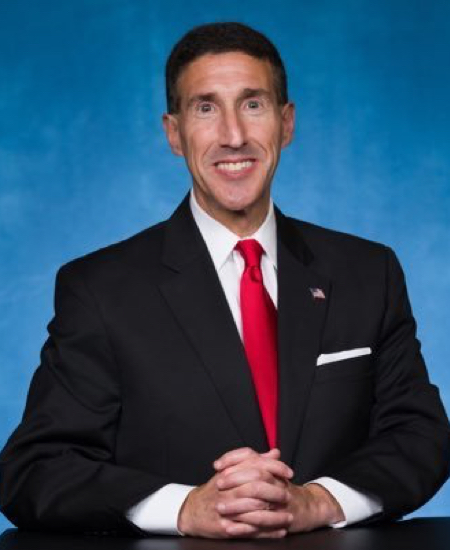
Rep. David Kustoff
Sponsored bills
Maddy summaryThis bill designates the United States Postal Service facility located at 83 East Park Street in Alamo, Tennessee, as the "Kenneth Nolen Davis Post Office." It requires that any future references to this specific facility in federal laws, maps, regulations, or documents be understood as referring to its new name.
Maddy summaryThis House resolution formally mourns the passing of Dolly Parton and honors her extensive contributions to American music, philanthropy, and public service. It highlights her establishment of key organizations such as Dollywood and the Imagination Library, which have significantly impacted education, health care, and disaster relief in Tennessee. The bill recognizes specific achievements, including her support for pediatric medical research and wildlife conservation efforts. By acknowledging these accomplishments, the resolution aims to celebrate her legacy and encourage continued community service across the United States.
Maddy summaryThe Nitrous Oxide Safety Act of 2026 would classify consumer products containing nitrous oxide as banned hazardous items under federal law, except for specific exceptions. The bill prohibits the sale of nitrous oxide products for recreational use while allowing continued sales for medical and dental treatments, food production in commercial kitchens, research and development activities, and food propellant applications. This legislation directly affects manufacturers, retailers, and consumers by restricting access to nitrous oxide in consumer products after 180 days from enactment. The law defines nitrous oxide as the gas known as laughing gas or whippits and specifies which entities and activities are exempt from the ban.
Maddy summaryThis bill designates the U.S. Postal Service facility at 417 West 7th Street in Columbia, Tennessee, as the "Pharmacist’s Mate First Class John Harlan Willis Post Office Building." It updates all official references (including laws, maps, and documents) to reflect this new name. The bill affects the specific post office location and any federal records mentioning it, without altering postal services or creating new policies. This is a ceremonial naming bill with no substantive policy changes.
Maddy summaryThis bill renames a specific United States Postal Service facility in Knoxville, Tennessee, located at 300 Macedonia Lane, as the "Reverend Harold Middlebrook Post Office Building." It directly affects the USPS location by changing its official name and requires all federal references to the building (in laws, maps, documents, etc.) to reflect the new name. The key provision is the formal designation and updating of all official records to use the new name. This is a ceremonial naming bill with no substantive policy changes.
Maddy summaryThe SCREEN Act creates a new tax credit to help owners of movie theaters in the United States pay for renovations and upgrades to their facilities. This credit covers 30% of the costs spent on eligible equipment and property used to show films, provided the theater has been in operation for at least five years. The amount of the credit is limited based on the number of screens a theater has, ranging from $250,000 for small theaters with fewer than four screens up to $500,000 for larger venues with ten or more screens. Businesses can use this credit to lower their overall tax bill, and the provision is available for expenses incurred after the law is passed until the end of 2030.
Maddy summaryHR 6213, the Heat Workforce Standards Act of 2025, prohibits the U.S. Department of Labor from finalizing, implementing, or enforcing OSHA's proposed "Heat Injury and Illness Prevention" standard (published August 30, 2024). This bill directly blocks the specific regulatory proposal targeting heat safety in both outdoor and indoor work settings. It does not create new requirements or affect workers; it solely prevents the implementation of the existing OSHA proposal. The bill is procedural, focusing on halting a regulatory action rather than establishing new policy.
Maddy summaryThe AADAPT Act reauthorizes and expands Project ECHO grants to improve Alzheimer’s and dementia care through technology-enabled training. It specifically funds grants for healthcare providers in rural, frontier, or medically underserved areas to enhance early diagnosis, quality care, and provider retention for dementia patients. The bill authorizes $1 million annually (2027-2032) for these dementia-focused training programs, requiring funds to supplement - not replace - existing resources. This directly supports primary care providers licensed to serve underserved communities, using collaborative online learning to address care gaps.
Maddy summaryThis bill establishes the INCLUDE Project at the National Institutes of Health (NIH) to advance research on Down syndrome and related health conditions. It requires NIH to fund high-risk studies on trisomy 21, support inclusive clinical trials for people with Down syndrome across all ages, and investigate co-occurring conditions like Alzheimer’s disease and autoimmunity. The law mandates NIH coordination across its institutes, consultation with patient advocates, and biennial reports to Congress detailing funded research and its real-world applications. The project directly affects individuals with Down syndrome, their families, and medical researchers, aiming to improve diagnosis, treatment, and quality of life through targeted scientific efforts.