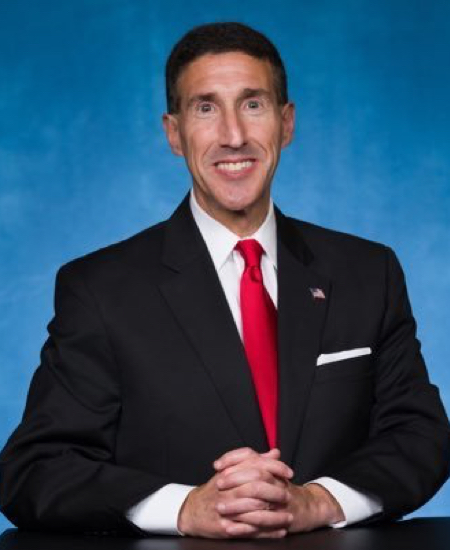
Photo of David Kustoff
R United States House · District 8 · Tennessee On the 2026 ballot

Rep. David Kustoff

Compare
Total votes
2,837
all sessions
Attendance
98%
48 missed
Higher than 78% of chamber peers
With party
96%
of cast votes
Higher than 90% of chamber peers
Bipartisan score
2%
crosses aisle rarely
Lower than 91% of chamber peers
Sponsored
718
bills & resolutions
Lower than 76% of chamber peers
Committees
3
assignments
718 bills and resolutions

Sponsored bills

Total
718
Primary
82
Co-sponsor
636
This page
718
matching current filters
Co-sponsor HR 5756
In committee · United States House · Co-sponsor
Portal for Appraisal Licensing Act of 2021

Portal for Appraisal Licensing Act of 2021 This bill establishes a central portal for real estate appraisers and real estate appraisal management companies to apply for and to renew certain licenses, certifications, and registrations. The portal must provide connectivity with state agencies and include the ability to pay fees. The Department of Justice must provide access to criminal history information to state officials for required background checks.

In committee Oct 27, 2021 1 co-sponsor
Co-sponsor HR 5735
In committee · United States House · Co-sponsor
State, Local, Tribal, and Territorial Fiscal Recovery, Infrastructure, and Disaster Relief Flexibility Act

State, Local, Tribal, and Territorial Fiscal Recovery, Infrastructure, and Disaster Relief Flexibility Act This bill allows states, tribes, territories, and localities to use certain COVID-19 relief funds for new categories of spending, including for natural disasters and infrastructure projects. It also makes changes to expenditure deadlines and other aspects of this funding. Specifically, recipients may use funds for emergency relief from natural disasters and associated negative economic impacts of natural disasters. In addition, recipients may use a portion of their COVID-19 relief funds for designated infrastructure projects, such as nationally significant freight and highway projects. Furthermore, the bill allows recipients to expend COVID-19 relief funds on these types of infrastructure projects until September 30, 2026. Under current law, recipients must expend the funds by December 31, 2024. Other changes in the bill include (1) modifying eligibility and allocation requirements for funding set aside for counties and Indian tribes that are near public lands, (2) allowing Indian tribes an additional year to expend their COVID-19 relief funds, and (3) establishing a process for government entities to decline COVID-19 relief funds and requiring any declined funds to be used to reduce the federal deficit.

In committee Oct 26, 2021 1 co-sponsor
Co-sponsor HR 5656
In committee · United States House · Co-sponsor
Simon Crosier Act

Simon Crosier Act This bill requires hospitals and other health care providers, as a condition of Medicare and Medicaid participation, to have certain written policies and procedures in place that limit the implementation of do-not-resuscitate (DNR) orders for unemancipated minors in accordance with specified criteria. Among other provisions, such policies and procedures must (1) require the informed consent of at least one parent and a reasonable attempt to contact the other parent before instituting a DNR order, (2) allow either parent to refuse to consent to a DNR order, and (3) allow a parent to transfer a minor to another facility after being informed of an intent to institute a DNR order.

In committee Oct 22, 2021 1 co-sponsor
Co-sponsor HRES 352
In committee Oct 19, 2021 1 co-sponsor
Primary HR 2787
In committee · United States House · Lead sponsor
SECURE CAMPUS Act of 2021

Safeguarding Educational Institutions, Colleges, Universities, and Research Entities from China's Attempts to Misappropriate Property of the United States Act of 2021 or the SECURE CAMPUS Act of 2021 This bill prohibits certain Chinese citizens from receiving visas to participate in graduate or post-graduate studies in science, technology, engineering, or math (STEM) and contains other related provisions. This prohibition applies to F (academic student) and J (exchange visitor) visas and does not apply to citizens or permanent residents of Taiwan or Hong Kong. (China considers Taiwan a Chinese province. Hong Kong is a special administrative region within China, and most of its permanent inhabitants are Chinese citizens.) The Department of State may waive this prohibition on a case-by-case basis for national security purposes or if the applicant is a member of a religious or ethnic group that is systematically oppressed by the Chinese Communist Party. Institutions of higher education in the federal Student and Exchange Visitor Program must annually certify that no prohibited Chinese citizens are permitted to participate in the institution's graduate or post-graduate STEM programs. A recipient of a federal STEM research grant must certify that the recipient (1) is not a Chinese citizen or a participant in a Chinese government foreign researcher recruitment program (a program that compensates individuals to conduct STEM-related research and development), and (2) will not knowingly use grant funds to employ such an individual. Entities that receive certain federal research or education assistance shall not knowingly employ any individual participating in a Chinese government foreign researcher recruitment program. An individual who recruits or performs research for such a program must register as an agent of a foreign principal.

In committee Oct 19, 2021 0 co-sponsors
Co-sponsor HR 19
In committee · United States House · Co-sponsor
Lower Costs, More Cures Act of 2021

Lower Costs, More Cures Act of 2021 This bill establishes and modifies several programs and requirements to address prescription drug prices. The bill modifies provisions under Medicare and Medicaid relating to prescription drug coverage and price transparency. Among other changes, the bill requires the Centers for Medicare & Medicaid Services to publish certain information, as reported by pharmacy benefit managers (PBMs), relating to generic dispensing rates, drug discounts and rebates, and payments between PBMs, health plans, and pharmacies; caps annual out-of-pocket spending under the Medicare prescription drug benefit; allows prescription drug plan sponsors under the Medicare prescription drug benefit to offer additional plans in a region; requires pass-through pricing models, and prohibits spread-pricing, for payment arrangements with PBMs under Medicaid; and allows states to include in the Medicaid Drug Rebate Program covered outpatient drugs that are provided as part of physician or outpatient hospital services. The bill also generally modifies other provisions relating to the regulation and costs of generic and brand-name drugs. Among other changes, the bill prohibits the manufacturer of a brand-name, generic, or biosimilar drug from entering into certain agreements to resolve or settle a patent infringement claim in connection with the sale of a drug or biological product; permanently allows high deductible health plans to waive deductibles for insulin and associated products; and establishes the position of Chief Pharmaceutical Negotiator in the Office of the U.S. Trade Representative.


In committee Oct 19, 2021 1 co-sponsor
Co-sponsor HR 2493
In committee · United States House · Co-sponsor
Holocaust Insurance Accountability Act of 2021

Holocaust Insurance Accountability Act of 2021 This bill allows a beneficiary (or an heir of a beneficiary) of certain insurance policies in effect during the Holocaust to sue in U.S. district court to enforce rights under such policies. An insurance policy covered under this bill must have been (1) in effect at any time between January 31, 1933, and December 31, 1945, and (2) issued to a policyholder domiciled in Nazi-controlled territory or Switzerland. A court shall award to a prevailing beneficiary (1) the amount due under a policy, (2) prejudgment interest of 6% a year, (3) attorney's fees and costs, and (4) treble damages if the insurer acted in bad faith.  An action under this bill or state law related to a covered insurance policy shall be considered timely if filed within 10 years of this bill's enactment. Judgments and agreements entered before this bill's enactment shall not preclude a claim brought under the bill, with certain exceptions. Neither executive agreements between the United States and a foreign government nor U.S. executive foreign policies shall (1) affect or preclude claims brought under this bill, or (2) supersede or preempt any state laws relating to insurance policies covered by this bill.

In committee Oct 19, 2021 1 co-sponsor
Co-sponsor HR 2314
In committee · United States House · Co-sponsor
Protect Our Police Act

Protect Our Police Act This bill provides statutory authority for Executive Order 13809, which was issued on August 28, 2017. The order revoked a 2015 executive order establishing an interagency working group to recommend improvements to the process through which state, local, and tribal law enforcement agencies acquire controlled equipment (e.g., firearms or military-style equipment) from the federal government.

In committee Oct 19, 2021 1 co-sponsor
Co-sponsor HR 5586
In committee · United States House · Co-sponsor
Prohibiting IRS Financial Surveillance Act

Prohibiting IRS Financial Surveillance Act This bill prohibits the Department of the Treasury from requiring a financial institution to report the transfers into and out of a financial account. This prohibition does not apply to laws or regulations in effect on October 1, 2021.

In committee Oct 15, 2021 1 co-sponsor
Showing 581 to 590 of 718 bills
Previous 1 … 58 59 60 … 72 Next