Freedom from Unfair Gun Taxes Act of 2024 This bill prohibits states or localities from imposing a levy or collecting an excise tax on the sale of a firearm, ammunition, or any part or component thereof, by a manufacture or retailer.
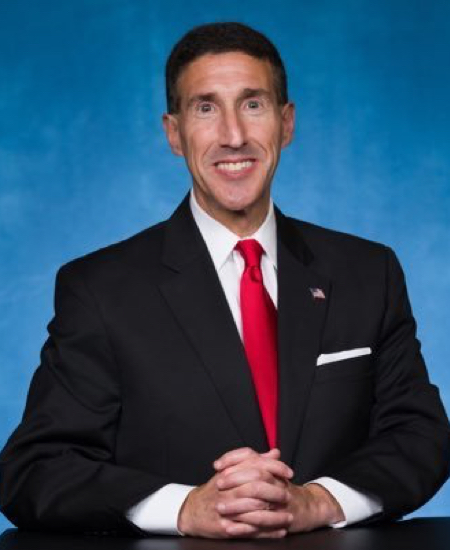
Rep. David Kustoff
Sponsored bills
Maddy summaryThis bill defines "sex," "male," and "female" in federal law based on biological characteristics present at birth, specifically referencing reproductive anatomy (e.g., sperm production for males, egg production for females). It mandates that all federal agencies, courts, and laws interpret these terms strictly according to this biological definition, excluding self-identification or gender identity. The bill directly affects how federal programs, regulations, and legal decisions interpret terms like "sex," "gender," and "gender identity" in all federal contexts. Key provisions clarify that "gender" refers only to biological sex differences and explicitly states that gender identity does not override these definitions.

Maddy summaryThe Respect State Housing Laws Act amends the CARES Act by removing subsection (c) of Section 4024, which governed notice requirements for housing assistance programs. This change eliminates a specific federal notice provision that applied to tenants and landlords receiving CARES Act housing aid. The bill directly affects the administrative process for housing assistance under the CARES Act, streamlining or removing a requirement for notice delivery. It modifies an existing provision without creating new policy or altering broader housing protections.
Maddy summaryHCONRES 122 is a non-binding resolution expressing Congress's view that Operation Legend - a 2020 federal-local initiative - successfully reduced violent crime in major cities like Chicago, Kansas City, and Memphis. It recommends that future presidential administrations consider deploying federal law enforcement agents to partner with local agencies in high-crime areas, similar to Operation Legend’s 2020 approach. The resolution also proposes providing grant funding to states and cities to hire more officers (including bonuses), impose stricter sentences for repeat offenders, and use bail/pretrial detention to keep dangerous individuals from reentering communities. It does not create new law but urges future administrations to prioritize these strategies to address ongoing violent crime surges.
Maddy summaryHJRES 164 is a congressional resolution seeking to block a rule issued by the Department of Commerce regarding firearms license requirements. It directly targets the rule published in the Federal Register (89 Fed. Reg. 34680), which would have revised licensing procedures for firearms dealers. If passed, the resolution would prevent this rule from taking effect by invoking the congressional disapproval process under federal law. The bill does not create new regulations but aims to halt an existing rule affecting gun license applicants and dealers.
Maddy summaryHRES 1323 is a House resolution rejecting a United Nations report that listed the Israel Defense Forces (IDF) as failing to protect children in conflict. It condemns the UN for what the resolution describes as "longstanding bias against Israel" and reaffirms U.S. support for Israel's right to defend itself. The resolution does not alter any laws or policies but expresses congressional opposition to the UN's decision. This procedural resolution has no binding effect and focuses solely on symbolic congressional stance.
Maddy summaryThe Revitalizing Downtowns and Main Streets Act creates a 20% tax credit for converting non-residential buildings into affordable housing. To qualify, buildings must be at least 20 years old and nonresidential, with conversion costs exceeding 50% of the building's adjusted basis or $100,000. The converted housing must be rent-restricted for 30 years for residents earning 80% or less of area median income (60% in certain designated areas), with a $12 billion national credit limit. Special provisions apply for economically distressed areas and rural historic preservation projects, primarily affecting developers who convert vacant commercial buildings in downtown or main street areas into affordable housing.
Maddy summaryHR 7914, the Accountability for Terrorist Perpetrators of October 7th Act, imposes U.S. sanctions on the Popular Resistance Committees (PRC) and associated individuals or groups, including blocking property transactions and denying visas to members. The bill requires the President to enforce these sanctions 90 days after enactment, with exceptions for United Nations operations and national security activities, and allows temporary 180-day waivers for national security reasons. It also mandates a 90-day report to Congress on whether the PRC and the group "Lion's Den" meet criteria for designation as terrorist organizations under existing laws. Ongoing reports every two years will track new entities linked to the PRC.
Maddy summaryHRES 1340 is a ceremonial resolution congratulating the University of Tennessee, Knoxville baseball team for winning the 2024 College World Series - their first national championship in program history. The resolution honors the team's achievements, including being the first Southeastern Conference team to win 60 games in a season, and directs the House Clerk to send copies to the head coach, university chancellor, and athletic director. It does not create new laws or policies but formally recognizes the team's victory and support from fans and Tennessee.
Maddy summaryThis bill (HR 2365, Public Law 118-66) directs the U.S. Department of Health and Human Services (HHS) to establish the National Parkinson’s Project. It requires HHS to create and update a coordinated national plan for preventing, diagnosing, treating, and researching Parkinson’s disease and related disorders (including multiple system atrophy and progressive supranuclear palsy), while coordinating federal research and care efforts across agencies like the NIH, CDC, and VA. The law mandates annual progress assessments, an advisory council with patient advocates and diverse experts, and annual reports to Congress on federal Parkinson’s programs and recommendations for improvement. It affects federal agencies managing Parkinson’s-related programs and aims to improve care coordination and research efficiency for patients and caregivers, with the law sunsetting in 2035.