

Protecting Horses from Soring Act of 2021 This bill revises requirements concerning the inspection of horse shows, exhibitions, sales, and actions for sored horses (e.g., horses suffering from pain when moving due to substances or devices placed on their limbs). Specifically, this bill replaces a requirement for the Department of Agriculture to prescribe regulations governing the appointment of inspectors with a requirement for the Horse Industry Organization, which is established by this bill, to appoint inspectors.
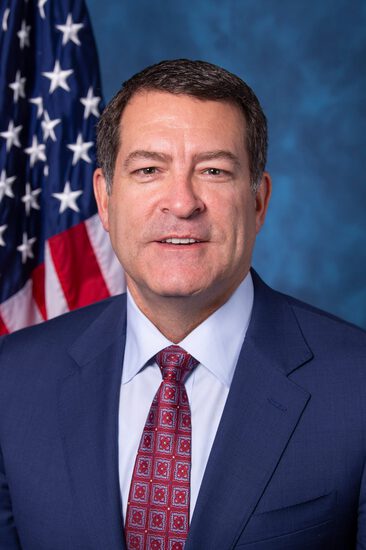
Rep. Mark E. Green
Sponsored bills
This bill designates the federal building at 167 North Main Street in Memphis, Tennessee (commonly known as the Clifford Davis and Odell Horton Federal Building), as the Odell Horton Federal Building.
This bill designates the building utilized as a U.S. courthouse located at 111 South Highland Avenue in Jackson, Tennessee, as the James D. Todd United States Courthouse.
This resolution states that the Chinese government is responsible for ongoing abuses against the Uyghurs and other ethnic and religious minority groups and that these abuses constitute genocide and crimes against humanity. The resolution also condemns such genocide and crimes against humanity and calls on the President to take certain actions to put an end to these atrocities.
Medicare Stability for Patients and Providers Act This bill prohibits the Centers for Medicare & Medicaid Services (CMS) from implementing the clinical labor price updates in a specified rule that was issued on November 19, 2021, relating to the Medicare physician fee schedule for 2022. The CMS must also analyze and report on information relating to the physician fee schedule in general, including whether it has accurately reflected medical inflation or should be reformed.
Maddy summaryHR 6020, the Supporting Medicare Providers Act of 2021, extends temporary Medicare payment increases for physicians through 2022 instead of ending them on January 1, 2022. It updates specific dates in Medicare law (Section 1848(t) of the Social Security Act) to maintain current payment rates for doctors treating Medicare patients. This directly affects physicians and clinics participating in Medicare who rely on these temporary payment adjustments. The bill makes no new policy changes but ensures existing payment levels continue for providers during 2022.
This joint resolution nullifies a Department of Labor emergency temporary standard for preventing the transmission of COVID-19 in employment settings. Under the standard issued on November 5, 2021, employers with 100 or more employees must require their onsite employees to either be fully vaccinated against COVID-19 or undergo weekly COVID-19 testing.
Uyghur Stop Oppressive Sterilizations Act or the Uyghur SOS Act This bill expands existing visa-blocking sanctions to cover certain high-ranking foreign government officials who are responsible for coercive population control policies, such as forced abortions, with a focus on those responsible for such policies against ethnic minority groups in China. Specifically, the Department of State may not issue a visa to a foreign national who is a head of state, head of government, or cabinet-level minister and responsible for establishing or enforcing such policies if the policies are (1) imposed with the intent to destroy a national, ethnic, racial, or religious group; or (2) targeting ethnic minority groups (e.g., Uyghurs, Kazakhs, or Tibetans) or individuals peacefully expressing internationally-recognized human rights in China. (Currently, these sanctions do not apply to any foreign government officials at these higher ranks.) The State Department must make a public announcement each time sanctions are imposed under this bill. The bill also requires the State Department to provide all appropriate assistance to women who belong to an ethnic minority group in China and who have experienced sexual violence, torture, or coercive population control policies.
Federal Initiative to Guarantee Health by Targeting Fentanyl Act This bill places fentanyl-related substances as a class into schedule I of the Controlled Substances Act. A schedule I controlled substance is a drug, substance, or chemical that has a high potential for abuse; has no currently accepted medical value; and is subject to regulatory controls and administrative, civil, and criminal penalties under the Controlled Substances Act. Additionally, the bill prohibits the application of a mandatory minimum prison term for certain drug offenses involving fentanyl-related substances.
This bill establishes a statutory definition for infrastructure . The bill specifies that, except where context determines otherwise, the term infrastructure means bridges, dams, wharfs, roads, highways, ports, buildings, public utilities (including broadband), airports, and train stations.