

Maddy summaryThis bill restricts federal funding for jurisdictions that limit cooperation with federal immigration enforcement. It defines a "sanctuary jurisdiction" as any state or local government that prohibits sharing immigration status information or complying with federal detainer requests (except for crime victims/witnesses). Starting after enactment, such jurisdictions lose eligibility for federal funds intended to provide food, shelter, healthcare, legal services, or transportation to undocumented immigrants. The law directly affects cities and states with specific immigration policies, not the immigrants themselves.
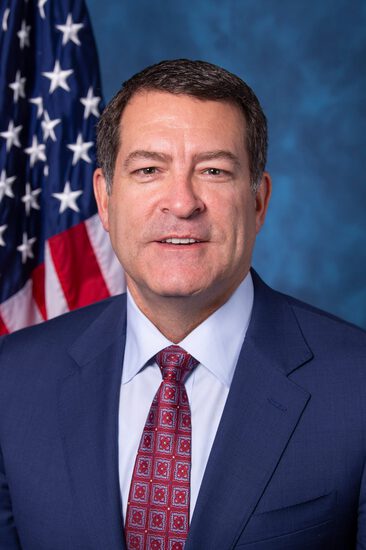
Rep. Mark E. Green
Sponsored bills
Maddy summaryThe Counter-UAS Authority Security, Safety, and Reauthorization Act establishes a framework for federal agencies to detect, identify, and mitigate unauthorized drones that threaten aviation safety. It creates a process for approving counter-UAS systems that meet safety requirements, requires coordination between the FAA, Department of Homeland Security, and Department of Justice, and mandates annual reporting on all counter-UAS activities. The bill directly affects covered entities like airports and large public gatherings, requiring them to work with law enforcement to deploy approved counter-UAS systems. It includes privacy protections for communications intercepted during counter-UAS operations and expires on October 1, 2028.
Maddy summaryHJRES 144 is a congressional disapproval resolution targeting a specific rule issued by the Bureau of Alcohol, Tobacco, Firearms, and Explosives (ATF) on April 19, 2024. The resolution seeks to block the ATF's rule that redefined the term "engaged in the business" for firearm dealers, which would have affected how federal licensing requirements apply to certain sellers. If enacted, this resolution would nullify the rule, preventing it from taking effect under procedures in Title 5 of the U.S. Code. The bill directly impacts firearm dealers operating under the current regulatory framework and the ATF's enforcement authority.
Maddy summaryThe Federal Lands Amplified Security for the Homeland (FLASH) Act authorizes the construction of navigable roads on Federal lands along the southern border to improve U.S. Customs and Border Protection access, while establishing policies to reduce trash accumulation and address environmental damage from unauthorized border crossings. The bill requires agencies to develop protocols for mitigating wildfire risks through vegetation management, prohibits Federal funds from being used to provide housing for unauthorized immigrants on Federal lands, and includes provisions to address illegal cannabis cultivation and pesticide use. It mandates annual reports on waste collection and environmental impacts, and authorizes $16 million annually for initiatives to address contamination from trespass cannabis cultivation on covered Federal lands. The legislation directly affects land management operations on approximately 50 million acres of Federal lands administered by the National Park Service, Bureau of Land Management, Fish and Wildlife Service, and Forest Service along the southern border.
Maddy summaryThis bill directs the Joint Committee on the Library to procure a statue of Benjamin Franklin and place it in the U.S. Capitol. The committee must secure the statue within two years of the bill's enactment and install it in a public-accessible location by January 1, 2026, for viewing during Capitol Visitor Center guided tours. It is a procedural measure with no policy changes or direct impact on constituents or legislation.
Maddy summaryHR 1425, the "No WHO Pandemic Preparedness Treaty Without Senate Approval Act," requires the U.S. Senate to approve any World Health Organization (WHO) pandemic preparedness treaty through a two-thirds vote. The bill deems any convention, agreement, or international instrument on pandemic prevention drafted by the WHO’s International Negotiating Body (INB) as a treaty subject to Senate ratification, rather than allowing it to take effect as an executive agreement. This directly affects U.S. foreign policy implementation regarding WHO agreements, ensuring Congress has a formal role in approving such binding international commitments. The bill stems from congressional concerns about WHO’s pandemic response and public skepticism toward the organization, as outlined in its findings.
Maddy summaryThis resolution (HRES 1446) formally condemns Cuba's labor export program, which deploys medical personnel abroad under conditions described in the 2024 U.S. Trafficking in Persons (TIP) Report as involving forced labor and human trafficking. It directly affects Cuban medical workers deployed in 72 countries over five years, who reportedly have wages withheld, passports confiscated, and face restricted movement. The resolution urges host governments to pay medical workers directly (bypassing Cuba) and calls for U.S. visa revocations against officials from Cuba, Brazil, Honduras, Mexico, and the Pan American Health Organization involved in these programs. It cites the State Department’s finding that Cuba profits $6-8 billion annually from this system while failing to meet international labor standards.
Maddy summaryHRES 1447 is a non-binding resolution expressing support for designating the week of September 22-28, 2024, as "Gold Star Families Remembrance Week." It directly honors families who lost loved ones while serving in the U.S. military (referred to as "Gold Star Families") and families of veterans. The resolution encourages Americans to observe the week by performing community service and celebrating the sacrifices of fallen service members, without creating new laws or obligations. It aligns with existing recognition of Gold Star Mother’s Day (the last Sunday in September) but expands the focus to all affected families.
Maddy summaryThis bill blocks U.S. Department of Homeland Security (DHS) funding to colleges and universities that maintain relationships with Confucius Institutes or "Chinese entities of concern" (defined as institutions linked to China's military or defense sectors). It requires affected schools to terminate such relationships within 12 months of the bill's enactment to regain eligibility for DHS funds. The law directly impacts higher education institutions receiving DHS funding, not all schools or federal programs. Key provisions mandate DHS to deny funding to institutions with ongoing ties to these entities, with eligibility restored only after relationship termination.
Maddy summaryThis bill creates a presumption of service connection for specific health conditions in veterans who served at Karshi Khanabad Air Base in Uzbekistan. It directly affects those veterans by automatically linking certain diseases to their military service at that location, without requiring them to prove the connection. Key provisions include presuming service connection for all cancers, thyroid diseases, bone disorders, cardiovascular conditions, skin issues, neurological problems, reproductive diseases, respiratory illnesses, endocrine disorders, liver/kidney diseases, and cataracts. The bill amends existing law to add this presumption as a new category under veterans' health benefits.