

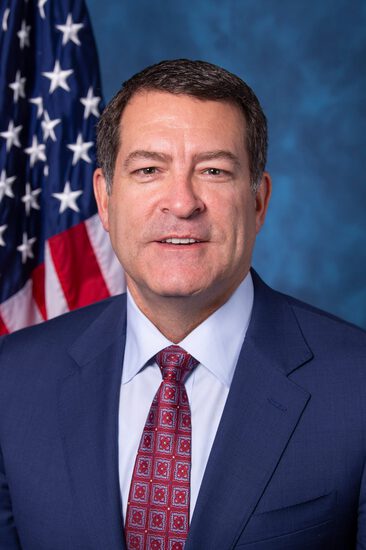
Photo of Mark E. Green
R United States House · District 7 · Tennessee

Rep. Mark E. Green

Compare
Total votes
2,375
all sessions
Attendance
94%
150 missed
Lower than 97% of chamber peers
With party
93%
of cast votes
Near the chamber average
Bipartisan score
4%
crosses aisle rarely
Near the chamber average
Sponsored
562
bills & resolutions
Lower than 95% of chamber peers
Committees
0
assignments
562 bills and resolutions

Sponsored bills

Total
562
Primary
95
Co-sponsor
467
This page
562
matching current filters
Primary HRES 1527
In committee · United States House · Lead sponsor
Recognizing October 2024 as "American Pharmacists Month" in honor of the contribution of pharmacists to provide safe, accessible, affordable, and beneficial patient care services and products to all residents and protect the public health of our communities.

Maddy summaryHRES 1527 is a symbolic resolution recognizing October 2024 as "American Pharmacists Month" to honor pharmacists' contributions to providing safe, accessible, and affordable patient care. It highlights pharmacists' role as highly accessible healthcare providers who support medication adherence, chronic disease management, and public health across communities. The resolution does not create new laws or funding but formally acknowledges pharmacists' work through community pharmacies and their collaboration with other healthcare providers.

In committee Oct 1, 2024 0 co-sponsors
Primary HR 9770
In committee · United States House · Lead sponsor
Cyber PIVOTT Act

Maddy summaryThe Cyber PIVOTT Act creates the PIVOTT Program to build a cybersecurity workforce by providing full scholarships to students at community colleges and technical schools pursuing cyber or cyber-relevant associate's degree programs. The program covers tuition, fees, certification costs, and internship expenses, requiring participants to complete a two-year service obligation in a cyber role after graduation, with exceptions for military service. It mandates skills-based exercises like hackathons and labs, internship placements with government entities and critical infrastructure organizations, and maintains a database mapping training to job roles. The bill sets enrollment goals of 250 students in the first year, doubling annually until reaching 1,000 students, with a long-term target of 10,000 students annually. The program aims to address cybersecurity workforce gaps by creating direct pathways from education to government cyber positions.

In committee Sep 25, 2024 0 co-sponsors
Co-sponsor HR 9752
In committee · United States House · Co-sponsor
Tren de Aragua Southwest Border Security Threat Assessment Act

Maddy summaryHR 9752, the Tren de Aragua Southwest Border Security Threat Assessment Act, requires the Secretary of Homeland Security to submit two reports within 180 days of enactment. The first report (threat assessment) must detail Tren de Aragua's criminal threats, origins, methods, funding, and presence along the southwest border (U.S.-Mexico border), while the second report (strategic plan) must outline DHS's strategy to counter these threats through interagency coordination and disruption efforts. The bill directly affects DHS, intelligence agencies, and border law enforcement by mandating specific analysis and planning to address this transnational criminal group. It does not change existing laws but establishes a process for evaluating and responding to security vulnerabilities.

In committee Sep 25, 2024 1 co-sponsor
Co-sponsor HR 9731
In committee · United States House · Co-sponsor
Special Interest Alien Reporting Act of 2024

Maddy summaryHR 9731, the Special Interest Alien Reporting Act of 2024, requires the Department of Homeland Security (DHS) to publish monthly reports on individuals classified as "special interest aliens" attempting unlawful entry into the U.S. These reports, due by the seventh day of each month, must detail the total number and nationalities of such individuals, broken down by geographic region and location of encounter (e.g., ports of entry, border areas, or interior). The reports must also identify if encounters involve individuals from "covered nations" (as defined in existing law). This bill mandates transparency for Congress and the public but does not change immigration law or enforcement practices.

In committee Sep 25, 2024 1 co-sponsor
Co-sponsor HR 9722
In committee · United States House · Co-sponsor
CATCH Fentanyl Act

Maddy summaryHR 9722, the CATCH Fentanyl Act, directs U.S. Customs and Border Protection (CBP) to test new technology at land border ports to improve detection of fentanyl, drugs, weapons, and smuggling. Over five years, CBP must run pilot projects evaluating at least five types of nonintrusive inspection technologies - such as AI-powered scanners and machine learning tools - to enhance detection accuracy, reduce inspection wait times, and integrate with existing systems. The bill requires CBP to analyze performance metrics like detection rates and false alarms, prioritize cost-effective solutions, and submit reports on privacy impacts and recommendations for broader implementation. The pilot program ends after five years, with no new funding authorized for the initiative.

In committee Sep 25, 2024 1 co-sponsor
Co-sponsor HR 8119
In committee · United States House · Co-sponsor
PEARL Act

Maddy summaryHR 8119, the PEARL Act, establishes a 3-year pilot program at U.S. Customs and Border Protection (CBP) to adopt therapy dogs from local animal shelters for emotional support of CBP personnel. The bill requires the Secretary of Homeland Security to create the program within 60 days of enactment, train shelter dogs as therapy dogs, and reimburse CBP for related costs. It also authorizes $1,000,000 for CBP's existing Support Canine Program. The bill directly affects CBP officers and staff by introducing a new emotional wellness resource through therapy dog interactions.

In committee Sep 25, 2024 1 co-sponsor
Co-sponsor HR 8068
In committee · United States House · Co-sponsor
Stop the Baseline Bloat Act of 2024

Maddy summaryThis bill amends the budget baseline calculation method under the Balanced Budget and Emergency Deficit Control Act. It adds a specific exclusion for emergency funding and supplemental appropriations when determining the baseline deficit figure. This change directly affects how federal budget deficits are measured and reported under current law. The key provision prevents emergency and supplemental funds from being counted toward the baseline, altering the calculation used for deficit targets. The bill makes a technical adjustment to budget scoring rules without creating new spending or policy requirements.

In committee Sep 25, 2024 1 co-sponsor
Co-sponsor HR 5729
In committee · United States House · Co-sponsor
To prohibit the use of Federal funds to establish a Homeland Intelligence Experts Group, and for other purposes.

Maddy summaryHR 5729 blocks federal funding for creating a "Homeland Intelligence Experts Group" at the Department of Homeland Security (DHS) and prohibits funding for any equivalent group, program, or activities. It prevents the DHS Secretary from using allocated funds to establish such a group or similar efforts starting from the bill's enactment date. This directly affects DHS budget planning and spending authority for intelligence-related initiatives.

In committee Sep 25, 2024 1 co-sponsor
Co-sponsor HR 3169
In committee · United States House · Co-sponsor
Port Crane Security and Inspection Act of 2023

Maddy summaryHR 3169, the Port Crane Security and Inspection Act of 2023, requires the Department of Homeland Security to inspect internet-connected foreign cranes deemed high-risk for security threats before they are used at U.S. ports. It mandates a threat assessment of existing and new cranes within 180 days of enactment and orders cranes posing security risks to be taken offline until certified safe. The bill prohibits operating new foreign cranes (from "covered foreign countries" like those identified as adversaries by U.S. intelligence) after enactment and bans the use of foreign software on port cranes after a 5-year deadline. This directly affects port operators and crane manufacturers from countries designated as security threats, focusing on securing port cyber infrastructure.

In committee Sep 25, 2024 1 co-sponsor
Co-sponsor HR 5526
Passed · United States House · Co-sponsor
Seniors’ Access to Critical Medications Act of 2024

Maddy summaryThis bill clarifies Medicare rules to allow doctors to provide certain critical medications directly in their offices without extra administrative hurdles. It specifically amends a Medicare provision (Section 1877(b)(2) of the Social Security Act) to remove a requirement that drugs furnished in-office must follow specific administrative rules, effective May 11, 2023. The bill also directs the removal of conflicting Medicare guidance published in 2021 and 2023, which had previously restricted this practice. This change directly affects Medicare beneficiaries (seniors) and doctors' offices that supply covered medications during patient visits. It streamlines access to necessary drugs by eliminating an unnecessary barrier to in-office medication administration under Medicare.

Passed Sep 24, 2024 1 co-sponsor
Showing 151 to 160 of 562 bills
Previous 1 … 15 16 17 … 57 Next