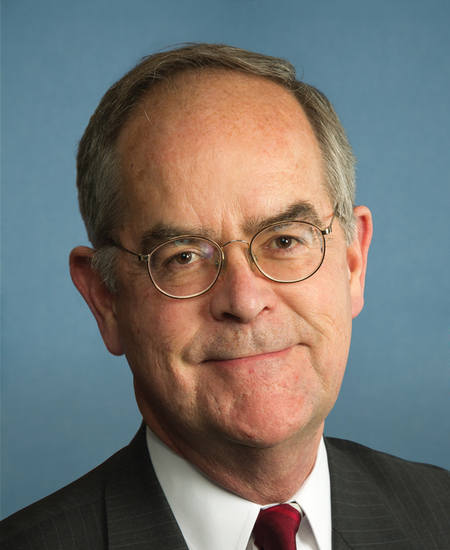
Photo of Jim Cooper
D United States House · District 5 · Tennessee

Rep. Jim Cooper

Compare
Total votes
958
all sessions
Attendance
99%
9 missed
Near the chamber average
With party
99%
of cast votes
Higher than 82% of chamber peers
Bipartisan score
0%
crosses aisle rarely
Lower than 83% of chamber peers
Sponsored
486
bills & resolutions
Near the chamber average
Committees
0
assignments
486 bills and resolutions

Sponsored bills

Total
486
Primary
10
Co-sponsor
476
This page
486
matching current filters
Co-sponsor HRES 537
In committee · United States House · Co-sponsor
MEMBERS Resolution

Mandating that being an Elected Member Be an Essential Requirement for Speakership Resolution or the MEMBERS Resolution This resolution bars an individual from being eligible to be nominated to serve as Speaker of the House of Representatives unless the individual is a Member, Delegate, or Resident Commissioner (or, in the case of a nomination made prior to the beginning of the Congress in which the individual would serve as Speaker, is a Member-elect, Delegate-elect, or Resident Commissioner-elect).

In committee Jul 19, 2021 1 co-sponsor
Co-sponsor HR 4413
In committee · United States House · Co-sponsor
National Infrastructure Development Bank Act of 2021

National Infrastructure Development Bank Act of 2021 This bill establishes the National Infrastructure Development Bank as a government corporation to finance energy, environmental (e.g., drinking water or waste facilities), telecommunications, and transportation infrastructure projects. The bill establishes the National Infrastructure Development Bank Board, which must oversee the infrastructure projects. The board may make loans and loan guarantees to assist in financing infrastructure projects. Further, the board must establish an executive committee, a risk management committee, an audit committee, and a compliance office. To be eligible for financial assistance from the bank, an infrastructure project (1) must have a public benefit, as determined by the board; and (2) may not have a sole use or purpose that is private. An infrastructure project must use iron, steel, and manufactured products that are made in the United States. The bill also establishes accounting and reporting requirements. In particular, the Government Accountability Office must, within five years of this bill's enactment, submit a report to Congress evaluating the bank's activities.

In committee Jul 14, 2021 1 co-sponsor
Co-sponsor HR 2436
In committee · United States House · Co-sponsor
Veterans Burn Pits Exposure Recognition Act of 2021

Veterans Burn Pits Exposure Recognition Act of 2021 This bill requires the Department of Veterans Affairs (VA) to concede, for the purposes of health care benefits and wartime disability compensation, that a veteran was exposed to certain toxic substances, chemicals, and hazards from burn pits if such veteran served on active duty in a covered location during a specified time frame (unless there is affirmative evidence to establish that the veteran was not exposed during such service). A burn pit is an area used for burning solid waste in open air without equipment. Specifically, the bill covers the following locations and corresponding time periods: Iraq between August 2, 1990, and February 28, 1991, as well as from March 19, 2003, until burn pits are no longer used in this location; Somalia and Southwest Asia (including Kuwait, Saudi Arabia, Oman, and Qatar) from August 2, 1990, until burn pits are no longer used in these locations; and Afghanistan, Syria, Jordan, Egypt, Lebanon, Yemen, Uzbekistan, the Philippines, and Djibouti from September 11, 2001, until burn pits are no longer used in these locations. Under the bill, if an exposed veteran submits insufficient evidence to establish a service-connection for purposes of disability compensation, the VA shall provide a medical examination and request a medical opinion regarding a causal link between the disability and a toxin, chemical, or hazard.


In committee Jul 14, 2021 1 co-sponsor
Co-sponsor HR 2225
Passed · United States House · Co-sponsor
National Science Foundation for the Future Act

National Science Foundation for the Future Act This bill reauthorizes the National Science Foundation (NSF) through FY2026 and authorizes programs and activities at the NSF. The bill establishes requirements for the NSF, including to enter into a contract with the National Academies of Science, Engineering, and Medicine to assess the status and opportunities for Pre-K through 12 science, technology, engineering, and mathematics, including computer science, (STEM) education research; award grants to establish no fewer than three multidisciplinary Centers for Transformative Education Research and Translation to support research and development of STEM education innovations; provide grants for research on programming that engages students in grades Pre-K through 8, including underrepresented and rural students, in STEM in order to prepare such students to pursue degrees or careers in STEM; award grants to support research and development activities to encourage greater collaboration and coordination between institutions of higher education and industry to enhance education, foster hands-on learning experiences, and improve alignment with workforce needs; award grants to establish a network of centers for science and technical education; award grants to advance research on the nature of learning and teaching at community colleges; award grants to establish traineeship programs for graduate students who pursue artificial intelligence-related research leading to a masters or doctorate degree; award grants to carry out research on the cyber workforce; establish a cybersecurity workforce data initiative; carry out a national initiative to facilitate the development of networks and partnerships to broaden participation in STEM studies and careers of groups historically underrepresented in such studies and careers; maintain a Research Security and Policy office to coordinate all research security policy issues across the NSF; award grants to support research to improve our understanding of the climate system and related human and environmental systems; support research to significantly advance our understanding of the food-energy-water system; award grants to advance knowledge of risk assessment and predictability to improve our ability to predict extreme events and natural hazards, including pandemics; and award grants to support basic research that will accelerate innovation to advance critical minerals mining strategies and technologies. The bill also establishes within the NSF a Directorate for Science and Engineering Solutions to advance research and development solutions to address societal and national challenges.

Passed Jul 12, 2021 1 co-sponsor
Co-sponsor HR 391
Passed · United States House · Co-sponsor
Global Health Security Act of 2021

Global Health Security Act of 2021 This bill directs the United States to implement a strategy to strengthen global health security, including by requiring the President to create the Global Health Security Agenda Interagency Review Council to implement the Global Health Security Agenda. The agenda is an initiative launched by nearly 30 nations to address global infectious disease threats. The council's responsibilities include (1) providing policy recommendations on agenda-related goals, objectives, implementation, and other international efforts to strengthen pandemic preparedness and response; (2) helping federal agencies with implementation; and (3) reviewing the progress and challenges in achieving U.S. commitments, including assistance to help other countries meet agenda targets. The bill also directs the federal agencies involved with the agenda to prioritize its implementation and to take certain steps to achieve that goal. The President shall coordinate a strategy for responding to global health security emergencies and submit a report on the implementation of this strategy. Additionally, the Department of State should seek to enter into negotiations with donors, relevant United Nations agencies, and other multilateral stakeholders to establish a Fund for Global Health Security and Pandemic Preparedness that (1) closes gaps in global health security and pandemic preparedness; and (2) builds capacity in eligible partner countries related to global health security, infectious disease control, and pandemic preparedness. The fund should provide grants, technical assistance, and innovative funding mechanisms to achieve its purposes.

Passed Jul 12, 2021 1 co-sponsor
Co-sponsor HR 239
Passed · United States House · Co-sponsor
Equal Access to Contraception for Veterans Act

Equal Access to Contraception for Veterans Act This bill prohibits the Department of Veterans Affairs from requiring payment from a veteran for any contraceptive item that is required to be covered by health insurance plans without a cost-sharing requirement.

Passed Jul 12, 2021 1 co-sponsor
Co-sponsor HR 4319
In committee · United States House · Co-sponsor
PROTECT 911 Act

Providing Resources and Occupational Training for Emotional Crisis and Trauma in 911 Act or the PROTECT 911 Act This bill requires reporting on, and authorizes a grant program to address, suicide and other behavioral health issues among 9-1-1 operators and other public safety personnel who receive and communicate requests for emergency assistance. Specifically, the Centers for Disease Control and Prevention must develop a reporting system to collect data on the suicide rate among and identify best practices to reduce suicides within that profession. In addition, the bill establishes within the Department of Homeland Security grants for emergency communications centers and relevant nonprofits to raise awareness of, prevent, and mitigate job-related mental health issues.

In committee Jul 2, 2021 1 co-sponsor
Co-sponsor HR 4323
In committee · United States House · Co-sponsor
Excellence in Mental Health and Addiction Treatment Act of 2021

Excellence in Mental Health and Addiction Treatment Act of 2021 This bill increases the number of states that may participate in two-year Medicaid demonstration programs that improve access to community mental health services. It also provides for additional grants to certified community behavioral health clinics.

In committee Jul 2, 2021 1 co-sponsor
Co-sponsor HR 3277
In committee · United States House · Co-sponsor
Animal Welfare Enforcement Improvement Act

Animal Welfare Enforcement Improvement Act This bill revises the licensing process of the Department of Agriculture (USDA) for animal dealers and exhibitors to expand USDA's oversight and enforcement of animal welfare requirements. The bill also authorizes citizen suits to enforce the Animal Welfare Act. Dealers and exhibitors must apply to USDA for licenses or renewal licenses each year. In order to obtain the licenses or renewals, dealers and exhibitors must meet certain standards for the humane treatment of animals and pass inspections as specified by this bill. USDA may not issue or renew such licenses if the dealers or exhibitors have violated laws relating to animals or if the issuance of the licenses would facilitate the circumvention of state or local laws that prohibit the private ownership of certain animals. Further, USDA must suspend the licenses of dealers or exhibitors whose violations present a risk to animal welfare. USDA must revoke the licenses if the violations persist or if the licensees commit multiple violations. Dealers and exhibitors with suspended or revoked licenses may not be (1) granted another license, (2) granted another license through another person or entity, or (3) employed by another licensee to work with animals during the period of the suspension or revocation.

In committee Jul 1, 2021 1 co-sponsor
Showing 231 to 240 of 486 bills
Previous 1 … 23 24 25 … 49 Next