

Saving America's Pollinators Act of 2021 This bill addresses the use of certain pesticides and the health and status of native bees and other pollinators. First, the bill requires the Environmental Protection Agency (EPA) to establish a Pollinator Protection Board to develop an independent review process for pesticides that pose a threat to pollinators and their habitats. All active ingredients and pesticide products that contain one or more specified neonicotinoid pesticides must be deemed to generally cause unreasonable adverse effects to the environment. Under the bill, the registration of all uses of neonicotinoid pesticides must be immediately and permanently canceled. The EPA must revoke any tolerance or exemption that allows the presence of a neonicotinoid pesticide, or any pesticide chemical residue that results from neonicotinoid pesticide use, in or on food. The continued sale or use of existing stocks of neonicotinoid pesticides is prohibited, and the EPA may not register any such pesticides under the Federal Insecticide, Fungicide and Rodenticide Act. The bill requires the Department of the Interior, the EPA, and the Department of Agriculture to coordinate monitoring activities and report on the health and population status of native bees and other pollinators. Finally, a state or federal agency may be granted an exemption to use neonicotinoid pesticides if the board votes that use of the pesticide is warranted (1) in an emergency situation to avert significant risk to threatened or endangered species, (2) to quarantine invasive species, or (3) to protect public health.
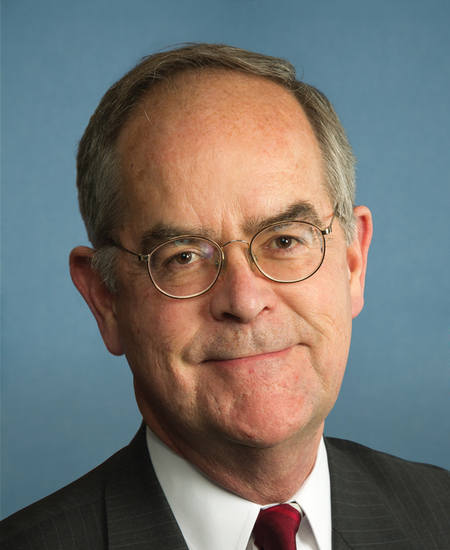
Rep. Jim Cooper
Sponsored bills
Access to Congressionally Mandated Reports Act This bill requires the Government Publishing Office (GPO) to establish and maintain a publicly available online portal containing copies of all congressionally mandated reports. A federal agency must submit a congressionally mandated report and specified information about the report to the GPO between 30 and 45 days after submission of the report to either chamber or to any congressional committee or subcommittee. Upon the written request of the chair of a congressional committee or subcommittee to the GPO, a report submitted to that committee or subcommittee shall not be submitted or published on the portal. Federally chartered corporations, the Government Accountability Office, and any elements of the intelligence community are excluded from the requirements of this bill. The Office of Management and Budget must issue guidance to federal agencies on the bill's requirement for agencies to submit copies of congressionally mandated reports and related information to the GPO.
Mississippi River Restoration and Resilience Initiative Act or the MRRRI Act This bill establishes the Mississippi River Restoration and Resilience Initiative to protect and restore the Mississippi River Corridor. The Environmental Protection Agency (EPA) must establish the initiative and the Mississippi River National Program Office to carry out the initiative. The office must (1) coordinate agency actions to protect and restore the Mississippi River Corridor; (2) develop, implement, and update the initiative, actionable goals, and an action plan required by the bill; (3) make updates and information available on a public website; and (4) submit annual reports to Congress. Additionally, the bill outlines the focus areas that each project carried out under the initiative must address, such as improving water quality and protecting wildlife habitat. The office may make grants to certain nonfederal entities to carry out eligible projects. The bill directs the EPA to include the initiative as a separate budget line item in its annual budget submission. Next, the bill directs the Department of the Interior to coordinate with the office to establish four Mississippi River Corridor research centers within the U.S. Geological Survey (USGS). These research centers must, among other duties, conduct scientific research on the focus areas of the initiative. The bill also directs the USGS to host a science forum to share current science and identify data gaps related to the ecological health of the Mississippi River Corridor. The USGS must, within two years of the forum, develop a science plan for the initiative.
Rebuilding Economies and Creating Opportunities for More People Everywhere To Excel Act or the RECOMPETE Act This bill establishes a grant program to assist economically distressed local communities and labor markets that meet specified economic criteria, including employment criteria. The Economic Development Administration (EDA) must award 10-year grants to a local government, tribal government, economic development district, or consortium of local government units located in such areas. Each grant recipient must develop and implement a comprehensive strategy to address the economic challenges specific to the area. The grants may be used to increase employment opportunities, increase local per capita income, support economic development, and develop infrastructure and housing. Additionally, the EDA must periodically evaluate each grant recipient based on certain benchmark criteria and annually report on the implementation of the program. The bill specifies formulas for determining the grant amount for each community or market and the federal share of the cost of each program or activity conducted under the program.
Recognizing and Ensuring Taxpayer Access to Infrastructure Necessary for GPS and Satellite Communications Act of 2021 or the RETAIN GPS and Satellite Communications Act of 2021 This bill places conditions on entities that deploy commercial terrestrial operations in the 1525-1559 megahertz (MHz) band or the 1626.5-1660.6 MHz band of the electromagnetic spectrum. These frequency bands are traditionally used for satellite operations, including the global positioning system (GPS). On April 19, 2020, the Federal Communications Commission approved an application for a low-power 5G wireless network in such bands despite concerns about the network interfering with GPS and other operations on adjacent bands. In its application, the entity committed to update, repair, or replace federal devices, platforms, or systems affected by its operations. This bill requires an entity (including the previously approved entity) that deploys terrestrial operations in the designated bands to reimburse a federal agency or a person for certain costs if the entity's operations interfere with or otherwise affect the operations of the agency or person. These costs may include necessary upgrades, repairs, or replacements to satellite communication devices and related equipment, as well as expenses for engineering studies and labor. Reimbursable costs owed by the entity transfer to any assignee, successor, or purchaser of its license to deploy terrestrial operations in the designated bands. The bill also expressly authorizes federal agencies to directly accept from the entity reimbursements for incurred costs.
Medicaid Saves Lives Act This bill requires and provides funds for the Department of Health and Human Services to establish a program that provides health benefits to the Medicaid expansion population in states that have not expanded Medicaid. Specifically, the program must provide coverage for individuals who are newly eligible for Medicaid under the Patient Protection and Affordable Care Act (i.e., the Medicaid expansion population) without premiums and in accordance with Medicaid cost-sharing and other requirements. The bill also extends and increases the temporarily enhanced Federal Medical Assistance Percentage (i.e., federal matching rate) for states that elect to participate in Medicaid expansion if they have not already done so.
United States Call Center Worker and Consumer Protection Act of 2021 This bill establishes restrictions on businesses that relocate call centers or redirect customer service calls to locations outside the United States. Specifically, a business must notify the Department of Labor that it intends to move its customer service call center overseas and Labor must maintain a publicly available list of such businesses. Subject to narrow exceptions, a business appearing on such list is ineligible to receive federal grants or guaranteed loans for five years after the business is added to the list. Further, agencies must condition the awarding of government contracts on the requirement that any call center activity pursuant to the contract must be performed in the United States. Additionally, the bill requires call center employees to disclose their physical location at the beginning of each call initiated or received, unless all employees of the business participating in the communication are located in the United States, among other exceptions.
Averting Loss of Life and Injury by Expediting SIVs Act of 2021 or the Allies Act of 2021 This bill increases the number of special immigrant visas available to qualified Afghan nationals who worked for the U.S. government or the North Atlantic Treaty Organization (NATO) missions in Afghanistan. The bill also relaxes certain qualifications for such visas. Specifically, this bill makes available an additional 8,000 visas for principal aliens under this special visa program, to be available until all such visas have been issued. (The numerical limitations in this program apply only to the principal alien who applies for the visa, not to any accompanying spouse or child.) Under this bill, an alien may qualify based on a credible basis for concern about the possibility of an ongoing serious threat in Afghanistan due to their work with the U.S. government or a NATO mission, where currently the alien must have experienced such a threat. The bill also eliminates a requirement for each applicant to submit a credible sworn statement describing that threat. Furthermore, for an applicant qualifying for a visa by performing duties for U.S. military personnel stationed with a NATO mission, this bill eliminates a requirement that the duties performed qualify as sensitive and trusted duties. If an alien submits a visa application that included an accompanying spouse or child but the alien passes away before the application is granted, the surviving spouse or child shall remain eligible to receive a visa under that application. Currently, a surviving spouse or child retains eligibility only if the application was approved before the alien passed away.
PFAS Action Act of 2021 This bill establishes requirements and incentives to limit the use of perfluoroalkyl and polyfluoroalkyl substances, commonly referred to as PFAS, and remediate PFAS in the environment. PFAS are man-made and may have adverse human health effects. A variety of products contain PFAS, such as nonstick cookware or weatherproof clothing. The bill directs the Environmental Protection Agency (EPA) to designate the PFAS perfluorooctanoic acid (PFOA) and perfluorooctanesulfonic acid (PFOS) as a hazardous substances under the Comprehensive Environmental Response, Compensation, and Liability Act of 1980, thereby requiring remediation of releases of those PFAS into the environment. Within five years, the EPA must determine whether the remaining PFAS should be designated as hazardous substances. The EPA must publish human health water quality criteria under the Clean Water Act for each measurable PFAS and class of such substances and establish standards to limit discharges of PFAS from industrial sources into waters of the United States. In addition, the EPA must issue a national primary drinking water regulation for PFAS that, at a minimum, includes standards for PFOA and PFOS. Among other requirements, the EPA must also issue a final rule adding PFOA and PFOS to the list of hazardous air pollutants, test all PFAS for toxicity to human health, and regulate the disposal of materials containing PFAS. The EPA must also require PFAS manufacturers to submit analytical reference standards for PFAS. The EPA and states may use those standards for (1) the development of information, protocols, and methodologies, and (2) activities relating to the implementation of enforcement of requirements. Finally, the bill provides incentives to address PFAS, such as grants to help community water systems treat water contaminated by PFAS and grants to schools for testing and filtrating PFAS from drinking water.
Comprehensive Paid Leave for Federal Employees Act This bill provides paid family and medical leave to federal employees. Currently, federal employees are entitled to 12 weeks of administrative leave for one or more of the following reasons: (1) the birth of a child, (2) the adoption or foster care of a child, (3) the care of an immediate family member with a serious health condition, (4) inability to work due to a serious health condition, and (5) exigencies relating to an immediate family member's active duty service in the Armed Forces. However, of these reasons, employees are entitled to paid administrative leave only in connection with the birth, adoption, or foster care of a child (i.e., parental leave). The bill provides 12 weeks of paid administrative leave for any of these reasons, and specifies that this leave is in addition to any annual or sick leave to which employees are entitled.