

Finish the Wall Act This bill requires the Department of Homeland Security (DHS) to resume activities related to the construction of a barrier system along the U.S.-Mexico border and addresses other border-related issues. DHS must resume all such construction activities that were planned or underway prior to January 20, 2021. DHS must also expend all funds appropriated or explicitly obligated since October 1, 2016, for construction of this barrier system. DHS may not cancel contracts for activities related to such construction entered into on or before January 20, 2021. Furthermore, within 14 days of this bill's enactment, DHS must certify to Congress that U.S. Customs and Border Protection facilities that process adults taken into custody at the border are fully compliant with certain laws related to the collection of DNA. (Among other things, these laws allow for the collection of DNA samples from non-U.S. persons detained under U.S. authority.)
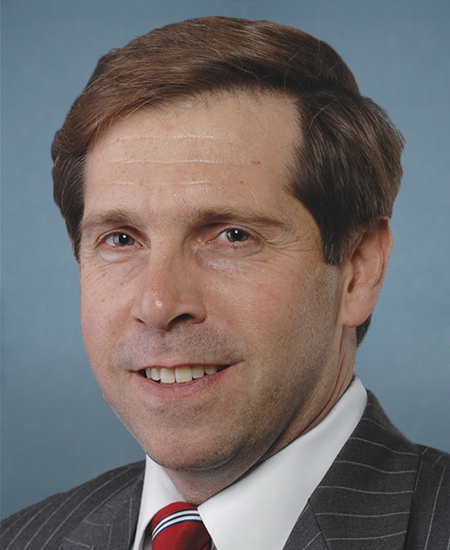
Rep. Charles J. "Chuck" Fleischmann
Sponsored bills
This resolution condemns Iranian state-sponsored terrorist attacks against U.S. citizens and officials and Iranian dissidents. The resolution also expresses support for the people of Iran who are legitimately defending their rights for freedom against repression and condemns the killing of Iranian protesters by the Iranian regime.
Maddy summaryThis bill transfers specific lands and easements in Monroe County, Tennessee, to the Eastern Band of Cherokee Indians in federal trust for cultural and historical use. It includes 46 acres for the Sequoyah Museum, 18.2 acres for Chota/Tanasi memorials, 11.9 acres for support facilities, plus 8.5 acres of peninsula easement and 11.4 acres for a cultural trail. The tribe gains exclusive rights to use these properties for preserving Cherokee history, operating museums, managing trails, repatriating remains, and cultural education - while prohibiting gaming and requiring compliance with flood management rules. All lands must be administered under standard federal trust laws, with the Tennessee Valley Authority retaining authority over reservoir operations and environmental responsibilities.
Maddy summaryHCONRES 13 is a concurrent resolution expressing Congress's support for maintaining the current policy that prohibits imposing new fees on local radio stations for playing music. It states that Congress should not impose any performance fee, tax, royalty, or charge on local radio stations for broadcasting sound recordings over the air, or on businesses like bars and restaurants that play music publicly. The resolution argues that such fees would harm local radio stations - critical sources for emergency information and community programming - and jeopardize the economic model that has supported both radio and the music industry for decades. This resolution does not create new law but formally opposes potential legislative changes to the existing fee structure.
Strengthen the Pediatric Research Initiative Act This bill terminates (1) the taxpayer election to designate $3 of income tax liability for financing of presidential election campaigns, (2) the Presidential Election Campaign Fund, and (3) the Presidential Primary Matching Payment Account. The Department of the Treasury must transfer the funds remaining in the Presidential Election Campaign Fund to the Pediatric Research Initiative Fund.
Maddy summaryThis bill helps new car dealers affected by pandemic-era supply chain disruptions by changing tax rules for inventory sales. It allows dealers using LIFO accounting to treat certain sales of unsold vehicles (liquidations) between March 2020 and December 2021 as "qualified" for tax purposes. Dealers can defer recognizing income from these sales and have until 2026 to replace the sold vehicles before potential tax adjustments apply. The provision specifically targets dealers who couldn't replenish inventory during the supply chain crisis.
Maddy summaryThe HEAL Act (HR 603) requires the U.S. Holocaust Memorial Museum Director to study how public elementary and secondary schools teach about the Holocaust and related antisemitism. The study will examine curriculum requirements, teaching methods (like project-based learning), instructional materials, and assessment approaches across states and school districts. It specifically analyzes whether Holocaust education is mandatory, optional, or integrated across subjects, and how schools address antisemitism and genocide prevention. The resulting report, due within 180 days of the study or three years after enactment, will inform Congress but does not change current school policies. This is a data-gathering measure, not a policy mandate.
Maddy summaryThe Educational Choice for Children Act creates tax credits for individuals and corporations that contribute to scholarship granting organizations providing education scholarships. Individuals can claim a credit up to $5,000 or 10% of their income, while corporations can claim up to 5% of taxable income. The scholarships are available to students from households with income up to 300% of the area median income, and can be used for private school tuition, tutoring, and other educational expenses at elementary and secondary schools. The bill includes strict requirements for scholarship organizations to verify income, conduct audits, and prevent misuse of funds, while also prohibiting government control over these organizations and protecting private and religious schools from discrimination in the program. It establishes a $10 billion annual cap on the total tax credits available.
This concurrent resolution calls on the President to abandon the One China policy in favor of one that recognizes Taiwan as an independent country that is not a part of China. The resolution also urges the President to bolster diplomatic and economic relations between the United States and Taiwan through specified means.
Maddy summaryThis bill requires healthcare providers to give the same medical care to infants born alive during abortions as they would to any newborn, and to immediately admit such infants to a hospital. It mandates reporting of non-compliance to law enforcement and imposes penalties including up to 5 years in prison for violations. Women who undergo abortions can file civil lawsuits seeking money damages for injuries, three times the abortion cost, and punitive damages if care standards are not met. The bill also clarifies that abortion includes intentionally killing an unborn child or terminating pregnancy without specific exceptions (e.g., after viability to preserve life or removing a dead fetus).