

Maddy summaryHR 1200, the National Right-to-Work Act, prohibits requiring workers to join a union or pay dues as a condition of employment in both private-sector workplaces (covered by the National Labor Relations Act) and railroad industries (covered by the Railway Labor Act). The bill amends key sections of these laws to eliminate provisions that allowed union security agreements, meaning workers in unionized settings would no longer be forced to pay dues to retain their jobs. This directly affects employees in unionized workplaces across the U.S., particularly those in industries with existing union contracts that included mandatory dues. The law changes the legal framework to ensure union membership and dues payment remain voluntary for all workers.
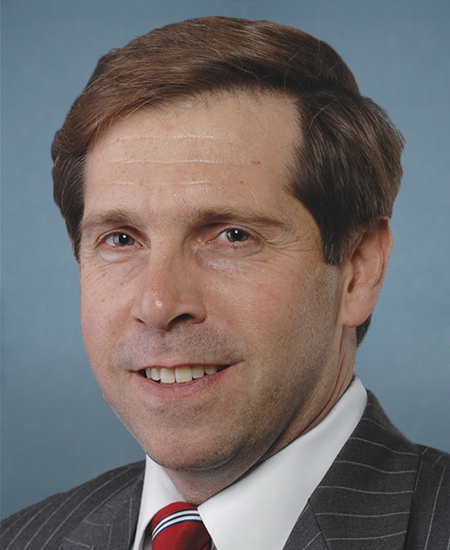
Rep. Charles J. "Chuck" Fleischmann
Sponsored bills
Maddy summaryHRES 124 is a non-binding House resolution expressing congressional support for expanding domestic nuclear energy and advanced nuclear technology. It states the House believes the U.S. should promote nuclear energy as a reliable, low-carbon power source to enhance energy leadership and independence, citing its high reliability (92% operation rate), carbon reduction benefits (482 million metric tons avoided in 2021), and economic contributions (475,000 jobs supported). The resolution urges actions like streamlining regulations for advanced reactors, securing domestic uranium supply chains, and addressing misinformation about nuclear safety - though it does not create new laws or funding. It serves solely as a statement of policy preference, not a legislative mandate.
Maddy summaryHR 1007, the Nuclear Assistance for America’s Small Businesses Act, delays collection of nuclear regulatory fees for small businesses applying for permits to build or operate advanced nuclear reactors. It allows eligible small businesses (defined as those with NAICS code 221113 that responded to NRC's RIS-20-02) to delay up to 50% of pre-application fees and 35% of post-application fees. The delayed fees must be repaid over 10 years at 10% annually, or accelerated to 25% if the business fails to submit a covered application within 5 years, withdraws it, or faces denial. This applies specifically to applications for construction permits, operating licenses, or combined licenses for advanced nuclear reactors under NRC oversight.
Maddy summaryHR 1006, the NRC Survey Act, requires the Nuclear Regulatory Commission (NRC) to conduct surveys of its employees and nuclear industry stakeholders to identify ways to improve the efficiency of reactor licensing. The employee survey asks about internal processes, communication, funding, and barriers to innovation, while the stakeholder survey seeks industry input on regulatory challenges and engagement. The Inspector General must distribute these surveys within 60 days of enactment and submit reports to Congress with aggregated feedback and individual responses. This bill gathers direct input to inform potential future regulatory improvements without changing existing laws or creating new requirements.
Maddy summaryHR 1009 requires the President to develop a national strategy for using microreactors (small nuclear reactors under 20 MW thermal) to replace diesel generators during natural disasters. The strategy must evaluate current diesel generator use, compare environmental impacts, and address deployment logistics like storage, transportation, and maintenance. It mandates collaboration between agencies like FEMA, the Department of Energy, and the Nuclear Regulatory Commission, with annual reports to Congress. The bill aims to improve disaster response by providing reliable, low-emission power to critical facilities like hospitals and water plants, while reducing reliance on diesel.
Maddy summaryThis bill would require the U.S. to withhold funding for the UNRWA (United Nations refugee agency for Palestinians) unless the State Department certifies UNRWA staff, materials, and facilities comply with specific conditions. Key conditions include confirming no ties to terrorism or anti-Israel rhetoric (like denying Israel's right to exist or promoting BDS), no misuse of UNRWA resources for terrorist activities, and adherence to international financial audits. It also caps U.S. contributions to UNRWA at levels comparable to Arab League countries and mandates annual reports to Congress on phasing out UNRWA support. These changes directly affect U.S. foreign aid decisions for Palestinian refugees in Jordan, Lebanon, Syria, Gaza, and the West Bank.
Second Chance at Life Act of 2023 This bill requires abortion providers to disclose information about the possibility of reversing a medication abortion. This is a procedure that uses a medication regimen to terminate a pregnancy, typically with a two-drug protocol. Providers must inform patients that it may be possible to reverse the effects of a medication abortion after taking the first drug. They must also let patients know that more information and assistance is available on the Department of Health and Human Services (HHS) website. At least 24 hours before the procedure, the provider must share this information with the patient in person or by telephone. The provider must also include the information in written discharge instructions after the first drug is dispensed. The bill sets out an exception to these notification requirements when an abortion is necessary to resolve a physical injury or condition that threatens the life of the woman. The provider must document the circumstances giving rise to the exception in the patient's medical file. Furthermore, providers must post signs with this information in their offices or facilities, and HHS must maintain information about reversing medication abortions on its website.
Maddy summaryThis bill authorizes a single Congressional Gold Medal to honor all U.S. Army Dustoff crews who served during the Vietnam War (1962-1973). It recognizes their critical role in evacuating nearly 900,000 wounded personnel, including U.S., South Vietnamese, and allied forces, under extreme combat conditions. The medal, designed with input from the Secretary of Defense, will be presented to the U.S. Army Medical Department Museum for permanent display. Duplicate bronze medals may be sold to cover costs, but the primary action is the commemorative recognition of these crews' service.
Maddy summaryHR 800, the "DO NOT Call Act of 2023," amends the Telephone Consumer Protection Act of 1991 to increase penalties for intentional telemarketing violations. It adds criminal penalties of up to one year in prison or fines for willfully and knowingly making unwanted calls, with harsher penalties (up to three years) for severe offenses like sending over 100,000 calls in 24 hours, causing $5,000+ in damages, or committing calls to further a felony. The bill also raises civil penalties for providing false caller identification information from $10,000 to $20,000 per violation. This directly affects telemarketers, debt collectors, and businesses making unsolicited calls, increasing legal consequences for repeated or large-scale violations.
Maddy summaryHR 936, the Tanning Tax Repeal Act of 2023, repeals a 10% federal excise tax on indoor tanning services that was originally enacted under the Affordable Care Act. This bill directly affects tanning salons and businesses providing indoor tanning services by eliminating their obligation to pay this tax on customer services. The repeal applies to services performed after the bill's enactment date, removing the tax provision from the Internal Revenue Code. The bill does not create new requirements or alter other tax policies, solely removing this specific tax.