FEMA Relief Extension Act This bill extends the period for federal assistance to individuals and households under the Robert T. Stafford Disaster Relief and Emergency Assistance Act and any corresponding regulation from 18 to 24 months following the declaration of a major disaster. Further, the bill authorizes the President to charge fair market rent for each temporary housing unit provided after the end of the 24-month period.
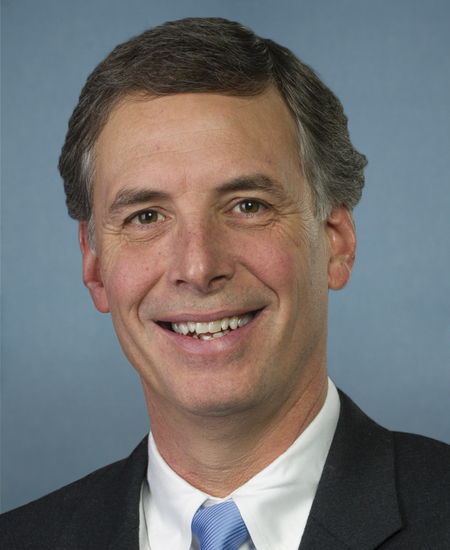
Rep. Tom Rice
Sponsored bills
This resolution recognizes the rights of parents to engage in the development and implementation of decisions impacting their children's school environment, curriculum, health, and well-being practices. It also condemns designating parents as domestic terrorists.
Drug-Free Communities Pandemic Relief Act This bill authorizes the Drug-Free Communities Support Program, subject to certain limitations, to waive matching funds requirements applicable to certain grants for reducing substance use among youth. Before waiving these requirements, the program must determine that a grantee is unable to raise funds because of the COVID-19 emergency. Currently, the Office of National Drug Control Policy administers this program, and community coalitions that receive the grants must match a specified percentage of the federal award amount with nonfederal funds, including in-kind contributions.
Free Veterans from Fees Act This bill waives the application fee for any special use permit solely for a veterans special event at war memorials on land administered by the National Park Service in the District of Columbia and its environs.
This joint resolution proposes an amendment to the Constitution to provide that a new state may only be admitted into the union upon a vote of two-thirds of each chamber of Congress.
This resolution recognizes and appreciates the dedication and devotion demonstrated by the men and women of law enforcement. It also condemns calls to defund, disband, dismantle, or abolish the police.
Lower Costs, More Cures Act of 2021 This bill establishes and modifies several programs and requirements to address prescription drug prices. The bill modifies provisions under Medicare and Medicaid relating to prescription drug coverage and price transparency. Among other changes, the bill requires the Centers for Medicare & Medicaid Services to publish certain information, as reported by pharmacy benefit managers (PBMs), relating to generic dispensing rates, drug discounts and rebates, and payments between PBMs, health plans, and pharmacies; caps annual out-of-pocket spending under the Medicare prescription drug benefit; allows prescription drug plan sponsors under the Medicare prescription drug benefit to offer additional plans in a region; requires pass-through pricing models, and prohibits spread-pricing, for payment arrangements with PBMs under Medicaid; and allows states to include in the Medicaid Drug Rebate Program covered outpatient drugs that are provided as part of physician or outpatient hospital services. The bill also generally modifies other provisions relating to the regulation and costs of generic and brand-name drugs. Among other changes, the bill prohibits the manufacturer of a brand-name, generic, or biosimilar drug from entering into certain agreements to resolve or settle a patent infringement claim in connection with the sale of a drug or biological product; permanently allows high deductible health plans to waive deductibles for insulin and associated products; and establishes the position of Chief Pharmaceutical Negotiator in the Office of the U.S. Trade Representative.

Maximum Pressure Act This bill expands sanctions and economic penalties on Iran. It also restricts the President from unilaterally lifting or waiving the sanctions or penalties and increases congressional oversight of them. Specifically, the bill requires the President to impose visa- and asset-blocking sanctions. Additionally, it modifies existing sanctions, including by (1) providing statutory authority for executive orders imposing sanctions; (2) applying sanctions to additional sectors of Iran's economy; and (3) broadening sanctionable conduct to cover, for example, assisting Iran with the acquisition of ballistic missiles and the complicity of Iranian officials in human rights violations in specified countries. The bill also requires reporting on licenses that authorize activities subject to sanctions. The bill prohibits U.S. representatives at the International Monetary Fund from voting to allow Iran's access to special drawing rights (a currency support tool) and places restrictions on financial transactions with Iran. The restrictions include requiring domestic financial institutions to implement special measures with respect to foreign financial institutions that conduct significant transactions connected to the Instrument in Support of Trade Exchanges (a European mechanism that bypasses U.S. sanctions when carrying out trade with Iran). The Department of State must maintain the Islamic Revolutionary Guard Corps' designation as a terrorist organization and must designate Ansharallah (or Houthis), which operates in Syria, as a foreign terrorist organization. The bill also requires reports on U.S. sanctions concerning Iran, the status of Iran's nuclear weapons program, and other matters.
Red Tape Reduction Act This bill grants the force and effect of law to various executive orders relating to administrative procedures that were rescinded on January 20, 2021, including orders requiring agencies to (1) identify at least two regulations for repeal before publishing notice of a proposed new rule, and (2) rescind guidance documents that are no longer in effect.
Accountability Through Electronic Verification Act This bill expands the E-Verify program by requiring all employers to use it and permanently reauthorizes the program. Currently, E-Verify use is voluntary for most employers, although some states mandate its use. All employers shall use E-Verify to confirm the identity and employment eligibility of all recruited, referred, or hired individuals, including current employees who were never verified under the program. Failure to use E-Verify shall create a rebuttable presumption that the employer is violating immigration law. U.S. Citizenship and Immigration Services shall generate weekly reports about individuals who have received a final nonconfirmation of employment eligibility. The Department of Homeland Security (DHS) shall use the report to enforce immigration laws. DHS shall establish a program to help certain small businesses verify employee eligibility. DHS shall also update E-Verify's design to help prevent and detect fraud and identity theft. The bill increases civil and criminal penalties for hiring unauthorized aliens. DHS shall debar repeat offenders and those criminally convicted from holding federal contracts, grants, or cooperative agreements. The Social Security Administration, Internal Revenue Service, Department of the Treasury, and DHS shall jointly establish a program to share information to help identify unauthorized aliens. The bill establishes the Employer Compliance Inspection Center within Homeland Security Investigations of U.S. Immigration and Customs Enforcement. The center's duties include processing I-9 employment eligibility verification forms and ensuring compliance with employment eligibility laws. DHS shall report to Congress on ways to simplify procedures relating to I-9 forms and on whether the I-9 process should be eliminated.