

Maddy summaryHR 192 prohibits noncitizens from voting in all District of Columbia elections, including for public office and ballot initiatives. It directly affects noncitizen residents of Washington D.C. who currently have voting rights under the repealed Local Resident Voting Rights Amendment Act of 2022. The bill's key mechanism is repealing that 2022 amendment, restoring the requirement that only U.S. citizens may vote in DC elections. This changes the voting eligibility rules for noncitizens living in the District. The law would take effect upon enactment, removing noncitizens from the voter rolls for all local elections.
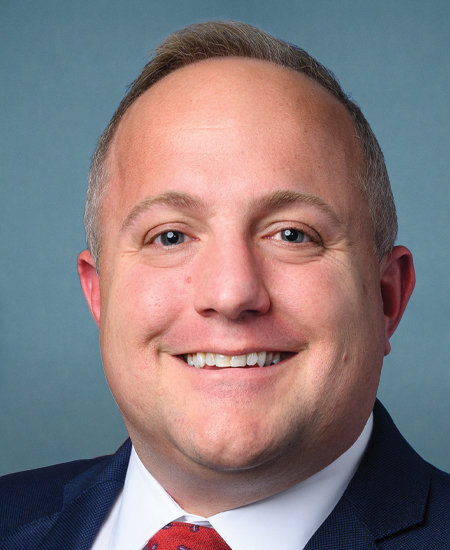
Rep. Russell Fry
Sponsored bills
Maddy summaryHR 5403, the CBDC Anti-Surveillance State Act, prohibits the Federal Reserve from issuing or facilitating central bank digital currency (CBDC) directly or indirectly to individuals through financial institutions. It specifically bans Federal Reserve banks from offering digital products to individuals, maintaining individual accounts, or using CBDC for monetary policy implementation. The bill also clarifies that its restrictions do not apply to existing physical cash or private, permissionless digital payment systems. This bill directly affects the Federal Reserve's ability to develop or deploy a government-run digital dollar. The law aims to prevent the Federal Reserve from creating a digital currency that could enable transaction tracking or government oversight of personal financial activity.
Maddy summaryHRES 1267 is a non-binding House resolution supporting the Second Amendment and opposing the Biden administration's gun-related policies. It criticizes executive orders, Bureau of Alcohol, Tobacco, Firearms, and Explosives (ATF) regulations, and export restrictions as efforts to undermine constitutional rights, though the resolution itself has no legal effect. The bill does not change laws or directly affect anyone, as it serves only as a symbolic statement of congressional opinion. It specifically references the administration's actions on firearm regulations and exports, but does not propose new policies or alter existing ones.
Maddy summaryHRES 1247 is a non-binding House resolution recognizing National Safe Boating Week. It acknowledges the significance of this annual observance (held in late May) and highlights statistics about boating safety, including that drowning causes 75% of boating fatalities. The resolution supports existing safety procedures like life jacket use and encourages Americans to boat safely. It does not create new laws or policies, but formally urges federal, state, and local partners to continue promoting safe boating through events during this week.
Maddy summaryThis bill requires the U.S. Department of Defense and State Department to immediately deliver all previously approved military equipment and services to Israel within 15 days, reversing any pauses on arms transfers. It prohibits using federal funds to withhold, halt, or cancel defense article deliveries to Israel and mandates that unobligated security assistance funds for Israel must be spent by the end of 30 days. The bill also requires monthly reports to Congress detailing all security assistance provided to Israel since October 7, 2023, including specific items delivered and funding sources. The law directly affects U.S. agencies responsible for military aid and Israel as the recipient of the security assistance.
Maddy summaryHRES 1210 is a non-binding House resolution condemning the Biden administration's border policies as the cause of a crisis that burdens law enforcement. It claims these policies led to record illegal border crossings, security threats (including encounters with individuals on terrorist watch lists), and increased crime involving migrants, citing specific incidents like assaults on officers and violent crimes. The resolution urges the administration and local officials to support law enforcement and recognizes the mental, physical, and psychological stress faced by officers. As a symbolic resolution, it does not enact legal changes but expresses the House's position on border policy.
Maddy summaryThis bill amends a 2021 law to specify the location for the National Medal of Honor Monument on federal land in Washington, D.C. It requires the monument to be placed within the National Mall's "Reserve" area and attached to, or no more than 1,000 feet from, the Lincoln Memorial. The change directly affects the National Medal of Honor Museum Foundation, which is authorized to build the monument under existing law. This policy adjustment finalizes the physical placement of the monument to honor Medal of Honor recipients, aligning it with the Lincoln Memorial's historical significance.
Maddy summaryHR 7109, the Equal Representation Act, requires the U.S. Census Bureau to add a citizenship status checkbox to the 2030 and future decennial censuses, asking respondents to identify if they are U.S. citizens, U.S. nationals, lawful residents, or unlawful residents. It then mandates excluding noncitizens (both lawful and unlawful residents) from the population count used to determine each state's number of congressional seats and electoral votes starting with the 2030 census. This bill directly affects how states are apportioned representation in Congress and presidential electoral votes, based solely on the citizen population. The key change is shifting the apportionment base from total population to citizen population alone, using the new census data.
Maddy summaryThis bill defines what constitutes "compensation" for student athletes, explicitly excluding standard benefits like tuition, health insurance, and academic stipends (capped at $5,980 annually). It shields colleges, athletic associations, and conferences from lawsuits when enforcing rules that limit or prohibit student athletes from earning money through name, image, and likeness (NIL) deals or other commercial opportunities. The law clarifies that institutions cannot be held liable for restricting eligibility if athletes violate these compensation rules. It applies to all colleges and athletic conferences under the Higher Education Act, focusing on legal clarity around NIL policies.
Maddy summaryHR 8231, the James Earl Jones Congressional Gold Medal Act, authorizes a Congressional Gold Medal to be awarded to actor James Earl Jones in recognition of his distinguished career in theater and film, and his role in advancing inclusion and equal opportunities for people of all backgrounds in the entertainment industry. The Treasury will strike the medal with an image and inscription of Jones, and may produce and sell bronze duplicates to cover costs, with proceeds deposited into the U.S. Mint's public enterprise fund. This bill serves as a ceremonial honor with no new legal requirements or policy changes.