

Maddy summaryHJRES 164 is a congressional resolution seeking to block a rule issued by the Department of Commerce regarding firearms license requirements. It directly targets the rule published in the Federal Register (89 Fed. Reg. 34680), which would have revised licensing procedures for firearms dealers. If passed, the resolution would prevent this rule from taking effect by invoking the congressional disapproval process under federal law. The bill does not create new regulations but aims to halt an existing rule affecting gun license applicants and dealers.
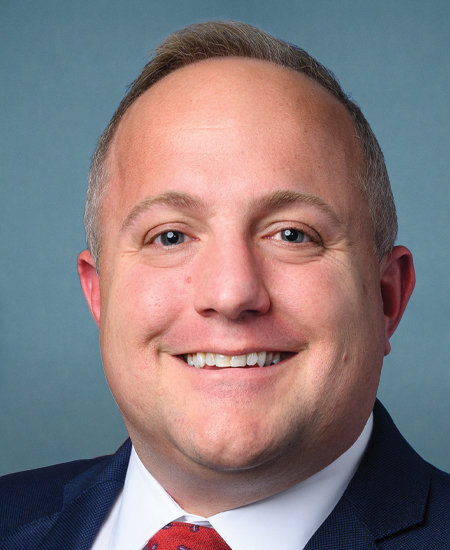
Rep. Russell Fry
Sponsored bills
Maddy summaryThis resolution (HRES 1344) formally declares Attorney General Merrick Garland in contempt of the House of Representatives for failing to produce subpoenaed materials related to the Special Counsel's investigation of President Biden's handling of classified documents. It specifically cites his refusal to turn over "audio tapes" requested by the House Judiciary and Oversight committees on February 27, 2024. The resolution mandates that the Speaker impose a daily $10,000 fine on Garland (payable from his personal funds, not taxpayer money) until he complies with the subpoena. As a procedural resolution - not a law - it addresses a specific dispute over congressional oversight authority, not policy changes.
Maddy summaryHR 4848, the Censorship Accountability Act, allows individuals to sue federal employees who, while acting in their official capacity, deny others their First Amendment rights (such as free speech or assembly). It directly affects federal employees (excluding the President/Vice President) who may restrict protected expression under federal law. Key provisions create a private right of action for victims to seek legal redress in court, with courts able to award attorney fees to the winning party. The bill explicitly excludes lawsuits against the federal government for employment-related conduct and clarifies that unconstitutional sections won’t invalidate the rest of the law.
Maddy summaryThis bill ends judicial deference to federal agency interpretations of laws (known as "Chevron deference"). It requires agencies to review past interpretations they relied on under Chevron, publish revised positions, and only issue rules when explicitly authorized by Congress. The bill also mandates that courts interpret statutes themselves rather than favoring agency views, requires criminal penalties to include proof of intent ("mens rea"), and ensures agency decisions are based only on publicly accessible materials. These changes directly affect federal agencies, courts, and individuals or businesses subject to agency regulations or penalties.
Maddy summaryHRES 1335 is a non-binding resolution designating July 21, 2024, as "Guam Liberation Day" to commemorate the U.S. military's liberation of Guam from Japanese occupation on July 21, 1944. It directly affects Guam's community by honoring the island's historical resilience, the CHamoru people's suffering during the 1941-1944 occupation, and the U.S. military's role in the Pacific campaign. The resolution's key mechanism is a formal House endorsement of this commemorative date, urging the President to issue a proclamation encouraging public observance. This is a symbolic gesture with no legal or financial impact, focusing solely on historical recognition.
Maddy summaryHR 2833, the Pretrial Release Reporting Act, requires the Bureau of Justice Statistics to submit a detailed report to Congress within 180 days of enactment. The report must include data on individuals charged with specific violent felonies (such as murder, rape, robbery, or aggravated battery) who were granted bail or pretrial release in state courts. It will cover how many were rearrested for additional violent crimes, missed court dates, bail amounts, and factors courts use for release decisions, especially for those with prior violent felony convictions. This bill does not change release policies but mandates updated data collection to address gaps in existing reporting since 2020.
Maddy summaryThis bill rescinds unspent funds from specific federal programs. It targets leftover money from pandemic relief (like the CARES Act and American Rescue Plan) and certain infrastructure initiatives (including education stabilization funds and transportation programs like the Congestion Mitigation Program). The rescission is limited to amounts already allocated for Israel, Ukraine, and Indo-Pacific security supplements under recent appropriations. Unspent funds must be returned to the Treasury, with no new spending created.
Maddy summaryHRES 1303 is a resolution passed by the U.S. House of Representatives on June 14, 2024, that condemns the Biden administration's suspension of pending approvals for liquefied natural gas (LNG) exports to countries without free trade agreements with the U.S. The resolution argues this action is politically motivated, citing studies showing economic benefits of LNG exports and noting that previous administrations conducted similar environmental reviews without halting permits. It calls for lifting the suspension to restore confidence in the energy sector, prioritize U.S. workers and communities, and align with the administration's stated goals of economic growth. As a non-binding resolution, it does not change policy but formally expresses congressional disapproval of the administration's approach.
Maddy summaryHR 537 authorizes a Congressional Gold Medal to honor 60 diplomats who saved Jewish lives during the Holocaust by issuing visas and passports against their governments' orders, risking expulsion and personal danger. The medal will be presented to the next of kin of these diplomats, alongside representatives from their home countries, and permanently displayed at the United States Holocaust Memorial Museum. The bill also permits the sale of bronze duplicates to cover production costs, with proceeds going to the U.S. Mint. This legislation recognizes the diplomats' humanitarian actions without creating new government programs or altering existing laws.
Maddy summaryHR 8653 authorizes the posthumous award of a Congressional Gold Medal to Major Thomas D. Howie, a U.S. Army officer who died during the Battle of Normandy in WWII. The bill specifies the medal will be presented to his nephew, Tom Howie, or his next of kin, and then permanently displayed at The Citadel Museum. It also permits the U.S. Mint to produce and sell bronze duplicates to cover costs. This is a commemorative measure honoring Major Howie's military service and sacrifice, with no substantive policy changes.