

Maddy summaryThe Federal Prisons Accountability Act of 2023 requires the President to appoint the Director of the Bureau of Prisons with Senate confirmation, replacing the current system where the Director is appointed directly by the Attorney General. It also establishes a 10-year term limit for the Director, though the current Director may continue serving for up to three months after the bill's enactment. This change directly affects the leadership structure of the Bureau of Prisons, which oversees over 176,000 federal inmates across 122 facilities and has a budget exceeding $7 billion annually. The bill aims to increase oversight of this major Department of Justice component by aligning its leadership appointment process with other senior Justice Department officials.
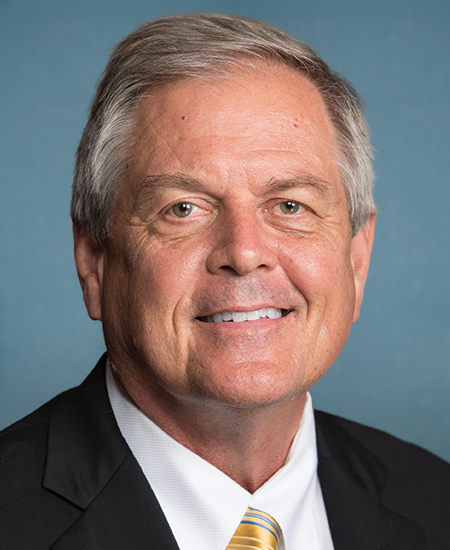
Rep. Ralph Norman
Sponsored bills
Maddy summaryHR 4035, the Protecting Small Business Information Act of 2023, requires the Treasury Secretary to coordinate the effective dates of all rules under the Corporate Transparency Act. It mandates that all final rules related to beneficial ownership reporting must take effect on the same date, delaying implementation until the Secretary certifies to Congress that all rules are issued and will align on a single effective date. This directly affects small businesses required to report beneficial ownership information under the Corporate Transparency Act. The bill’s key mechanism is creating a unified implementation timeline, preventing staggered rule deadlines that could complicate compliance for small entities. It does not change reporting requirements but ensures a synchronized rollout of the regulations.
Maddy summaryHR 3924, the Passport Sanity Act, requires the U.S. Department of State to issue passports, passport cards, and Consular Reports of Birth Abroad only with "male" or "female" gender designations, prohibiting the use of the "X" (unspecified) option. This bill directly affects individuals who currently apply for or hold U.S. passports with an "X" gender marker. The key provision mandates that all new applications and documents must use only the binary gender options, eliminating the existing "X" designation. The bill does not alter eligibility for passports but changes the gender marker options available on these specific travel documents.
This resolution requires the Clerk of the House of Representatives to place in the House Chamber a real-time display of the outstanding national debt.
VA Canine Reporting Act of 2023 This bill requires the Department of Veterans Affairs to report on the average time it took to provide a veteran with a service or guide dog in the prior year. The report must also include legislative recommendations to reduce such wait time.
Maddy summaryThis bill prohibits the Department of Veterans Affairs from changing its anesthesia care policies to allow nurse anesthetists (CRNAs) to provide anesthesia independently without a physician anesthesiologist. It specifically blocks implementation of a 2016 proposed rule that would have expanded CRNAs' authority in VA facilities. The law maintains current requirements that physician anesthesiologists must oversee or provide anesthesia care for veterans during surgical procedures. Emergency orders for veteran safety during surgery remain permitted under the bill's exception clause.
Maddy summaryHR 3792 extends U.S. security funding for Israel through 2028 (Section 3) and expands energy cooperation to include advanced nuclear technologies and carbon capture (Section 5). It requires annual reports on regional security partnerships involving Israel (Section 6) and ensures countries in the Abraham Accords can access U.S. development programs (Section 8). The bill also mandates reports on diplomatic efforts against ICC investigations targeting the U.S. and Israel (Section 10) and encourages people-to-people programs to strengthen the Abraham Accords (Sections 7, 9). These provisions directly affect Israel’s diplomatic engagement, security partnerships, and economic cooperation in the Middle East.
Maddy summaryHR 3773, the Stop Anti-Semitism on College Campuses Act, requires colleges and universities receiving federal funding to prohibit any event promoting antisemitism on campus. This includes not hosting, facilitating, funding, or supporting such events. The bill adopts the International Holocaust Remembrance Alliance's 2016 definition of antisemitism - including contemporary examples - as the standard for determining prohibited conduct. The law directly affects all institutions covered by the Higher Education Act of 1965.
Maddy summaryHR 3212, the "Shall Not Be Infringed Act of 2023," repeals or prevents funding for numerous gun control measures across federal agencies. The bill eliminates funding for Bureau of Alcohol, Tobacco, Firearms and Explosives (ATF) modernization efforts, blocks Department of Veterans Affairs programs related to firearm storage, and prohibits CDC and NIH from funding research on firearm injury prevention. It also repeals specific provisions from the Bipartisan Safer Communities Act related to background checks and domestic violence restrictions, and prevents the use of federal funds for red flag laws or gun registries. The bill directly affects federal agencies and programs that implement gun control measures, including ATF, VA, HHS, CDC, NIH, and the Department of Education.
Maddy summaryHR 3740, the Federal Employee Student Debt Transparency Act, requires certain high-level federal employees to publicly disclose their student loan debt. Specifically, it applies to Senior Executive Service (SES) employees and Schedule C appointees (political appointees in policy roles), mandating they report their full student loan balances (including federal loans under the Higher Education Act) within 60 days of taking the position and annually by February 28. The Office of Government Ethics must then submit an annual report to Congress by May 1, detailing the total debt owed by all covered employees and identifying those who failed to report. This bill focuses solely on transparency, not debt relief or policy changes.